[CA] How do I use an affidavit to collect my deceased mother-in-law’s personal property in California?
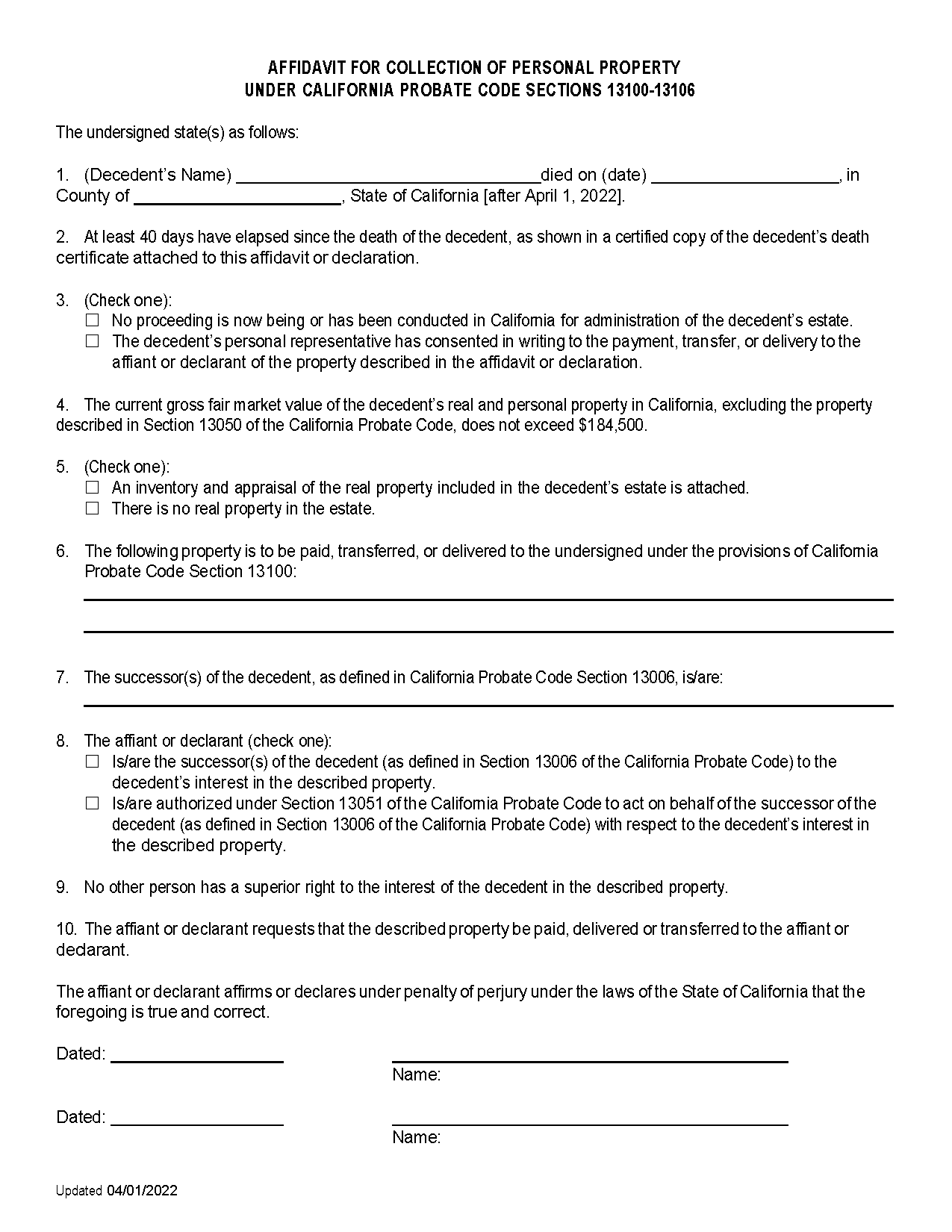
Okay. In California, there is a form called an Affidavit of Collection of Personal Property, which can be used to bypass probate and claim the personal property of a person who has died. The affidavit can be given to any institution or facility holding onto the property of the deceased, such as a bank or storage facility. Here are some things to keep in mind:
- Statutory Limit: In California, you can only use this type of affidavit to collect property if the estate to which the property belongs is worth $184,500 or less (Sections 13100, 13101). If the estate is worth more than the statutory limit, then you'll have to go through the probate process in order to collect your mother-in-law's property.
- Estate Does Not Include Real Estate: This affidavit cannot be used to gain possession of real estate. To do this, use Form DE-305.
- No Formal Probate: An affidavit for the collection of personal property cannot be legally used if probate is already underway, unless you get the express written permission of the personal representative administering the estate.
- Waiting Period: In order to use this affidavit, at least 40 days must have passed since the decedent's death (CA Prob Code Section 13101).
- Notarization: While it's not required in California, it's a good idea to get the affidavit notarized.
- Collecting Property: Take the completed affidavit, a copy of the death certificate, proof of your identity, and proof of ownership of any properties listed to the person, company, or bank that has possession of the decedent's property.
Best of luck! If you have any other questions, don't hesitate to reach out.
0
California Small Estate Affidavit
Full Conversation
How do I obtain and use an affidavit of collection of personal property?
Lexi, Chatbot
I understand you're looking for information on an affidavit of collection of personal property. Can you please clarify if you are referring to collecting personal property after someone has passed away?
Yes, my mother-in-law passed and we need to collect her stuff.
Lexi, Chatbot
Are you looking to create this affidavit yourself, or do you need assistance from a lawyer to help with the process?
Myself.
Lexi, Chatbot
Is there anything else the lawyer should know before I connect you?
No.
Andres Sanchez
Hello! I'm Andres Sanchez, an expert in estate law. I understand you're dealing with the loss of your mother-in-law and need help with an affidavit for collecting her personal property. I'm here to assist you through this process. What state are you in?
California.
Andres Sanchez
Okay. In California, there is a form called an Affidavit of Collection of Personal Property, which can be used to bypass probate and claim the personal property of a person who has died. The affidavit can be given to any institution or facility holding onto the property of the deceased, such as a bank or storage facility. Here are some things to keep in mind:
- Statutory Limit: In California, you can only use this type of affidavit to collect property if the estate to which the property belongs is worth $184,500 or less (Sections 13100, 13101). If the estate is worth more than the statutory limit, then you'll have to go through the probate process in order to collect your mother-in-law's property.
- Estate Does Not Include Real Estate: This affidavit cannot be used to gain possession of real estate. To do this, use Form DE-305.
- No Formal Probate: An affidavit for the collection of personal property cannot be legally used if probate is already underway, unless you get the express written permission of the personal representative administering the estate.
- Waiting Period: In order to use this affidavit, at least 40 days must have passed since the decedent's death (CA Prob Code Section 13101).
- Notarization: While it's not required in California, it's a good idea to get the affidavit notarized.
- Collecting Property: Take the completed affidavit, a copy of the death certificate, proof of your identity, and proof of ownership of any properties listed to the person, company, or bank that has possession of the decedent's property.
Best of luck! If you have any other questions, don't hesitate to reach out.
Disclaimer
By messaging AskaLawyer.com, you agree to our Terms and have read our Privacy Policy.
The information provided on AskaLawyer.com is for general informational purposes only and does not constitute legal advice. While we strive to ensure the accuracy and timeliness of the information presented, we make no guarantees regarding its completeness or applicability to your specific circumstances.
Use of this website does not create an attorney-client relationship between you and AskaLawyer.com or any of its attorneys. Communications through this website, including any responses from attorneys, are not privileged or confidential. For advice tailored to your individual situation, we recommend consulting a licensed attorney in your jurisdiction.
AskaLawyer.com disclaims any liability for actions taken or not taken based on the content of this site. We are not responsible for any third-party content that may be accessed through this website. Reliance on any information provided herein is solely at your own risk.