[CA] Can I amend my trust to give my niece her inheritance early?
No—you cannot just cross out and initial part of your trust in California if you want the change to be legally binding. You must either follow the amendment procedure in your trust (usually a written, signed—often notarized—amendment) or meet California’s formal requirements (Haggerty v. Thornton, 15 Cal.5th 729 (Cal. 2024)). If you simply strike through and initial, a court or successor trustee could treat the change as invalid and the original 25% gift could still control.
Proper approach:
- Review the trust’s amendment clause.
- Prepare and sign a formal amendment (§§15401–15402).
- Keep it with the trust and share with the trustee/your estate attorney.
If you want to give money now but keep the trust as-is, document the payment as an “advancement” so it reduces her future share. I can provide sample language for (1) an amendment or (2) an advancement acknowledgment.
So, you can absolutely help her now—just protect against future confusion. Two options:
- If the $26,000 is an advance on her 25% share, do a short trust amendment reducing her gift by that amount (signed/notarized), or have her sign an Advancement Acknowledgment confirming the $26,000 will be deducted from her share.
- If you intend the $26,000 to replace her inheritance (i.e., she receives nothing more), you must amend the trust to change or remove her 25% gift.
0
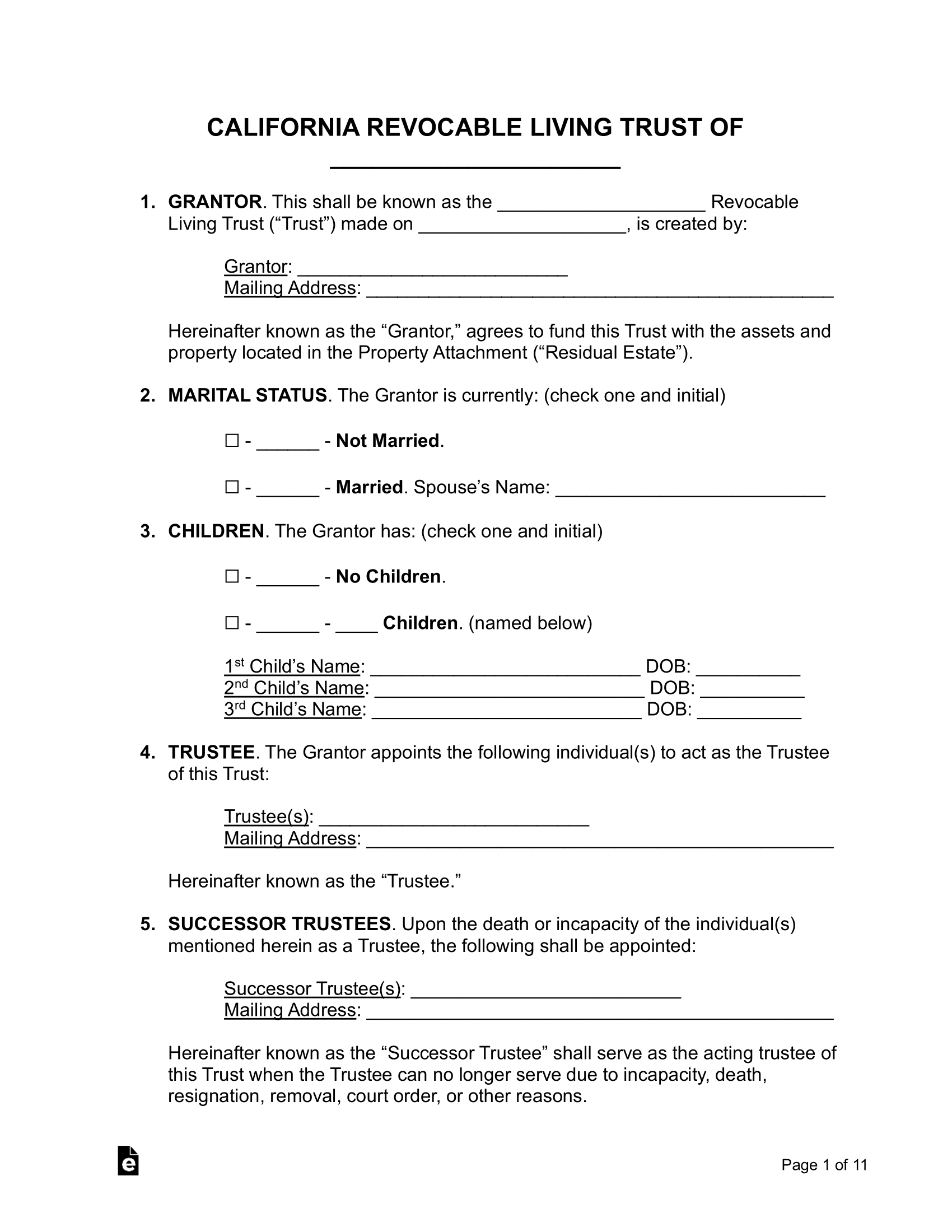
California Revocable Living Trust Form
Full Conversation
My niece wants her inheritance now. My trust says she will get 25% of what is in a bank account. I will give it to her. I am in California—can I just draw a line through that part of the trust and initial it with a date?
Lexi, Chatbot
Have you consulted with a lawyer about making changes to your trust before?
Yes, when my husband died.
Lexi, Chatbot
Are there any specific conditions in the trust about amendments or modifications?
Not that I know of.
Lexi, Chatbot
Anything else the lawyer should know before I connect you?
Not sure.
Andres Sanchez
Hello, my name is Andres Sanchez and I am an attorney with 20 years of experience. How are you?
Okay. My niece is dying and needs the money for hospice. I sent her $26,000. She wouldn’t have asked me if she didn’t really need it.
Andres Sanchez
No—you cannot just cross out and initial part of your trust in California if you want the change to be legally binding. You must either follow the amendment procedure in your trust (usually a written, signed—often notarized—amendment) or meet California’s formal requirements (Haggerty v. Thornton, 15 Cal.5th 729 (Cal. 2024)). If you simply strike through and initial, a court or successor trustee could treat the change as invalid and the original 25% gift could still control.
Proper approach:
- Review the trust’s amendment clause.
- Prepare and sign a formal amendment (§§15401–15402).
- Keep it with the trust and share with the trustee/your estate attorney.
If you want to give money now but keep the trust as-is, document the payment as an “advancement” so it reduces her future share. I can provide sample language for (1) an amendment or (2) an advancement acknowledgment.
So, you can absolutely help her now—just protect against future confusion. Two options:
- If the $26,000 is an advance on her 25% share, do a short trust amendment reducing her gift by that amount (signed/notarized), or have her sign an Advancement Acknowledgment confirming the $26,000 will be deducted from her share.
- If you intend the $26,000 to replace her inheritance (i.e., she receives nothing more), you must amend the trust to change or remove her 25% gift.
So, I need to go to the attorney and get the paperwork done. Thank you so much. I will do that. He charges $500/hour and I was hoping to spare that fee, but I want to keep things simple for my kids. I can also just keep funds low in that account. I am 91, so it’s a race to the grave for her and me.
Andres Sanchez
You’re welcome. I hope everything works out for you.
15
6
Answered 4 days ago
Disclaimer
By messaging AskaLawyer.com, you agree to our Terms and have read our Privacy Policy.
The information provided on AskaLawyer.com is for general informational purposes only and does not constitute legal advice. While we strive to ensure the accuracy and timeliness of the information presented, we make no guarantees regarding its completeness or applicability to your specific circumstances.
Use of this website does not create an attorney-client relationship between you and AskaLawyer.com or any of its attorneys. Communications through this website, including any responses from attorneys, are not privileged or confidential. For advice tailored to your individual situation, we recommend consulting a licensed attorney in your jurisdiction.
AskaLawyer.com disclaims any liability for actions taken or not taken based on the content of this site. We are not responsible for any third-party content that may be accessed through this website. Reliance on any information provided herein is solely at your own risk.