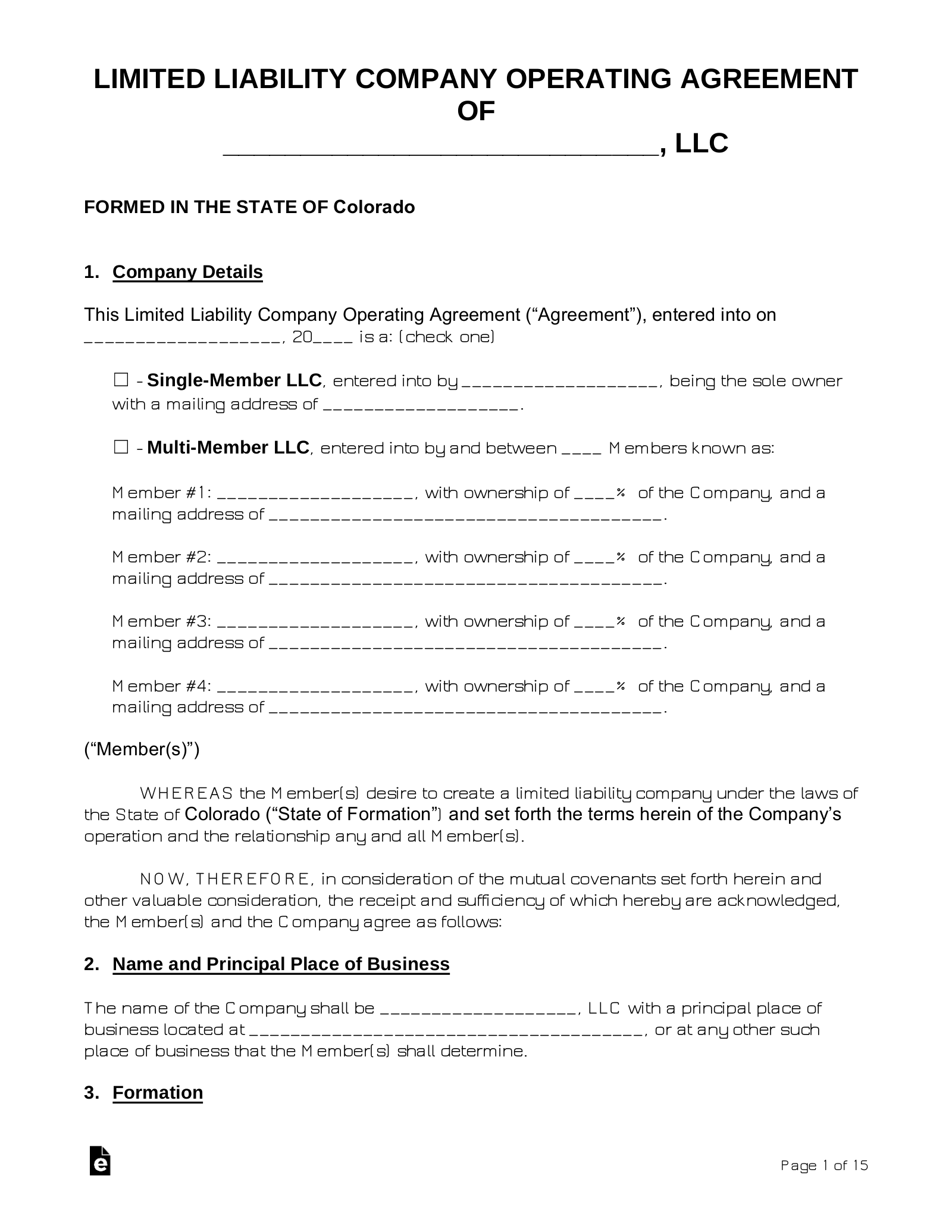
[CO] [CO] How can I protect my LLC from partners’ spouses?
In Colorado, it’s absolutely possible—and smart—to include specific terms in your multi-member LLC’s operating agreement to control what happens to a member’s ownership interest if they pass away or get divorced.
This can help prevent a member’s spouse from ever becoming an owner in the business, which is often a key concern in closely held companies.
Since your LLC is taxed as an S-Corp and already has an operating agreement in place, you’re off to a strong start. The operating agreement is the backbone of your company’s structure, and it can be customized to include protections around ownership transfers.
For example, if a member dies, the agreement can include a buy-sell provision. This would give the remaining members—or the LLC itself—the right or obligation to buy the deceased member’s interest.
The agreement would set the terms for how the interest is valued and paid for, so that the deceased member’s estate (which could include their spouse) receives the value of the share without ever actually becoming a part-owner of the company. This is a common and effective way to keep membership within the intended group.
0
LLC Operating Agreement
Full Conversation
Would I be able to add a clause so that if one of the members passes away or gets divorced, the spouse is not entitled to any part of the company?
I understand that you're concerned about protecting your company's interests in the event of a member's passing or divorce. Can you tell me what type of business entity you are operating?
A multi-member LLC registered as an S-Corp.
Have you already established any agreements or contracts among the members regarding ownership and succession?
Yes, we have the operating agreement.
Is there anything else the lawyer should know before I connect you? Rest assured they'll be able to help with your operating agreement.
Not at this time.
Hello and thank you for reaching out! I’m Jon, a licensed attorney with over 13 years of experience, and I’m here to help.
I know legal matters can feel overwhelming, but you're in good hands. I’ll do my best to make things clear and provide you with the guidance you need. Let’s work together to find the right solution for your situation.
You want to write that into the governing documents of the company?
Yes, that is correct—add a clause to the operating agreement.
And what state is the company formed in?
Colorado.
Understood! I think I have all the information I need, but is there anything else you'd like to add before I get started on your answer? If not, I'll start working on a response for you right away.
That will be all.
Got it. I just need a few minutes to finish typing out a complete response for you. It won’t take long.
In Colorado, it’s absolutely possible—and smart—to include specific terms in your multi-member LLC’s operating agreement to control what happens to a member’s ownership interest if they pass away or get divorced.
This can help prevent a member’s spouse from ever becoming an owner in the business, which is often a key concern in closely held companies.
Since your LLC is taxed as an S-Corp and already has an operating agreement in place, you’re off to a strong start. The operating agreement is the backbone of your company’s structure, and it can be customized to include protections around ownership transfers.
For example, if a member dies, the agreement can include a buy-sell provision. This would give the remaining members—or the LLC itself—the right or obligation to buy the deceased member’s interest.
The agreement would set the terms for how the interest is valued and paid for, so that the deceased member’s estate (which could include their spouse) receives the value of the share without ever actually becoming a part-owner of the company. This is a common and effective way to keep membership within the intended group.
You can also trigger a buyout clause in the event of divorce, ensuring the divorcing member is bought out and the spouse is compensated financially rather than gaining a stake in the business.
While it’s not required by law, having spouses sign a written acknowledgment of the agreement’s terms can further protect the business. Prenups and postnups can also help ensure LLC interests are treated as separate property.
There are a few key things to get right when putting these protections in place. You’ll want a clear, fair method to value a member’s interest, since disputes often come down to money. You’ll also need a plan for how to fund the buyout—whether that’s life insurance, installment payments, or company funds.
And while your agreement is strong, a Colorado divorce court can still factor the LLC interest into the broader division of assets. The good news is that the S-Corp status doesn’t interfere with these protections, though it’s wise to keep eligibility rules in mind as you plan.
Ok, thank you.
That will be all.
Great! I hope the information I provided was helpful and addressed your question. If there's anything else you need, please don't hesitate to reach out—I’m always happy to assist. Wishing you a fantastic day ahead!
13
3
Answered 2 days ago
27
10
Answered 1 week ago
Disclaimer
By messaging AskaLawyer.com, you agree to our Terms and have read our Privacy Policy.
The information provided on AskaLawyer.com is for general informational purposes only and does not constitute legal advice. While we strive to ensure the accuracy and timeliness of the information presented, we make no guarantees regarding its completeness or applicability to your specific circumstances.
Use of this website does not create an attorney-client relationship between you and AskaLawyer.com or any of its attorneys. Communications through this website, including any responses from attorneys, are not privileged or confidential. For advice tailored to your individual situation, we recommend consulting a licensed attorney in your jurisdiction.
AskaLawyer.com disclaims any liability for actions taken or not taken based on the content of this site. We are not responsible for any third-party content that may be accessed through this website. Reliance on any information provided herein is solely at your own risk.