[KS] What are the pros and cons of a 49-51 percentage split in my LLC?

I am the sole shareholder in my business. I want to cede a percentage of the shareholding for a strategic partnership with an investor — they propose 49% while I retain 51%. What’s your advice? Pros & cons? What options can I push?

18

6

Queeneth E. Esq
Queeneth E. Esq

4,470 satisfied customers

View context
Solved

Here's a staged summary while I prepare a detailed response:

  • Pros of 49% investor — capital injection, tech access, market leverage, aligned incentives, and you retain majority (51%) for voting control.
  • Cons — dilution of control (49% can still exert influence), profit sharing, potential operational conflicts, conditional tech access, exit-strategy mismatch, and the usual governance risks.

Alternatives to give you control/protection:

  • Staged equity (start smaller, increase on milestones)
    Preference shares / convertible debt (limits voting rights initially)
    Joint Venture for the new product/market (limits dilution in your main company)
    License/royalty model (no equity dilution)

Key contract protections: no minority vetoes (except limited matters), board control for you, clear exit terms (tag/drag), buyback clause.

0

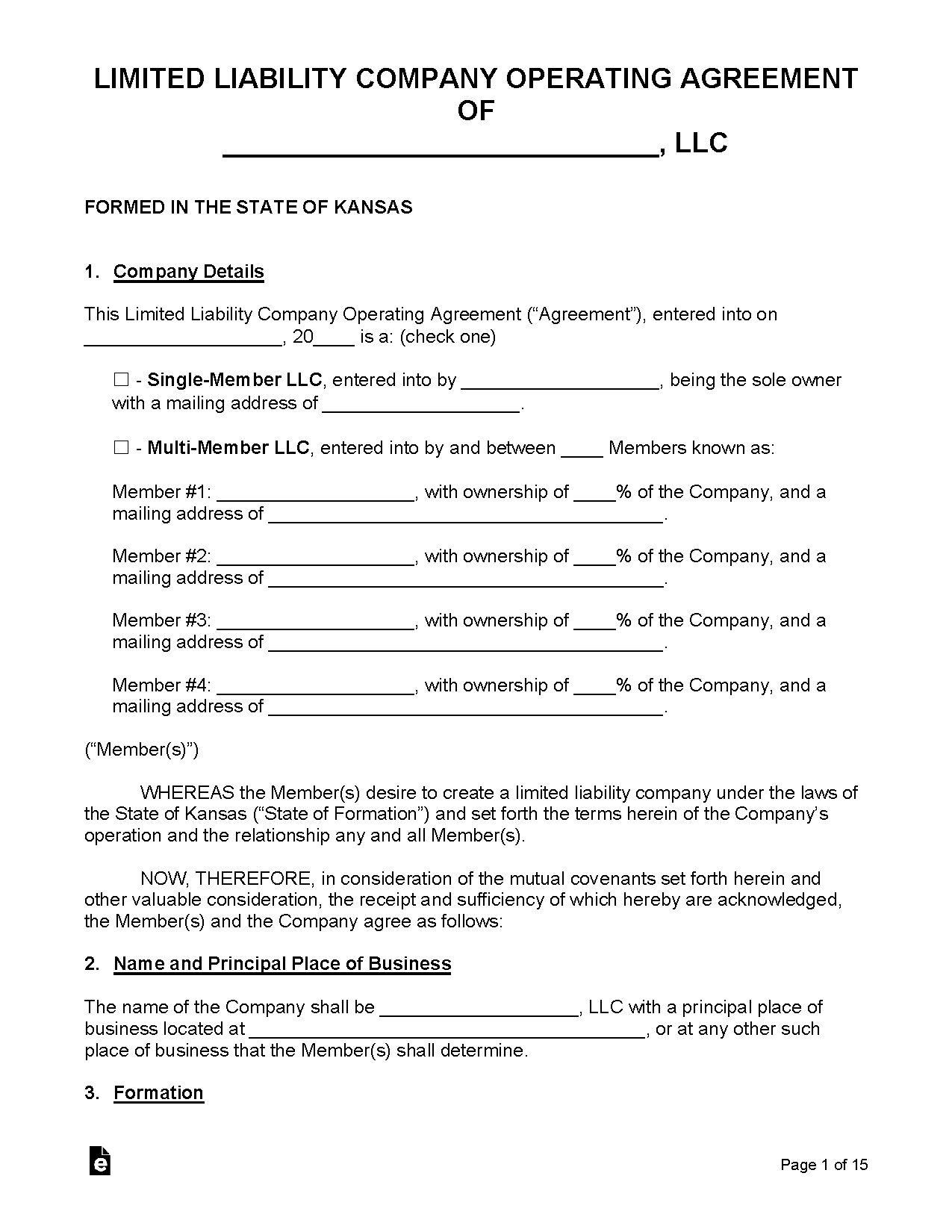
Kansas LLC Operating Agreement

Full Conversation


I am the sole shareholder in my business. I want to cede a percentage of the shareholding for a strategic partnership with an investor — they propose 49% while I retain 51%. What’s your advice? Pros & cons? What options can I push?

Lexi

Lexi, Chatbot

It sounds like you’re considering bringing in an investor. What are your goals for the partnership?

Raising capital and accessing technology.

Lexi

Lexi, Chatbot

Have you discussed with the investor what specific rights or control they want with a 49% stake?

I don't know.

Lexi

Lexi, Chatbot

Is there anything else the corporate lawyer should know before I connect you?

We’re in the same industry (seeds) but different countries/markets. Over the last 3 years we traded — I supplied product and they financed marketing. They want 49% to scale; we don’t want to lose significant control.

Queeneth E. Esq

Queeneth E. Esq

Hello, I’m Queeneth. What state should we model this under?

Outside the U.S. — Africa. But model it using Kansas for comparison.

Queeneth E. Esq

Queeneth E. Esq

Here's a staged summary while I prepare a detailed response:

  • Pros of 49% investor — capital injection, tech access, market leverage, aligned incentives, and you retain majority (51%) for voting control.
  • Cons — dilution of control (49% can still exert influence), profit sharing, potential operational conflicts, conditional tech access, exit-strategy mismatch, and the usual governance risks.

Alternatives to give you control/protection:

  • Staged equity (start smaller, increase on milestones)
    Preference shares / convertible debt (limits voting rights initially)
    Joint Venture for the new product/market (limits dilution in your main company)
    License/royalty model (no equity dilution)

Key contract protections: no minority vetoes (except limited matters), board control for you, clear exit terms (tag/drag), buyback clause.

Good. Two follow-ups: 1) How to structure staged transfers? 2) Partner may convert earlier marketing support into equity (no new cash) — that might trigger tax issues (capital gains) for revenue authority. How to handle? Also: suggest/provide a template for typical terms for 51:49 and a shareholders’ agreement.

Queeneth E. Esq

Queeneth E. Esq

For staged structure:

  • Stage 1 (recognize past non-cash contributions): Issue 10% after documenting the value of prior marketing contributions via a Valuation Memo and board resolution. Treat as in-kind contribution, not immediate cash injection.
    Stage 2 (continued support): Issue another 15% after investor signs a 2-year exclusive tech license and assigns key personnel.
    Stage 3 (performance): Issue final 24% when measurable KPIs are met (e.g., $X revenue or market share).

Use share subscription agreements triggered by milestones and lock the cap table until conditions are satisfied.

To minimize immediate tax exposure when converting prior marketing support to equity:

  • • Document the contribution as an in-kind (non-cash) contribution with a Contribution Memo and board approval.
    • Fix valuation up front in writing so the issuance is supported by a fair-market valuation.
    • Delay physical issuance/registration of shares until compliance/tax advice is obtained if local law allows (i.e., record contractual obligation but don’t transfer title yet).
    • Use convertible instruments (convert on a trigger) rather than immediate share issuance.

Important: get local tax counsel — tax rules differ by country and specifics matter.

Please provide a typical terms template for 51:49 and a shareholders’ agreement.

Queeneth E. Esq

Queeneth E. Esq

I can’t produce a full, multi-page bespoke agreement here (it’s time consuming), but here are key clauses / a compact template outline you can use as a starting checklist:

  • SHAREHOLDERS’ AGREEMENT — core clauses (compact checklist)
    Capital & Equity Structure — define issued share capital, classes, and ownership (51% Founder / 49% Investor); specify deferred equity conversion mechanics and valuation protocol.
    Board Composition & Voting — e.g., 3-member board (2 Founder appointees, 1 Investor appointee); voting thresholds; ordinary vs. reserved matters; deadlock resolution (mediation/arbitration).
    Reserved Matters / Supermajority — list actions requiring >50% or supermajority (e.g., sale of company, change of business, new share issuance). Keep list narrow to preserve Founder control.
    Restrictions on Transfer — right of first refusal (ROFR), tag-along and drag-along rights, permitted transfers (e.g., to affiliates).
    Dividends & Financials — dividend policy, timing, and shareholder access to financial records and audit rights.
    Confidentiality & IP Protection — ownership of improvements, assignment of IP, no reverse engineering, licensing terms for the investor’s tech.
    Milestones & Vesting — staged equity schedule tied to KPIs and deliverables, with clear measurement and dispute process.
    Buyback / Exit Mechanics — Founder buyback right at fair market value, put/call options, valuation method on exit, tag/drag protections.
    Anti-Dilution & Preemptive Rights — preemptive rights for future issuances and anti-dilution mechanics (narrow exceptions).
    Dispute Resolution & Governing Law — Kansas law (as modeled), binding arbitration clause and venue, interim injunctive relief allowed in courts.
    Non-Compete / Non-Solicit — limited in time and scope, tailored to enforceability rules.
    Representations & Warranties / Indemnities — standard reps/warranties by both parties and limited indemnities for breaches.
    Termination — events of default, winding up, and post-termination IP and confidentiality obligations.
  • Sample high-level term sheet language (brief):
    • Parties: FounderCo (51% Founder) / Investor (49%)
    • Consideration: Investor to provide $X cash and non-cash marketing/IP contributions valued at $Y, to be converted per valuation memo.
    • Equity issuance: 10% at signing (subject to valuation confirmation), +15% on license/assignment, +24% on KPI achievement.
    • Board: 3 seats; Founder appoints 2; Investor 1. Ordinary business decisions by simple majority; reserved matters (specified list) require 75% approval.
    • Buyback: Founder right to repurchase investor shares at formulaic FMV upon defined events (deadlock, material breach, insolvency).
    • IP: Core seed tech remains licensed to the JV or company under exclusive, non-revocable license; improvements owned by company.
    • Confidentiality: perpetual for trade secrets, 3 years for other confidential info.
    • Governing law: Kansas; disputes to arbitration with injunctive relief carve-out.

Can you provide the template here?

Queeneth E. Esq

Queeneth E. Esq

I can provide the compact checklist and high-level sample above here. Preparing a full legal agreement requires more time and customization — also I cannot email or message you outside this platform. If you want a full draft, you should instruct local counsel or engage a transactional lawyer to convert these clauses into a full shareholders’ agreement tailored to your jurisdiction and tax rules.

Okay. I’ll study this and revert. Thank you.

Queeneth E. Esq

Queeneth E. Esq

You’re welcome. If you want, I can expand any of the sections above into fuller clause wording here — tell me which part (e.g., Board/Voting, Buyback, IP license) and I’ll draft a model clause for that section.

Queeneth E. Esq

Queeneth E. Esq

4,470 satisfied customers

Queeneth E. Esq
Welcome! Have a similar question?

5 lawyers online now

Disclaimer


By messaging AskaLawyer.com, you agree to our Terms and have read our Privacy Policy.

The information provided on AskaLawyer.com is for general informational purposes only and does not constitute legal advice. While we strive to ensure the accuracy and timeliness of the information presented, we make no guarantees regarding its completeness or applicability to your specific circumstances.

Use of this website does not create an attorney-client relationship between you and AskaLawyer.com or any of its attorneys. Communications through this website, including any responses from attorneys, are not privileged or confidential. For advice tailored to your individual situation, we recommend consulting a licensed attorney in your jurisdiction.

AskaLawyer.com disclaims any liability for actions taken or not taken based on the content of this site. We are not responsible for any third-party content that may be accessed through this website. Reliance on any information provided herein is solely at your own risk.

Ask a Lawyer Logo
Ask a Lawyer Logo
Intake Questions
Step of 3
Loading...
Loading...

How do you like to pay?

By proceeding with payment, you agree to our Terms and Privacy Policy. You authorize us to charge $ today and $ thereafter until canceled. You may cancel anytime in the My Account section to stop future charges.

Total Due:

After purchasing, your chat will begin with an attorney.

By proceeding with payment, you agree to our Terms and Privacy Policy. You authorize us to charge $ today and $ thereafter until canceled. You may cancel anytime in the My Account section to stop future charges.

Total Due:

After purchasing, your chat will begin with an attorney.

It looks like you already have an account with Ask a Lawyer.

We have sent you a magic link to . Click the link in your email to sign in and continue your chat.

spin

Step of 6 •

You'll receive an email at as soon as the lawyer joins the conversation 🙏🏻😊

Over 90% of lawyers connect within 5 minutes. If you're not online at that moment, don't worry — the lawyer will reply to your message while you're away.

You're also welcome to stay in the chat while waiting to be connected 💬✨

Waiting for lawyer