[NC] Can a single-member LLC provide liability protection?
What you’re trying to do is very common among content creators and business owners. To answer your core question:
No — the LLC does not need to be multi-member to provide liability protection for copyright ownership. A single-member LLC (SMLLC) in North Carolina still functions as a separate legal entity and can hold and manage copyright assets with limited liability protection (N.C. Gen. Stat. § 57D-2-01). A few important caveats and best practices:
Single-Member LLCs and liability protection
- Courts may be more willing to “pierce the corporate veil” if you don’t clearly separate personal and business affairs. To minimize that risk:
- Maintain a separate business bank account.
- Sign contracts and IP assignments in the LLC’s name.
- Keep clean accounting records and minutes, even if informal.
Transferring copyright ownership
- Use a written copyright assignment agreement.
- The assignment must be signed by the current copyright owner (you) and clearly describe the work(s) being transferred.
- After transfer, record the assignment with the U.S. Copyright Office using Form CA. Recording isn’t required but provides public notice and can strengthen enforcement in court.
Use of a trust and trust bank account
- You can add a trust for added protection/privacy/estate planning:
- Have a trust own the LLC, or have the trust be the LLC’s member from formation.
- Simply using a “trust bank account” without legally forming and funding a trust and assigning ownership won’t provide meaningful protection.
Tax and estate planning considerations
- Consider IRS classification (disregarded entity vs. partnership vs. S corp).
- Make sure transfers between individuals, LLCs, and trusts are documented in writing.
I recommend speaking with a local attorney or CPA experienced in intellectual property and business formation to ensure everything is done correctly under North Carolina law.
0
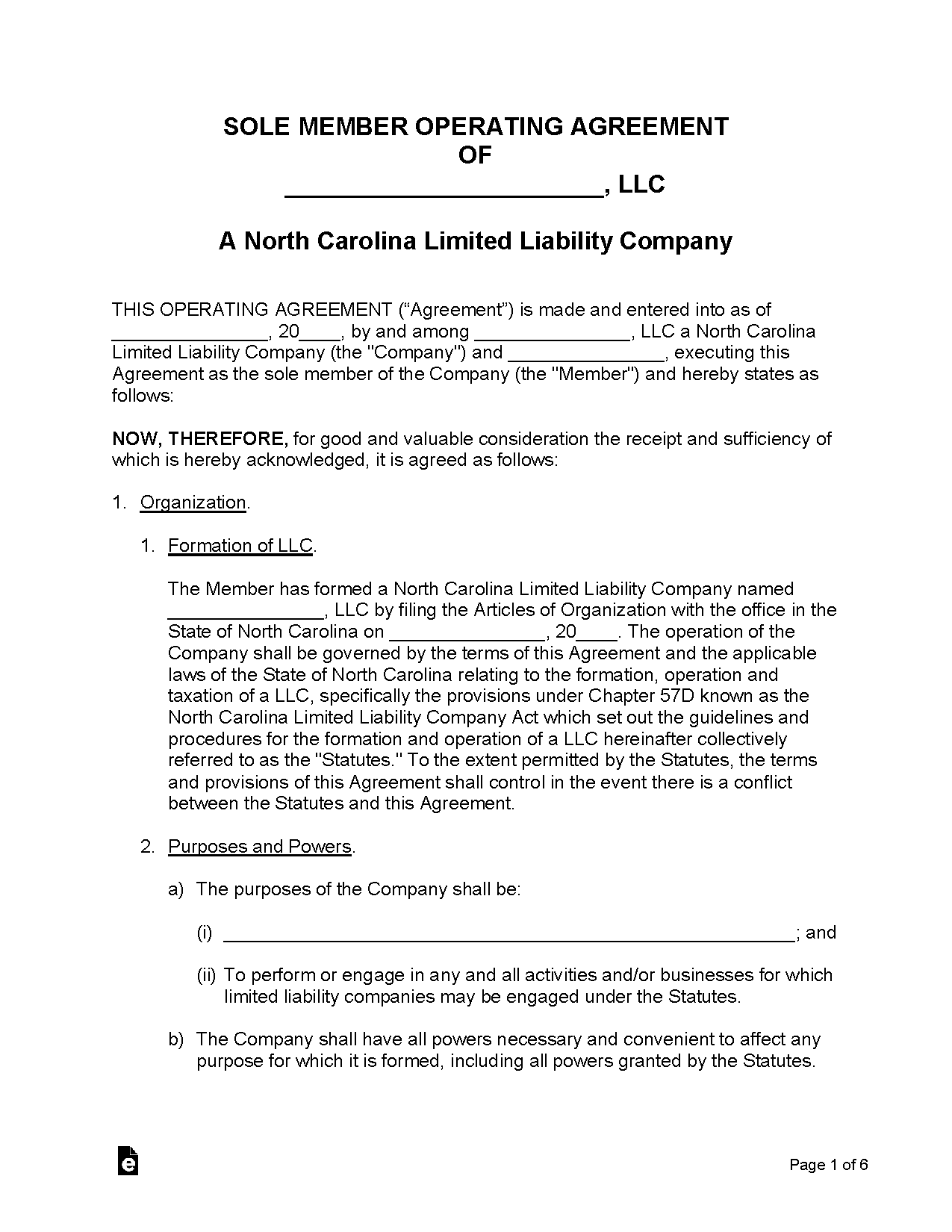
North Carolina LLC Operating Agreement
Full Conversation
Does the LLC I will form to transfer copyright ownership need to be a multi-owner LLC to protect against liability?
Lexi, Chatbot
I understand your concern. Are you looking to transfer the copyright ownership to the LLC for liability protection purposes?
Yes — and if needed, use a trust/banking account as further protection.
Lexi, Chatbot
Have you already consulted with a lawyer regarding the formation of the LLC and the transfer of copyright ownership?
No. I consulted the internet and began using Google Forms for transferring the ownership from my name to the newly formed LLC.
Lexi, Chatbot
Is there anything else the lawyer should know before I connect you?
I don't know.
Blake
Hello, my name is Blake, and I am a licensed attorney — I will be happy to help you today! First, how long ago did this happen, and where was it located?
I live in and operate from North Carolina.
Blake
What you’re trying to do is very common among content creators and business owners. To answer your core question:
No — the LLC does not need to be multi-member to provide liability protection for copyright ownership. A single-member LLC (SMLLC) in North Carolina still functions as a separate legal entity and can hold and manage copyright assets with limited liability protection (N.C. Gen. Stat. § 57D-2-01). A few important caveats and best practices:
Single-Member LLCs and liability protection
- Courts may be more willing to “pierce the corporate veil” if you don’t clearly separate personal and business affairs. To minimize that risk:
- Maintain a separate business bank account.
- Sign contracts and IP assignments in the LLC’s name.
- Keep clean accounting records and minutes, even if informal.
Transferring copyright ownership
- Use a written copyright assignment agreement.
- The assignment must be signed by the current copyright owner (you) and clearly describe the work(s) being transferred.
- After transfer, record the assignment with the U.S. Copyright Office using Form CA. Recording isn’t required but provides public notice and can strengthen enforcement in court.
Use of a trust and trust bank account
- You can add a trust for added protection/privacy/estate planning:
- Have a trust own the LLC, or have the trust be the LLC’s member from formation.
- Simply using a “trust bank account” without legally forming and funding a trust and assigning ownership won’t provide meaningful protection.
Tax and estate planning considerations
- Consider IRS classification (disregarded entity vs. partnership vs. S corp).
- Make sure transfers between individuals, LLCs, and trusts are documented in writing.
I recommend speaking with a local attorney or CPA experienced in intellectual property and business formation to ensure everything is done correctly under North Carolina law.
I understand, and yes, this is the information I need. Can I copy your statements from this page?
Blake
Yes — you may absolutely copy and use the information provided here for your personal reference and planning purposes. I’m glad it helped. Just remember this is general guidance; for specific legal drafting and to make sure your LLC/trust structure meets your goals and complies with federal and North Carolina law, have a local attorney review it.
Disclaimer
By messaging AskaLawyer.com, you agree to our Terms and have read our Privacy Policy.
The information provided on AskaLawyer.com is for general informational purposes only and does not constitute legal advice. While we strive to ensure the accuracy and timeliness of the information presented, we make no guarantees regarding its completeness or applicability to your specific circumstances.
Use of this website does not create an attorney-client relationship between you and AskaLawyer.com or any of its attorneys. Communications through this website, including any responses from attorneys, are not privileged or confidential. For advice tailored to your individual situation, we recommend consulting a licensed attorney in your jurisdiction.
AskaLawyer.com disclaims any liability for actions taken or not taken based on the content of this site. We are not responsible for any third-party content that may be accessed through this website. Reliance on any information provided herein is solely at your own risk.