[FL] How do I define votes in an operating agreement?

I have a question. My operating agreement says that amendments must be by "equal vote." There are three holders: two persons and a company. So the company gets one vote, correct?

14

4

Chris Fried
Chris Fried

5,974 satisfied customers

View context
Solved

I see the issue. Because Section 3(b) specifically governs amendments, it likely overrides the general voting rule in Section 4 for amendments. The word "equal" is ambiguous: it could mean one vote per member (regardless of ownership) or something else. That ambiguity creates risk of litigation.

If read literally, Section 3(b) = one vote per member for amendments (so Members 1 and 2 could out-vote the 65% owner if they both agree).

But Section 4 pushes a contrary interpretation (proportional voting). The conflict makes the clause unclear and litigable.

To remove the ambiguity, you should either:

  1. Amend Section 3(b) to explicitly adopt proportional voting (tie to Section 4), e.g.:
    “For voting under Section 3(B), votes shall be counted in proportion to each Member’s ownership as set forth in Section 4.”
    — or—
  2. Keep 3(b) as one-member/one-vote, but then modify Section 4 to carve out amendments, making the document internally consistent.

If you want amendments to be based on ownership %, eliminate the phrase “equal vote” and replace it with language referencing Section 4.

The agreement requires that after a successful vote, approving members must sign the amendment and attach it. Email can be used to propose and record consent, but you should ensure:

  • Your agreement contains an electronic signatures/consent clause (Florida Statutes § 668.004), and
  • Final, executed amendments are signed (wet or electronic signature) and attached as required.

Given the ambiguity and potential for dispute, I recommend using a local Florida transactional business attorney to prepare a clear amendment and manage the voting/signatures to reduce litigation risk.

0

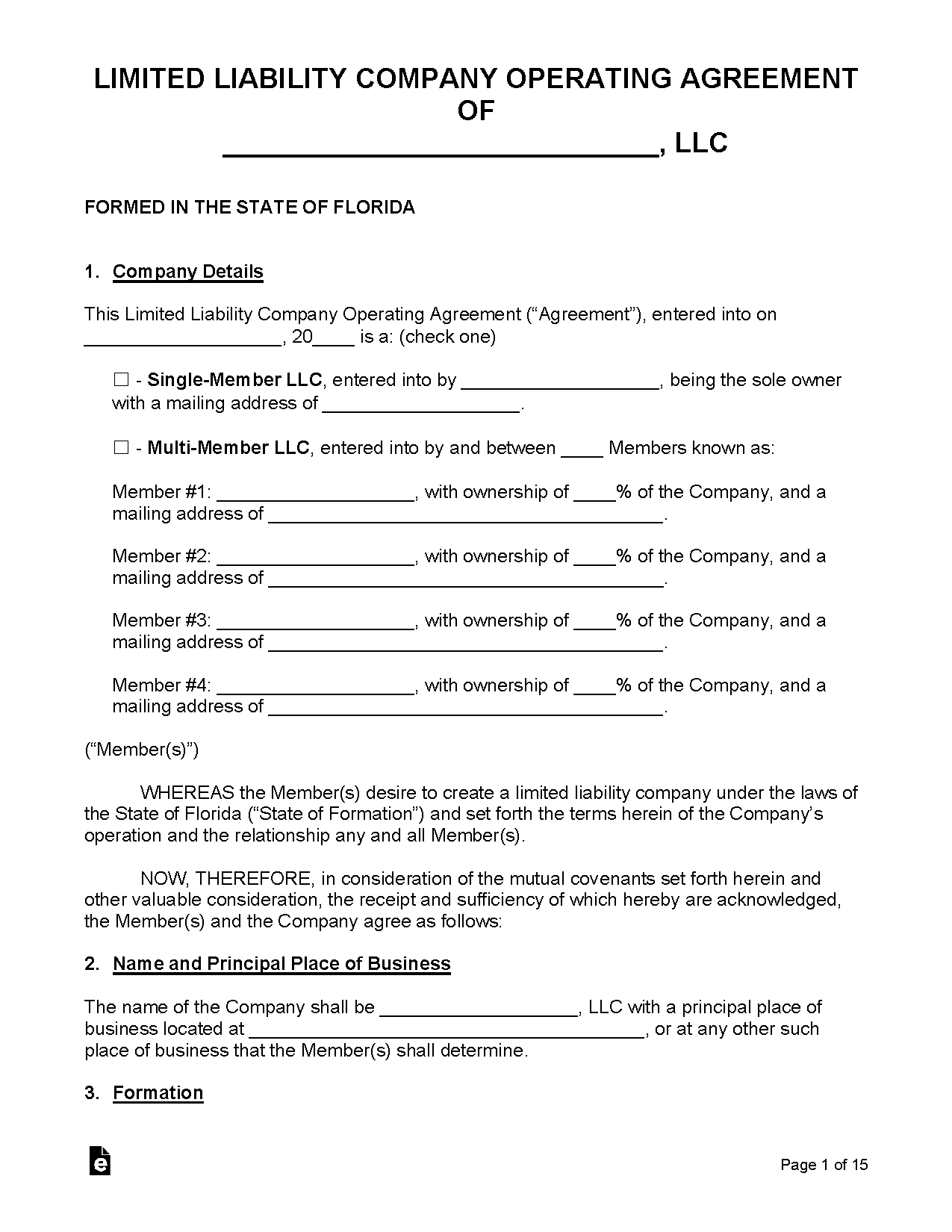
Florida LLC Operating Agreement

Full Conversation


I have a question. My operating agreement says that amendments must be by "equal vote." There are three holders: two persons and a company. So the company gets one vote, correct?

Lexi

Lexi, Chatbot

I understand. Are you asking whether the company is entitled to one vote for amendments?

Yes.

Lexi

Lexi, Chatbot

Does the operating agreement explicitly say the company is allocated one vote, or is voting based on ownership percentage?

It doesn't say the company is allocated one vote. It just says amendments require an "equal vote" and there are three of us — two persons and one company representing one member.

Lexi

Lexi, Chatbot

Anything else before I connect you with a lawyer?

Yes — can we send amendments by email and vote by email with each person replying yes or no?

Chris Fried

Chris Fried

Good afternoon — my name is Chris. I'm an attorney. Although we do not have an attorney-client relationship, I am here to assist you. 

Thanks. I have an Operating Agreement I made myself. There are three of us, and the agreement has a contradiction:

  • Section 3, Part B explicitly states amendments require an equal vote (all members have the same voting power, regardless of ownership).
  • Sections 3 A, C, D specify other decisions are by majority vote.
  • Section 4 says votes are proportional to ownership.

So Section 3(b) (equal vote) conflicts with Section 4 (proportional vote). Which rule controls for amendments?

 I will send the agreement now.

3. VOTING REQUIREMENTS.
a.) Business Decisions. Business decisions related to the Company’s activities, finances, and management shall be made by majority decision by the Members.
b.) Amending this Agreement. Any amendments to this Agreement shall be made by: Equal vote
c.) Adding New Members. Adding new Members to this Company shall be made by majority decision by the Members.
d.) Withdrawing Members. To allow Members to withdraw shall be made by majority decision by the Members.

4. VOTING RIGHTS. When votes are cast by Members as required under Section 3, or for any decision regarding the Company, each Member’s vote shall be counted in proportion to their ownership of the Company.

2. MEMBERS. The Company is formed with the following Members:
1st Member — Ownership: 15%
2nd Member — Ownership: 20%
3rd Member — Ownership: 65%

25. MISCELLANEOUS.
a.) Amendments. Any amendment to this Agreement must be agreed to in accordance with the Voting Requirements in Section 3(b). After a successful vote, the approving Members must sign the amendment and attach it to this Agreement.

Chris Fried

Chris Fried

I see the issue. Because Section 3(b) specifically governs amendments, it likely overrides the general voting rule in Section 4 for amendments. The word "equal" is ambiguous: it could mean one vote per member (regardless of ownership) or something else. That ambiguity creates risk of litigation.

If read literally, Section 3(b) = one vote per member for amendments (so Members 1 and 2 could out-vote the 65% owner if they both agree).

But Section 4 pushes a contrary interpretation (proportional voting). The conflict makes the clause unclear and litigable.

To remove the ambiguity, you should either:

  1. Amend Section 3(b) to explicitly adopt proportional voting (tie to Section 4), e.g.:
    “For voting under Section 3(B), votes shall be counted in proportion to each Member’s ownership as set forth in Section 4.”
    — or—
  2. Keep 3(b) as one-member/one-vote, but then modify Section 4 to carve out amendments, making the document internally consistent.

If you want amendments to be based on ownership %, eliminate the phrase “equal vote” and replace it with language referencing Section 4.

The agreement requires that after a successful vote, approving members must sign the amendment and attach it. Email can be used to propose and record consent, but you should ensure:

  • Your agreement contains an electronic signatures/consent clause (Florida Statutes § 668.004), and
  • Final, executed amendments are signed (wet or electronic signature) and attached as required.

Given the ambiguity and potential for dispute, I recommend using a local Florida transactional business attorney to prepare a clear amendment and manage the voting/signatures to reduce litigation risk.

I would eliminate "equal vote" and replace it with "By the method listed under Section 4." Can you help us as our lawyer to draft and guide the amendment and voting process?

Chris Fried

Chris Fried

I can explain options and draft proposed amendment language, but because you're in Florida, it's best to retain a local Florida transactional/business attorney who can form the attorney-client relationship and represent you if litigation arises.

Okay, thank you very much for your help.

Chris Fried

Chris Fried

You're welcome.

Chris Fried

Chris Fried

5,974 satisfied customers

Chris Fried
Welcome! Have a similar question?

5 lawyers online now

Disclaimer


By messaging AskaLawyer.com, you agree to our Terms and have read our Privacy Policy.

The information provided on AskaLawyer.com is for general informational purposes only and does not constitute legal advice. While we strive to ensure the accuracy and timeliness of the information presented, we make no guarantees regarding its completeness or applicability to your specific circumstances.

Use of this website does not create an attorney-client relationship between you and AskaLawyer.com or any of its attorneys. Communications through this website, including any responses from attorneys, are not privileged or confidential. For advice tailored to your individual situation, we recommend consulting a licensed attorney in your jurisdiction.

AskaLawyer.com disclaims any liability for actions taken or not taken based on the content of this site. We are not responsible for any third-party content that may be accessed through this website. Reliance on any information provided herein is solely at your own risk.

Ask a Lawyer Logo
Ask a Lawyer Logo
Intake Questions
Step of 3
Loading...
Loading...

How do you like to pay?

By proceeding with payment, you agree to our Terms and Privacy Policy. You authorize us to charge $ today and $ thereafter until canceled. You may cancel anytime in the My Account section to stop future charges.

Total Due:

After purchasing, your chat will begin with an attorney.

By proceeding with payment, you agree to our Terms and Privacy Policy. You authorize us to charge $ today and $ thereafter until canceled. You may cancel anytime in the My Account section to stop future charges.

Total Due:

After purchasing, your chat will begin with an attorney.

It looks like you already have an account with Ask a Lawyer.

We have sent you a magic link to . Click the link in your email to sign in and continue your chat.

spin

Step of 6 •

You'll receive an email at as soon as the lawyer joins the conversation 🙏🏻😊

Over 90% of lawyers connect within 5 minutes. If you're not online at that moment, don't worry — the lawyer will reply to your message while you're away.

You're also welcome to stay in the chat while waiting to be connected 💬✨

Waiting for lawyer