Can a divorce application be modified after it is submitted if one of the spouses does not agree to modify it?

Can a divorce application be modified after it is submitted if one of the spouses does not agree to modify it?

12

4

Angelo M
Angelo M

14,444 satisfied customers

View context
Solved

When it comes to modifying a divorce application after it has been submitted, the process can definitely become complicated, especially if one spouse does not agree to the changes.

Generally speaking, a divorce application or petition is a legal document filed with the court to begin the divorce process, and once it’s filed, changing its terms usually requires either the consent of both parties or a court’s intervention. If one spouse objects to a modification, the other spouse typically must file a formal motion with the court requesting the change and provide a valid legal reason why the modification is necessary or justified.

The court will then review the circumstances, consider factors such as fairness, any changes in situation since the initial filing, and the best interests of any children involved before deciding whether to allow the modification.

The key point here is that the court does not just rubber-stamp changes; it wants to ensure that any modifications are reasonable and do not unfairly prejudice one party. If the spouse opposing the modification simply feels it doesn’t benefit them, that alone may not be enough to block a change if the court finds a good cause to modify—but it does mean the moving party will face a hurdle to convince the judge.

On the other hand, if the divorce application hasn’t yet been filed, it might be easier to negotiate changes before submission, potentially avoiding conflict later on. But if the other spouse is unwilling to cooperate, you may need to rely on court proceedings to resolve the dispute.

The best course of action would usually involve consulting with a family law attorney who can assess the specific facts of your case, explain your options, and help prepare the necessary legal filings to pursue or contest a modification.

0

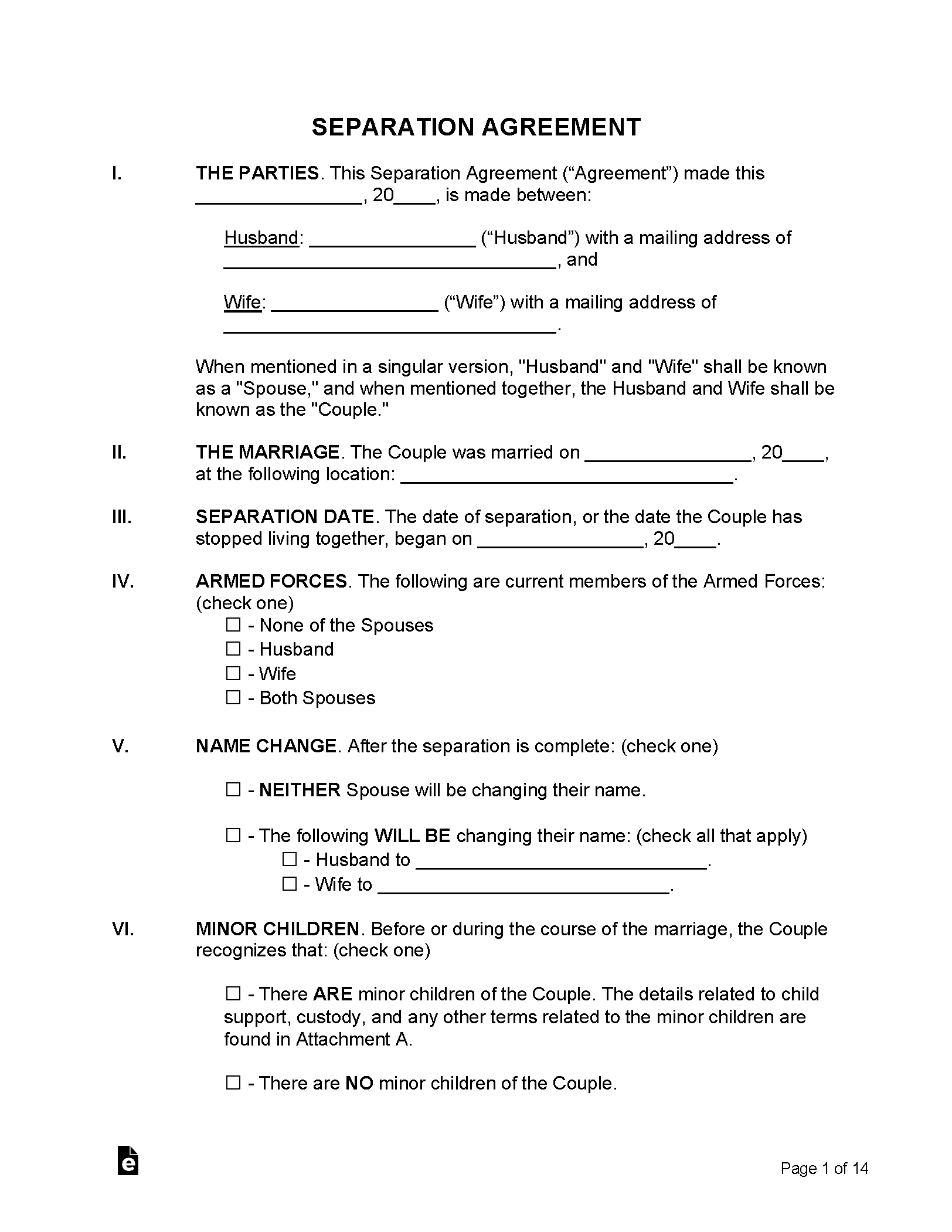
Marital Separation Agreement

Full Conversation


Can a divorce application be modified after it is submitted if one of the spouses does not agree to modify it?

Lexi

Lexi, Chatbot

I understand that modifying a divorce application can be a complex situation. Have you already submitted the divorce application?

No.

Lexi

Lexi, Chatbot

Are there specific reasons why one spouse does not agree to modify the application?

Yes. Because it does not benefit the disagreeing spouse.

Lexi

Lexi, Chatbot

Is there anything else the family lawyer should know before I connect you? Rest assured they’ll be able to help with modifying the divorce application.

No.

Angelo M

Angelo M

Greetings! I hope this message finds you well. I'm thrilled to have the opportunity to assist you with your situation and provide you with the support you need. Thank you for your patience, and I look forward to working with you.

Angelo M

Angelo M

When it comes to modifying a divorce application after it has been submitted, the process can definitely become complicated, especially if one spouse does not agree to the changes.

Generally speaking, a divorce application or petition is a legal document filed with the court to begin the divorce process, and once it’s filed, changing its terms usually requires either the consent of both parties or a court’s intervention. If one spouse objects to a modification, the other spouse typically must file a formal motion with the court requesting the change and provide a valid legal reason why the modification is necessary or justified.

The court will then review the circumstances, consider factors such as fairness, any changes in situation since the initial filing, and the best interests of any children involved before deciding whether to allow the modification.

The key point here is that the court does not just rubber-stamp changes; it wants to ensure that any modifications are reasonable and do not unfairly prejudice one party. If the spouse opposing the modification simply feels it doesn’t benefit them, that alone may not be enough to block a change if the court finds a good cause to modify—but it does mean the moving party will face a hurdle to convince the judge.

On the other hand, if the divorce application hasn’t yet been filed, it might be easier to negotiate changes before submission, potentially avoiding conflict later on. But if the other spouse is unwilling to cooperate, you may need to rely on court proceedings to resolve the dispute.

The best course of action would usually involve consulting with a family law attorney who can assess the specific facts of your case, explain your options, and help prepare the necessary legal filings to pursue or contest a modification.

Angelo M

Angelo M

I hope I was able to help you and answer all of your questions and concerns. Is there any part of my response that you need clarification on or any further information? Did you have any other questions on this subject for me today?

Can you give me an answer for this scenario: We agree that my wife keeps $100,000 in cash. I keep $100,000 in cryptocurrency value. After we sign and submit the application the value of the cryptocurrency doubles. So now the husband has $200,000 and due to that the wife now wants to modify the application. But the husband refuses. What would happen in this scenario?

Angelo M

Angelo M

That’s a great and very practical question, and it highlights the kind of issues that can arise when dividing assets during a divorce—especially with volatile assets like cryptocurrency.

In the scenario you described, where you and your wife agreed to divide assets based on their value at the time of signing and submitting the divorce application, but then the value of your cryptocurrency doubles afterward, the key question is how the divorce agreement or application addresses changes in asset values after signing.

Typically, courts look at the division of marital property based on its value as of a specific date—often the date of separation or the date the agreement is signed. If the agreement or court order doesn’t explicitly provide for adjustments based on fluctuations in asset values after that date, then the increased value of the cryptocurrency would generally belong to you as the owner, since you held it at the agreed time and its appreciation happened afterward.

The wife’s request to modify the application because the cryptocurrency doubled would likely be denied unless she can prove exceptional circumstances or that the original agreement was unfair or made under some sort of mistake or fraud.

Now, if your wife wants to modify the application to reflect the new value, and you refuse, she would have to file a motion with the court asking for modification. The court would then consider whether the change in value is a sufficient reason to reopen or adjust the agreement.

Courts are often reluctant to revisit financial terms once finalized unless there is a significant reason—like concealment of assets or fraud. Market fluctuations, especially with volatile assets, are usually seen as part of the risk each party assumes.

So, unless your divorce agreement includes language addressing future changes in asset values or there are extraordinary circumstances, the doubling of the cryptocurrency value after signing will probably remain with you. The wife’s ability to force a modification in this situation is limited.

That said, having clear terms in the agreement about how to handle asset value changes can avoid this kind of dispute.

Angelo M

Angelo M

14,444 satisfied customers

Criminal law, employment law, family law, landlord-tenant, and real estate law.

Angelo M
Welcome! Have a similar question?

5 lawyers online now

Jessica B
Jessica B

Attorney

4.75 (29,480)

How do I split a timeshare in a divorce?

12

3

Answered 3 days ago

Andres Sanchez
Andres Sanchez

Attorney

4.73 (22,292)

How do I pursue a divorce when there’s a no-contact order?

16

6

Answered 1 week ago

Disclaimer


By messaging AskaLawyer.com, you agree to our Terms and have read our Privacy Policy.

The information provided on AskaLawyer.com is for general informational purposes only and does not constitute legal advice. While we strive to ensure the accuracy and timeliness of the information presented, we make no guarantees regarding its completeness or applicability to your specific circumstances.

Use of this website does not create an attorney-client relationship between you and AskaLawyer.com or any of its attorneys. Communications through this website, including any responses from attorneys, are not privileged or confidential. For advice tailored to your individual situation, we recommend consulting a licensed attorney in your jurisdiction.

AskaLawyer.com disclaims any liability for actions taken or not taken based on the content of this site. We are not responsible for any third-party content that may be accessed through this website. Reliance on any information provided herein is solely at your own risk.

Ask a Lawyer Logo
Ask a Lawyer Logo
Intake Questions
Step of 3
Loading...
Loading...

How do you like to pay?

By proceeding with payment, you agree to our Terms and Privacy Policy. You authorize us to charge $ today and $ thereafter until canceled. You may cancel anytime in the My Account section to stop future charges.

Total Due:

After purchasing, your chat will begin with an attorney.

By proceeding with payment, you agree to our Terms and Privacy Policy. You authorize us to charge $ today and $ thereafter until canceled. You may cancel anytime in the My Account section to stop future charges.

Total Due:

After purchasing, your chat will begin with an attorney.

It looks like you already have an account with Ask a Lawyer.

We have sent you a magic link to . Click the link in your email to sign in and continue your chat.

spin

Step of 6 •

You'll receive an email at as soon as the lawyer joins the conversation 🙏🏻😊

Over 90% of lawyers connect within 5 minutes. If you're not online at that moment, don't worry — the lawyer will reply to your message while you're away.

You're also welcome to stay in the chat while waiting to be connected 💬✨

Waiting for lawyer