[MI] [MI] As part of our divorce mediation agreement, my spouse is removing himself from the title. Will I be required to pay real estate tax?
It sounds like the mediation agreement has a clear plan for who is responsible for the real estate taxes both before and after your spouse moves out. The key here is that the payment of real estate taxes is generally a separate issue from the transfer of the property itself. While the transfer of the property between divorcing spouses is usually not a taxable event, the ongoing real estate taxes are still a responsibility of the owner(s).
Since you are splitting the mortgage and taxes until your spouse vacates, you both remain responsible for those obligations as agreed in your mediation. This is common in divorce agreements where one spouse remains in the marital home for a period after the formal separation. The agreement dictates who pays what during this interim phase.
Once your spouse purchases a new home and moves out, and the quit claim deed is finalized, you will become solely responsible for the mortgage and taxes, as you've outlined. This aligns with standard practice, where the owner of record (which will then be you) is the party responsible for those recurring property expenses. The $40,000 payment to your spouse is part of the property division, not a tax on the transfer of the property.
So, to directly address your question about real estate tax when divorcing, you generally won't owe a new real estate tax on the actual transfer of ownership from your spouse to you due to the divorce. Instead, your real estate tax obligation will continue as the owner of the property, first shared as per your agreement and then solely yours after your spouse moves out and the deed is signed over.
0
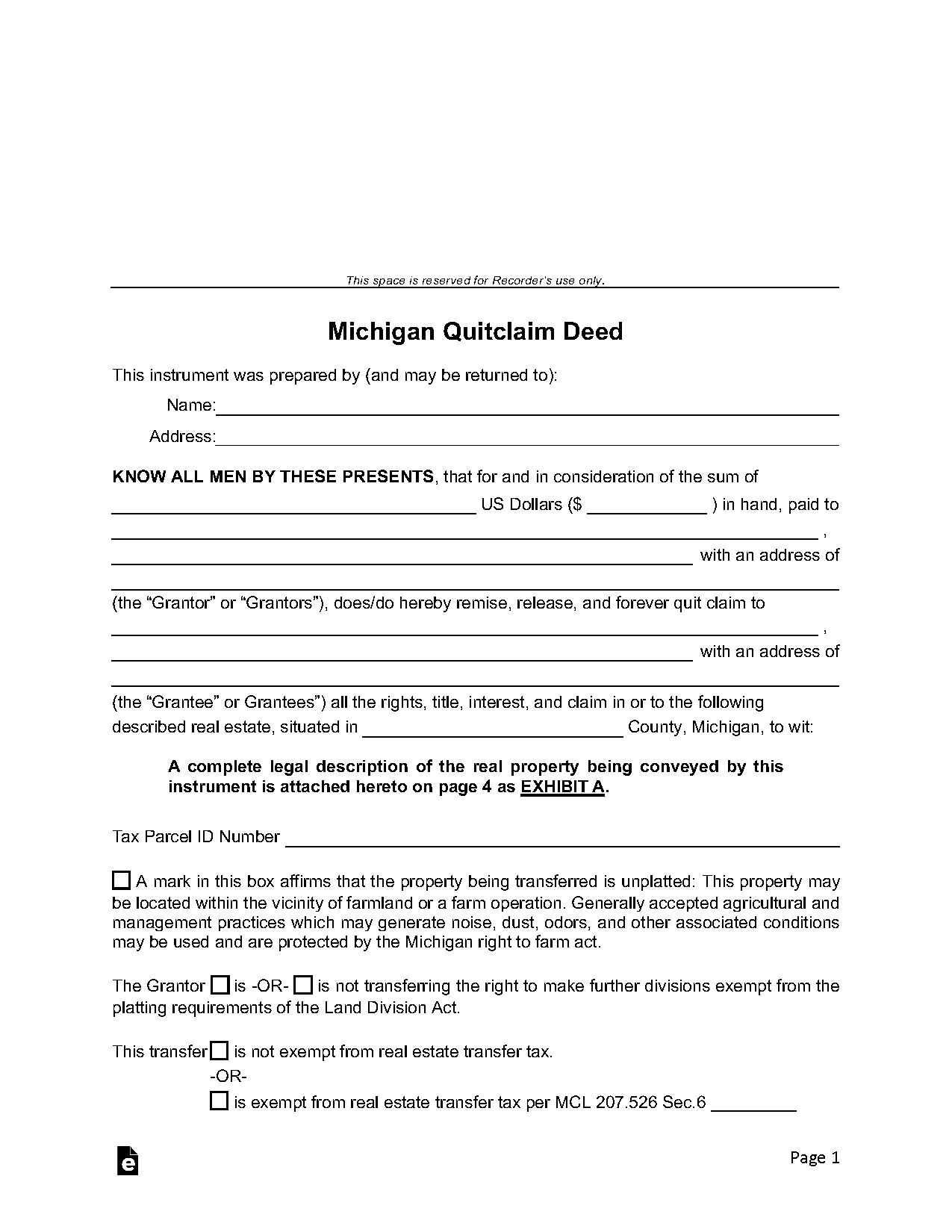
Michigan Quit Claim Deed
Full Conversation
I am trying to ascertain if I am going to be required to pay real estate tax when my spouse and I are divorcing. I refinanced the mortgage to be in my name only. In our mediation agreement, he would receive $40,000 and sign a quit claim deed to remove himself from the title.
I understand this situation can be stressful. Have you already consulted with a real estate lawyer regarding your refinancing and the mediation agreement?
No. Just consulted mediation.
Have you reviewed the terms of the mediation agreement with a legal professional to ensure they protect your interests?
No.
Is there anything else the Real Estate Lawyer should know before I connect you? Rest assured they'll be able to help with your real estate tax question.
No.
Hello! My name is TJ and I’m an attorney. Thanks so much for the opportunity to assist you!
Generally, when a spouse transfers their interest in the marital home to the other spouse as part of a divorce, it's considered a transfer incident to divorce and is not a taxable event for real estate tax purposes. This means that you would typically not owe real estate tax on the $40,000 payment to your spouse for the quit claim deed. However, the exact rules can vary, and it's important to understand your local regulations. This arrangement usually avoids immediate taxation on the transfer of property between divorcing spouses.
QUESTIONS FOR YOU:
- What state are you located in?
- Did you or your spouse receive any other assets or debts as part of the mediation agreement?
- Are there any other agreements or orders from the court regarding the property?
Michigan. No to both the last two questions.
Since the mediation agreement covers the house and the $40,000 payment, did the agreement also specify anything about who would be responsible for the real estate taxes on the home for the period leading up to the transfer?
Not sure if this makes sense. We are splitting the mortgage and taxes on the home until he purchases a new home and vacates the property that is in the agreement. After that I would be solely responsible for mortgage and taxes.
It sounds like the mediation agreement has a clear plan for who is responsible for the real estate taxes both before and after your spouse moves out. The key here is that the payment of real estate taxes is generally a separate issue from the transfer of the property itself. While the transfer of the property between divorcing spouses is usually not a taxable event, the ongoing real estate taxes are still a responsibility of the owner(s).
Since you are splitting the mortgage and taxes until your spouse vacates, you both remain responsible for those obligations as agreed in your mediation. This is common in divorce agreements where one spouse remains in the marital home for a period after the formal separation. The agreement dictates who pays what during this interim phase.
Once your spouse purchases a new home and moves out, and the quit claim deed is finalized, you will become solely responsible for the mortgage and taxes, as you've outlined. This aligns with standard practice, where the owner of record (which will then be you) is the party responsible for those recurring property expenses. The $40,000 payment to your spouse is part of the property division, not a tax on the transfer of the property.
So, to directly address your question about real estate tax when divorcing, you generally won't owe a new real estate tax on the actual transfer of ownership from your spouse to you due to the divorce. Instead, your real estate tax obligation will continue as the owner of the property, first shared as per your agreement and then solely yours after your spouse moves out and the deed is signed over.
Yes this absolutely makes sense. I really appreciate the thorough response.
9
3
Answered 3 days ago
Disclaimer
By messaging AskaLawyer.com, you agree to our Terms and have read our Privacy Policy.
The information provided on AskaLawyer.com is for general informational purposes only and does not constitute legal advice. While we strive to ensure the accuracy and timeliness of the information presented, we make no guarantees regarding its completeness or applicability to your specific circumstances.
Use of this website does not create an attorney-client relationship between you and AskaLawyer.com or any of its attorneys. Communications through this website, including any responses from attorneys, are not privileged or confidential. For advice tailored to your individual situation, we recommend consulting a licensed attorney in your jurisdiction.
AskaLawyer.com disclaims any liability for actions taken or not taken based on the content of this site. We are not responsible for any third-party content that may be accessed through this website. Reliance on any information provided herein is solely at your own risk.