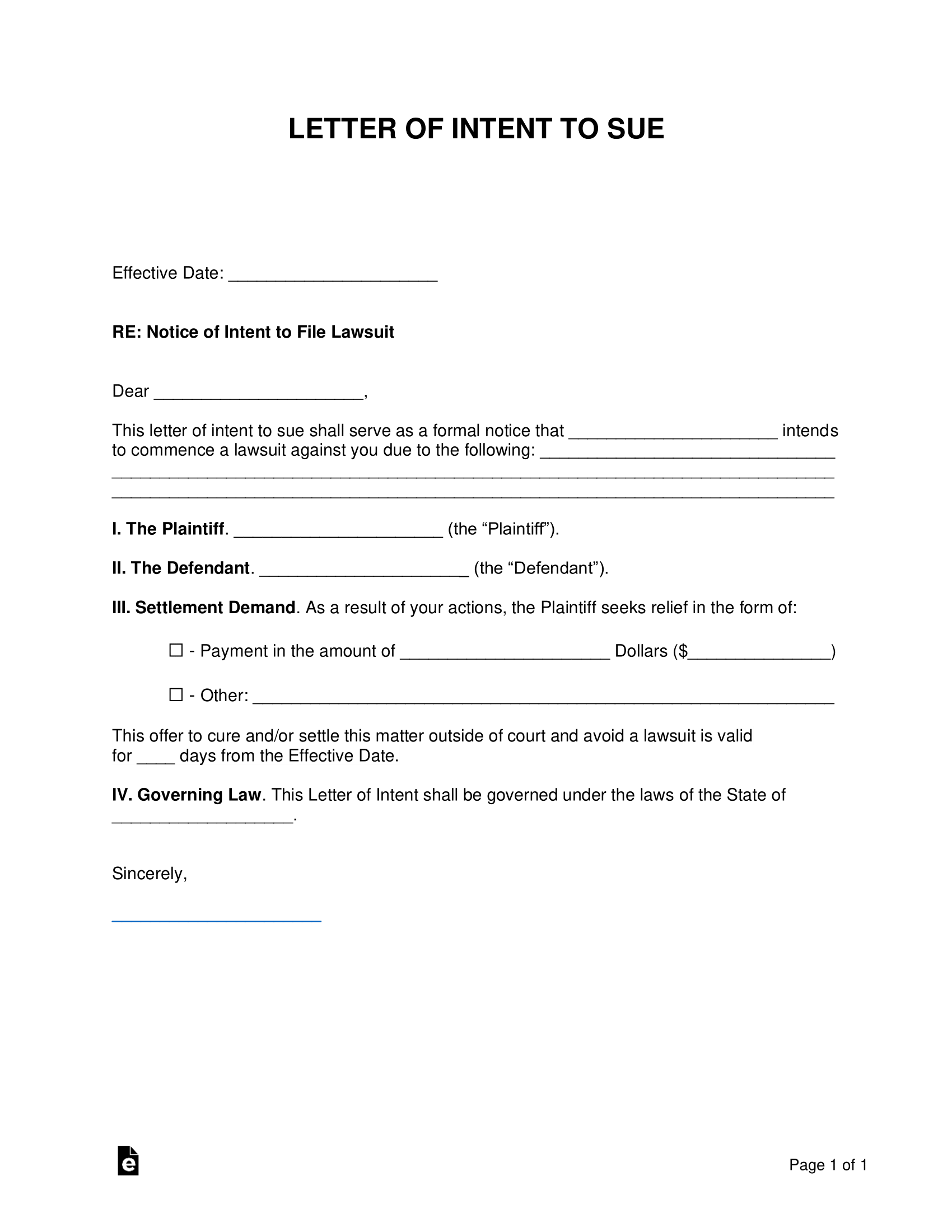
How do I write a strong Intent to Sue letter for workplace discrimination?

I’m planning to send my Intent to Sue letter before my time runs out to file my defamation & discrimination case against my employer. I want to make sure I do it properly.

27

12

Gurney P
Gurney P

13,616 satisfied customers

View context
Solved

Thank you for explaining, and it's smart that you’re planning ahead to send your Intent to Sue letter before your deadline passes. Here's a simple breakdown to help guide you:

1. Sending an Intent to Sue Letter
Before filing your lawsuit, it’s a good idea—and sometimes legally required—to notify your employer in writing that you intend to sue for defamation and discrimination. This gives them a chance to respond or resolve the matter.

A strong Intent to Sue letter should include:

  • Your full name and contact info

  • The employer’s name and address

  • A brief summary of what happened (facts, dates, statements)

  • What you believe was defamatory or discriminatory

  • The harm you’ve suffered (emotional, financial, etc.)

  • A clear statement that you intend to file a lawsuit if not resolved

  • A deadline for them to respond (usually 10–15 business days)

2. Motions & Evidence Collection
You can’t file a motion yet because you haven’t filed your lawsuit. Once you file, you can request evidence (called “discovery”) or file a motion to compel documents if they won’t cooperate.
For now, just gather everything you already have, and list out what you're missing so you know what to ask for.

3. Low-Cost Legal Help
Since you’re on disability and can’t afford a retainer, you might qualify for free or low-cost legal aid in your area. Some lawyers also take employment discrimination cases on contingency, meaning they only get paid if you win or settle.

0

Letter of Intent to Sue

Full Conversation


I’m planning to send my Intent to Sue letter before my time runs out to file my defamation & discrimination case against my employer. I want to make sure I do it properly.

Lexi

Lexi, Chatbot

I understand the importance of sending a proper Intent to Sue letter. Have you already gathered all the necessary evidence to support your defamation and discrimination claims?

Yes. I also need to get evidence from them.

Lexi

Lexi, Chatbot

Have you consulted with a lawyer to review your case and provide guidance on the legal process for filing a defamation and discrimination lawsuit against your employer?

Can I motion for it once I file, or can I file a motion now?

Lexi

Lexi, Chatbot

Is there anything else the lawyer should know before I connect you? Rest assured they’ll be able to help with your motion.

I’m not able to pay a retainer fee because I’m on disability now. So I would like to be represented if possible.

Gurney P

Gurney P

Welcome and thank you for using AskaLawyer. My name is Gurney, and I'm the attorney who will be assisting with your question. I'm happy to draw on my years of experience as an attorney and former prosecutor to offer some guidance. Please note, if you click the button for a second opinion, that will end our chat and I won’t be able to reply anymore.

What timeline are you working with for filing your Intent to Sue letter and any subsequent motions?

I have 30 plus days and I haven’t filed any motions yet.

Gurney P

Gurney P

Thank you for explaining, and it's smart that you’re planning ahead to send your Intent to Sue letter before your deadline passes. Here's a simple breakdown to help guide you:

1. Sending an Intent to Sue Letter
Before filing your lawsuit, it’s a good idea—and sometimes legally required—to notify your employer in writing that you intend to sue for defamation and discrimination. This gives them a chance to respond or resolve the matter.

A strong Intent to Sue letter should include:

  • Your full name and contact info

  • The employer’s name and address

  • A brief summary of what happened (facts, dates, statements)

  • What you believe was defamatory or discriminatory

  • The harm you’ve suffered (emotional, financial, etc.)

  • A clear statement that you intend to file a lawsuit if not resolved

  • A deadline for them to respond (usually 10–15 business days)

2. Motions & Evidence Collection
You can’t file a motion yet because you haven’t filed your lawsuit. Once you file, you can request evidence (called “discovery”) or file a motion to compel documents if they won’t cooperate.
For now, just gather everything you already have, and list out what you're missing so you know what to ask for.

3. Low-Cost Legal Help
Since you’re on disability and can’t afford a retainer, you might qualify for free or low-cost legal aid in your area. Some lawyers also take employment discrimination cases on contingency, meaning they only get paid if you win or settle.

Gurney P

Gurney P

Would you like help drafting your Intent to Sue letter? I can write it up free of charge for you.

Yes, I would like a strong intent to sue letter if possible.

Gurney P

Gurney P

Can do! Does this help?

[Your Full Name]
[Your Address]
[City, State, ZIP Code]
[Email Address]
[Phone Number]
[Date]

To: [Employer or HR Director’s Name]
[Company Name]
[Company Address]
[City, State, ZIP Code]

Subject: Formal Notice of Intent to File Legal Action for Defamation and Discrimination

Dear [Employer’s Name or HR Director],

I am writing to formally notify you of my intent to pursue legal action against [Company Name] for defamation of character and unlawful workplace discrimination in violation of applicable federal and state laws.

Throughout my employment, I was subjected to [briefly summarize the discriminatory treatment—e.g., unequal treatment, derogatory comments, retaliation, or harassment], which created a hostile work environment and directly impacted my mental and financial well-being. In addition, [clearly state the defamatory action—e.g., false statements made about me to coworkers, clients, or future employers that damaged my reputation].

I have gathered supporting documentation, including written communication, witness statements, and internal reports, and I have made good faith efforts to resolve these matters internally. However, due to the ongoing harm caused and your failure to take corrective action, I intend to file a formal lawsuit.

This letter serves as a final opportunity to address these issues through negotiation or settlement before I proceed. If I do not receive a written response within 15 days of the date of this letter, I will move forward with filing in the appropriate court.

Please direct all correspondence to me at the contact information listed above.

Sincerely,
[Your Full Name]

I have already tried mediation with them, and I was able to gather some information about their defense. They’re claiming it wasn’t discrimination because I had performance issues & not retaliation because they were already going to terminate the same day I made the complaint to corporate.

Gurney P

Gurney P

I hear that. Mediation might not be a good next step, in that case.

I will have to motion for the proof of those documents because I never signed any behavioral reports or was made aware of it. And they also lied to a government agency about my work ethics, which caused me to be denied unemployment benefits.

Gurney P

Gurney P

You will have to file a lawsuit to get the evidence you need.

I know. But I wanted to know what all can I motion for?

Gurney P

Gurney P

You can motion for discovery once your lawsuit is filed. This includes:

  • Personnel file (including any performance reviews or write-ups)

  • Internal emails or memos about your complaint or termination

  • Copies of any disciplinary reports (especially those you never saw or signed)

  • Communications with outside agencies, like the one that denied your unemployment

  • Witness statements or names of employees involved in the decision to fire you

Once your case is filed, you can request all of this through discovery or motion to compel if they don’t cooperate.
Does that help?

What about documentation from them, like all schedules made at the time of my employment & 3 months after… In approved hours worked by certain employees? Unapproved?

Gurney P

Gurney P

Yes, you can request schedules and time records in discovery, including:

  • All employee schedules during your employment and up to 3 months after

  • Your approved work hours and shifts

  • Hours worked by other employees (especially if comparing treatment or retaliation)

These records can help show disparate treatment, retaliation, or inconsistencies in their claims.

Gurney P

Gurney P

Do you think I could get a lawyer like you to represent me even though it’s not their state?

Gurney P

Gurney P

It's very doable, yes. I’d recommend Justia, an attorney database, for lawyers like that.

Justia has a huge directory of attorneys, and it’s completely free to use. You can search specifically for those experienced in handling tough cases in your area. The profiles on Justia are pretty detailed, with information like education, years of experience, practice areas, and reviews from former clients, so you can compare attorneys based on their specific qualifications and how they’ve handled cases like yours.

Thank you so much.

Gurney P

Gurney P

Sure thing! I’m glad that helps. Did you have more questions about this? I'll be happy to help more.

You answered all my questions for now.

Gurney P

Gurney P

Anytime! I'm glad I could JustAnswer all your questions today. If more questions come up later, I’m always available for you in a new chat.

Gurney P

Gurney P

13,616 satisfied customers

Gurney P
Welcome! Have a similar question?

5 lawyers online now

Disclaimer


By messaging AskaLawyer.com, you agree to our Terms and have read our Privacy Policy.

The information provided on AskaLawyer.com is for general informational purposes only and does not constitute legal advice. While we strive to ensure the accuracy and timeliness of the information presented, we make no guarantees regarding its completeness or applicability to your specific circumstances.

Use of this website does not create an attorney-client relationship between you and AskaLawyer.com or any of its attorneys. Communications through this website, including any responses from attorneys, are not privileged or confidential. For advice tailored to your individual situation, we recommend consulting a licensed attorney in your jurisdiction.

AskaLawyer.com disclaims any liability for actions taken or not taken based on the content of this site. We are not responsible for any third-party content that may be accessed through this website. Reliance on any information provided herein is solely at your own risk.

Ask a Lawyer Logo
Ask a Lawyer Logo
Intake Questions
Step of 3
Loading...
Loading...

How do you like to pay?

By proceeding with payment, you agree to our Terms and Privacy Policy. You authorize us to charge $ today and $ thereafter until canceled. You may cancel anytime in the My Account section to stop future charges.

Total Due:

After purchasing, your chat will begin with an attorney.

By proceeding with payment, you agree to our Terms and Privacy Policy. You authorize us to charge $ today and $ thereafter until canceled. You may cancel anytime in the My Account section to stop future charges.

Total Due:

After purchasing, your chat will begin with an attorney.

It looks like you already have an account with Ask a Lawyer.

We have sent you a magic link to . Click the link in your email to sign in and continue your chat.

spin

Step of 6 •

You'll receive an email at as soon as the lawyer joins the conversation 🙏🏻😊

Over 90% of lawyers connect within 5 minutes. If you're not online at that moment, don't worry — the lawyer will reply to your message while you're away.

You're also welcome to stay in the chat while waiting to be connected 💬✨

Waiting for lawyer