Can I modify a lady bird deed so that the grantor cannot sell the property?
A standard Lady Bird Deed gives the grantor a life estate plus full control during their lifetime — including the power to sell, mortgage, or transfer the property. If you remove that power, it is no longer a Lady Bird Deed. It becomes a traditional life estate deed.
Yes, you can delete the “unrestricted power to convey” language. Replace it with:
“The Grantor reserves a life estate for their lifetime, without any retained power to sell, transfer, mortgage, or otherwise convey the property.”
This means the grantor cannot sell the property without the beneficiary’s consent.
However, note that this severely restricts the grantor and may affect future needs (e.g., selling the home to pay for care).
0
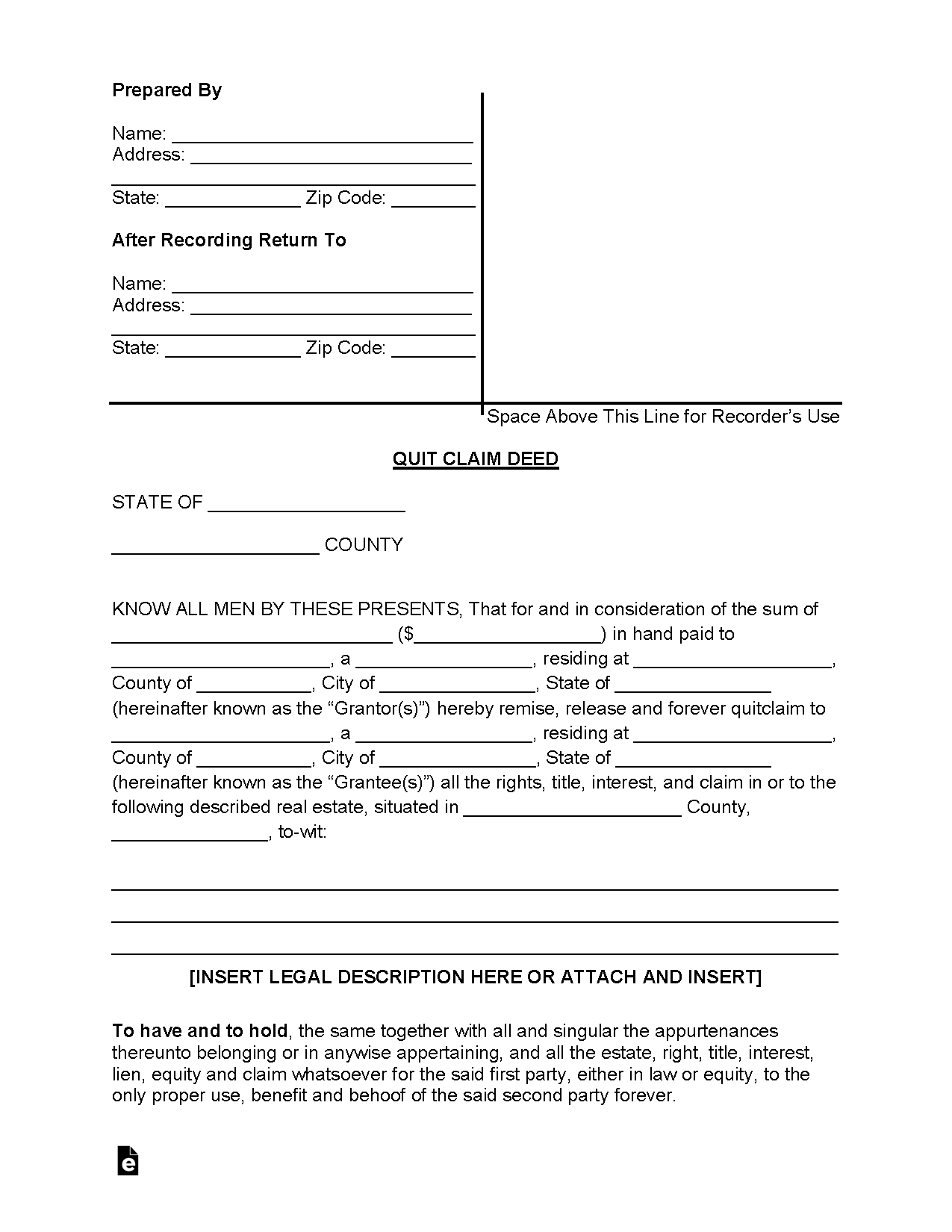
General Quit Claim Deed
Full Conversation
Hello, I am preparing a lady bird deed for a friend but we need to change the grantor’s reserved rights so he cannot sell the property at all. How can I change that on the deed?
I understand that modifying a Lady Bird Deed can be complex. Can you tell me what specific changes you want to make regarding the grantor’s reserved rights?
We need to change this part:
“The Grantor reserves a life estate for themselves during the Grantor’s lifetime coupled with an unrestricted power to convey during the Grantor’s lifetime, which includes the power to sell, gift, mortgage, lease and otherwise dispose of the property, and to retain the proceeds from the conveyance.”
Can this part be deleted from the deed itself? We're starting from scratch.
How can someone take their name off a deed?
A standard Lady Bird Deed gives the grantor a life estate plus full control during their lifetime — including the power to sell, mortgage, or transfer the property. If you remove that power, it is no longer a Lady Bird Deed. It becomes a traditional life estate deed.
Yes, you can delete the “unrestricted power to convey” language. Replace it with:
“The Grantor reserves a life estate for their lifetime, without any retained power to sell, transfer, mortgage, or otherwise convey the property.”
This means the grantor cannot sell the property without the beneficiary’s consent.
However, note that this severely restricts the grantor and may affect future needs (e.g., selling the home to pay for care).
If the property has to be sold, can the beneficiary sell it?
The beneficiary (remainderman) can only sell the property after the grantor (life tenant) dies. During the grantor’s lifetime, the beneficiary cannot sell the property unless the grantor agrees, because the grantor still owns the life estate.
Okay, so this type of deed will not work. A quitclaim deed will be better, correct?
If the goal is simply to transfer one owner’s interest to someone else, then yes — a quitclaim deed is the correct document.
If there are 2 people on a deed and only one is giving up rights, can a quitclaim deed be filed just to change one of the grantors?
Yes. Only the person giving up ownership (the grantor) must sign. The other owner remains on the deed.
A quitclaim deed does not affect the mortgage — if Mary is the only one on the mortgage, that stays the same.
On the current deed, there are 2 people — Person A and Person B. Person A wants to give his rights to his granddaughter. Does the new deed need to include Person B?
Yes. Mary’s name must remain on the deed. She keeps her share.
Person A signs a quitclaim deed transferring only his share to his granddaughter.
After recording, the new owners will be:
Person B (keeps her original share)
Granddaughter (receives Person A's share)
Person B is the only one on the mortgage, not Person A.
That’s fine. A deed transfer does not change mortgage responsibility. Person B remains the only borrower.
Person B retains her ownership. The deed simply replaces Person A's interest with his granddaughter's.
BUT check the original deed wording:
If it says joint tenants with right of survivorship, Person A's transfer to his granddaughter will break the joint tenancy and convert it to tenants in common.
If it says tenants in common, each already owns a separate share and Person A can freely transfer his share to his granddaughter.
Thank you.
Disclaimer
By messaging AskaLawyer.com, you agree to our Terms and have read our Privacy Policy.
The information provided on AskaLawyer.com is for general informational purposes only and does not constitute legal advice. While we strive to ensure the accuracy and timeliness of the information presented, we make no guarantees regarding its completeness or applicability to your specific circumstances.
Use of this website does not create an attorney-client relationship between you and AskaLawyer.com or any of its attorneys. Communications through this website, including any responses from attorneys, are not privileged or confidential. For advice tailored to your individual situation, we recommend consulting a licensed attorney in your jurisdiction.
AskaLawyer.com disclaims any liability for actions taken or not taken based on the content of this site. We are not responsible for any third-party content that may be accessed through this website. Reliance on any information provided herein is solely at your own risk.