[LA] Can I use the same power of attorney form in multiple states?
A Louisiana Power of Attorney (POA) form is legally valid in Louisiana, but other states like Nevada don’t have to accept it automatically unless it complies with their own legal requirements. Since you want it to cover broad powers (financial, medical, real estate) and work in both Louisiana and Nevada, the safest route is to:
- Use a Louisiana POA for Louisiana-specific use (Louisiana Civil Code Article 2985–2997).
- Create a separate Nevada-compliant POA, or have your Louisiana form reviewed and re-executed under Nevada law to meet their standards (NRS 162A.220 to 162A.660).
Also, medical powers usually require a separate document in some states (like an advance healthcare directive).
Here’s a checklist to help make your Power of Attorney (POA) as widely accepted as possible across states like Louisiana and Nevada, especially since you want it to cover financial, real estate, and medical powers.
Universal POA Checklist for Multi-State Use
1. Full Legal Names and Contact Info
- Principal (person giving the power)
- Agent (person receiving the power)
- Optional: Successor Agent(s)
2. Clear Statement of Intent
- Use clear language: “This Power of Attorney is intended to be valid in all U.S. states, including but not limited to Louisiana and Nevada.”
- Durability Clause
- Include: “This POA shall remain in effect even if I become incapacitated.”
- Specific Powers Granted
- Check all that apply:
☐ Banking and financial matters
☐ Real estate transactions
☐ Insurance and tax matters
☐ Legal proceedings
☐ Government benefits
☐ Personal and family care
☐ Medical and healthcare decisions (include HIPAA release language)
☐ Digital assets and online accounts
- Check all that apply:
- Execution Requirements
- Signed by the principal
- Two witnesses (not the agent or family)
- Notarized — this is critical for out-of-state acceptance
- State-Specific Language
- Include any required phrases or references from Louisiana Revised Statutes and Nevada Revised Statutes if possible
- Medical POA / Advance Directive (Separate Form)
- Some states require a separate healthcare POA — use a template that meets both Louisiana and Nevada standards
- Agent Certification Clause
- Optional but helpful: include a brief statement the agent can use later to confirm they are acting under a valid POA
- Attach Notarization Certificate for Both States
- If you’re able, have it notarized in both states, or with an acknowledgment form accepted in both states.
0
Durable (Financial) Power of Attorney
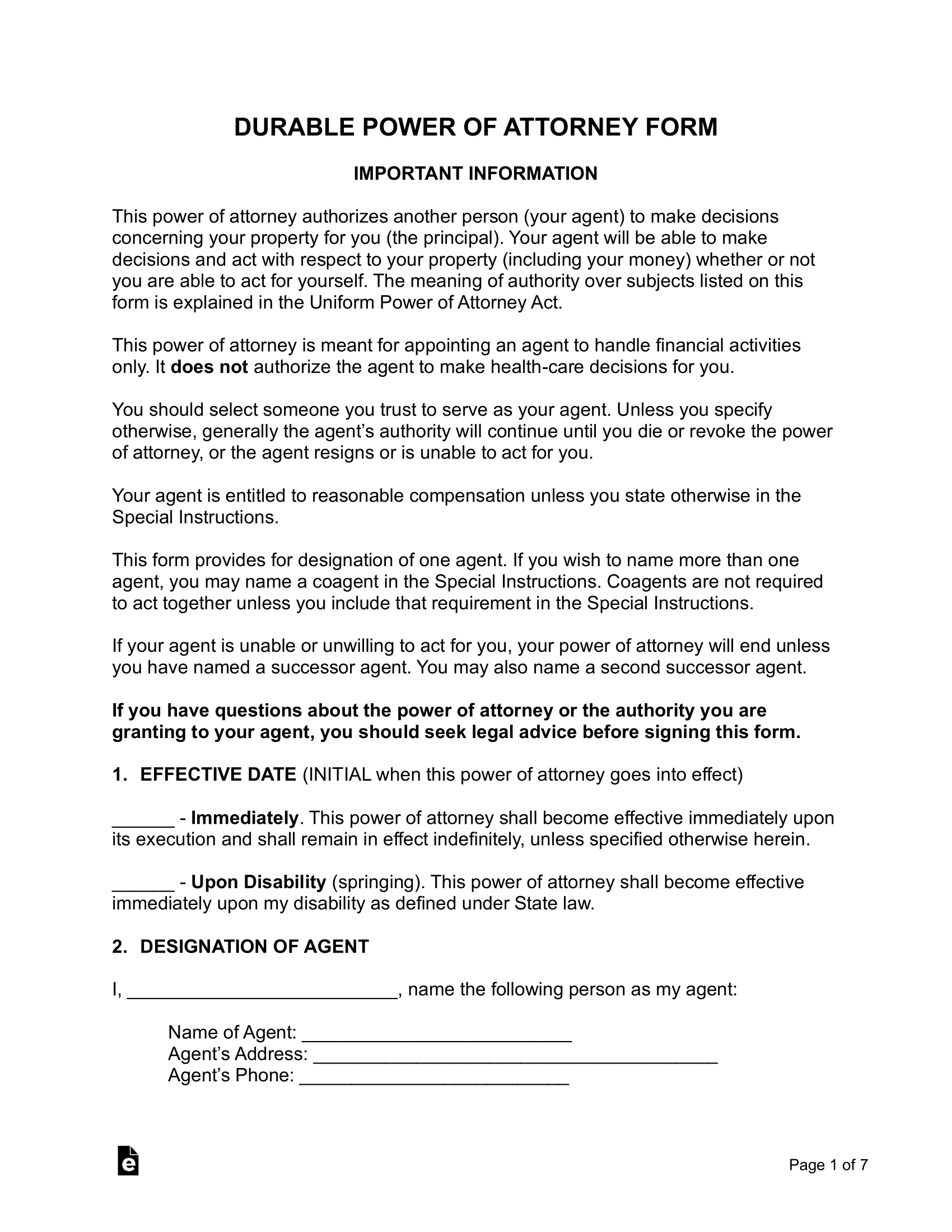
Full Conversation
Will this Louisiana POA form work in all states?
Lexi, Chatbot
I understand you're looking for information about a Power of Attorney form. Is this form specifically for Louisiana?
Yes. But we need to be able to use it in Louisiana and Nevada.
Lexi, Chatbot
Are you planning to use this Power of Attorney form outside of Louisiana?
Yes.
Lexi, Chatbot
Is there anything else the lawyer should know before I connect you?
No.
Gurney P
Welcome, and thank you for using AskaLawyer. My name is Gurney, and I'm the attorney who will be assisting with your question. What specific powers or responsibilities do you want to grant with the Power of Attorney?
All financial, real estate, medical. We really need to cover everything.
Gurney P
A Louisiana Power of Attorney (POA) form is legally valid in Louisiana, but other states like Nevada don’t have to accept it automatically unless it complies with their own legal requirements. Since you want it to cover broad powers (financial, medical, real estate) and work in both Louisiana and Nevada, the safest route is to:
- Use a Louisiana POA for Louisiana-specific use (Louisiana Civil Code Article 2985–2997).
- Create a separate Nevada-compliant POA, or have your Louisiana form reviewed and re-executed under Nevada law to meet their standards (NRS 162A.220 to 162A.660).
Also, medical powers usually require a separate document in some states (like an advance healthcare directive).
Here’s a checklist to help make your Power of Attorney (POA) as widely accepted as possible across states like Louisiana and Nevada, especially since you want it to cover financial, real estate, and medical powers.
Universal POA Checklist for Multi-State Use
1. Full Legal Names and Contact Info
- Principal (person giving the power)
- Agent (person receiving the power)
- Optional: Successor Agent(s)
2. Clear Statement of Intent
- Use clear language: “This Power of Attorney is intended to be valid in all U.S. states, including but not limited to Louisiana and Nevada.”
- Durability Clause
- Include: “This POA shall remain in effect even if I become incapacitated.”
- Specific Powers Granted
- Check all that apply:
☐ Banking and financial matters
☐ Real estate transactions
☐ Insurance and tax matters
☐ Legal proceedings
☐ Government benefits
☐ Personal and family care
☐ Medical and healthcare decisions (include HIPAA release language)
☐ Digital assets and online accounts
- Check all that apply:
- Execution Requirements
- Signed by the principal
- Two witnesses (not the agent or family)
- Notarized — this is critical for out-of-state acceptance
- State-Specific Language
- Include any required phrases or references from Louisiana Revised Statutes and Nevada Revised Statutes if possible
- Medical POA / Advance Directive (Separate Form)
- Some states require a separate healthcare POA — use a template that meets both Louisiana and Nevada standards
- Agent Certification Clause
- Optional but helpful: include a brief statement the agent can use later to confirm they are acting under a valid POA
- Attach Notarization Certificate for Both States
- If you’re able, have it notarized in both states, or with an acknowledgment form accepted in both states.
Thanks.
15
6
Answered 4 days ago
Disclaimer
By messaging AskaLawyer.com, you agree to our Terms and have read our Privacy Policy.
The information provided on AskaLawyer.com is for general informational purposes only and does not constitute legal advice. While we strive to ensure the accuracy and timeliness of the information presented, we make no guarantees regarding its completeness or applicability to your specific circumstances.
Use of this website does not create an attorney-client relationship between you and AskaLawyer.com or any of its attorneys. Communications through this website, including any responses from attorneys, are not privileged or confidential. For advice tailored to your individual situation, we recommend consulting a licensed attorney in your jurisdiction.
AskaLawyer.com disclaims any liability for actions taken or not taken based on the content of this site. We are not responsible for any third-party content that may be accessed through this website. Reliance on any information provided herein is solely at your own risk.