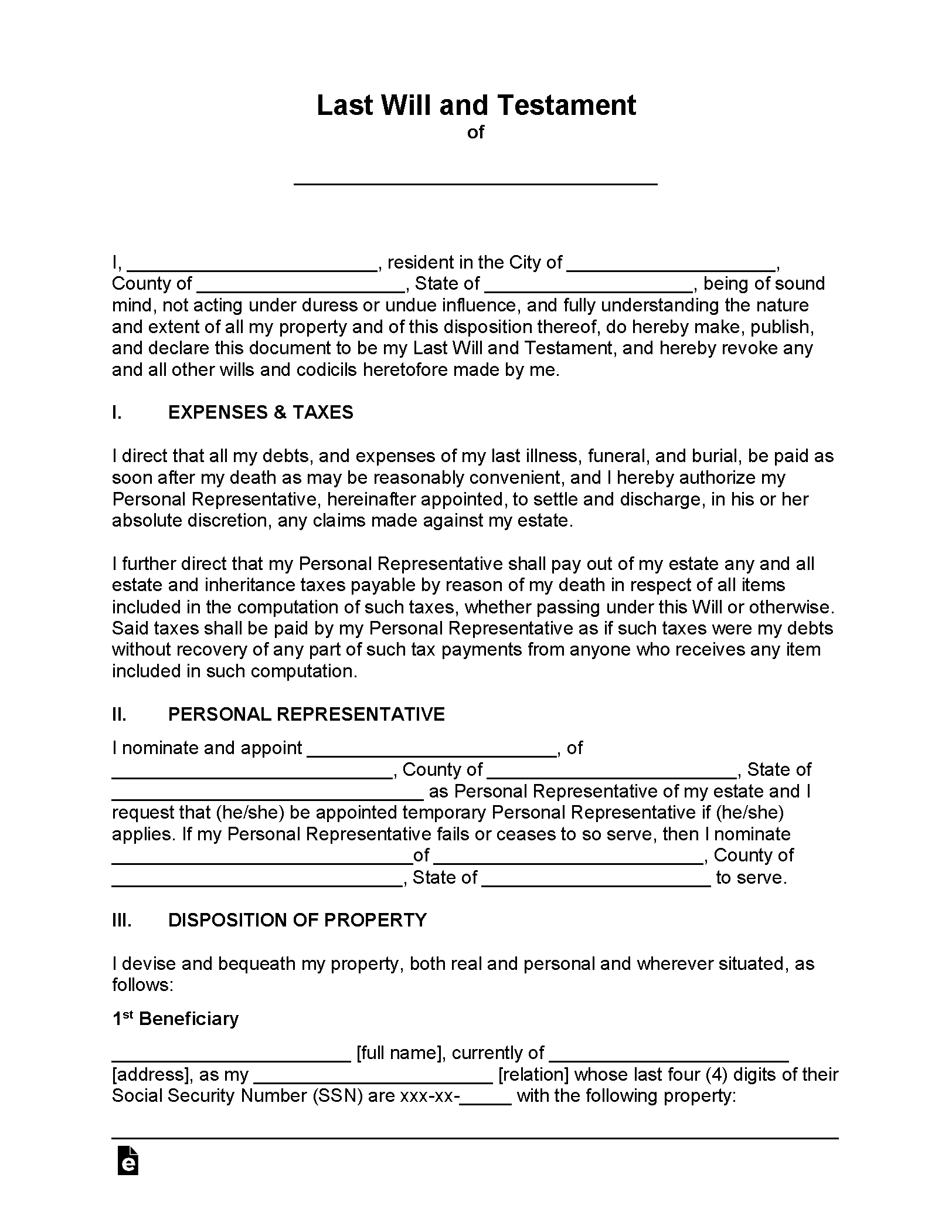
How do I draft exclusion and no-contest clauses for a will?
To draft exclusion and no-contest clauses, ensure clear and specific language is used to avoid ambiguity and potential disputes. For exclusion, identify the person(s) you wish to exclude with their full names and dates of birth to avoid ambiguity. For no-contest clauses, define specific actions that trigger forfeiture, such as contesting the will or seeking to void it.
While there isn't one universally "right" wording for a no-contest clause, a common and effective approach is to state that if a beneficiary contests the will and loses, they forfeit their inheritance. This discourages beneficiaries from challenging the will and potentially losing what they would have received.
0
Last Will and Testament (Will)
Full Conversation
Can you guide me through the wording for exclusion and no contest clause?
Lexi, Chatbot
I understand you're looking for guidance on exclusion and no contest clauses. Are you currently working on a will or trust document?
Yes, a will.
Lexi, Chatbot
Have you already drafted these clauses yourself, or are you looking to include them for the first time in your legal document?
First time.
Lexi, Chatbot
Is there anything else the Lawyer should know before I connect you? Rest assured they'll be able to help with your will clauses.
I would also like to ask about the affidavit for will.. I understand it will be helpful.
Jessica B
Hey there! Welcome to AskaLawyer. I'm Jessica B, an attorney with many years of experience, and I'm here to help you.
Hi Jessica. Is there a specific statement that should be worded for the no contest? Is there a separate form for no contest or just the statement is enough?
Jessica B
To draft exclusion and no-contest clauses, ensure clear and specific language is used to avoid ambiguity and potential disputes. For exclusion, identify the person(s) you wish to exclude with their full names and dates of birth to avoid ambiguity. For no-contest clauses, define specific actions that trigger forfeiture, such as contesting the will or seeking to void it.
While there isn't one universally "right" wording for a no-contest clause, a common and effective approach is to state that if a beneficiary contests the will and loses, they forfeit their inheritance. This discourages beneficiaries from challenging the will and potentially losing what they would have received.
Do we need to include SSN as well?
Jessica B
No, that is not required to be valid.
Just name and DOB is sufficient?
Jessica B
That is correct. Enough to identify the individual.
For the specifics of gifts... such as house, cars... do those items need to be specific such as address of legal name of property and specific make, model and VIN numbers of vehicles?
Jessica B
No, it can be very generic such as "my house" or very specific such as "123 Main St." It is up to you.
When stating gifts if the house is gifted is that also include all of its content? Or should that be worded at residual estate?
Jessica B
When gifting a house, it's best to clearly state whether the contents are also included. While it's possible to infer that contents are included in a specific gift of a house, explicitly stating it (or not) avoids potential confusion and disputes. The residual estate deals with items not specifically mentioned in the will, after all other gifts are made.
Do you recommend an affidavit for will?
Jessica B
Yes, a self-proving affidavit is highly recommended for a will, even though it's not legally required in most states. It simplifies probate by eliminating the need for witnesses to appear in court, potentially saving time and money. It also strengthens the validity of the will by providing further evidence of its proper execution and the testator's intent.
This is a basic, small estate will. Do you recommend anything else that I may be forgetting to include?
Jessica B
Ultimately, it is your document and you have the right to be as specific as you want to be. It is recommended to be more specific as to eliminate any confusion on interpretation after you pass.
Perfect! Are there any other types of affidavits that you recommend to avoid any problems?
Jessica B
No, you only need the self-proving affidavit.
Lastly, once the wills have been notarized and signed, we just notify our executor of where documents are kept.
Jessica B
That is correct.
Thank you for your help.
Jessica B
Thank you.
We are considering an irrevocable trust — is a transfer of deed necessary?
15
6
Answered 4 days ago
Disclaimer
By messaging AskaLawyer.com, you agree to our Terms and have read our Privacy Policy.
The information provided on AskaLawyer.com is for general informational purposes only and does not constitute legal advice. While we strive to ensure the accuracy and timeliness of the information presented, we make no guarantees regarding its completeness or applicability to your specific circumstances.
Use of this website does not create an attorney-client relationship between you and AskaLawyer.com or any of its attorneys. Communications through this website, including any responses from attorneys, are not privileged or confidential. For advice tailored to your individual situation, we recommend consulting a licensed attorney in your jurisdiction.
AskaLawyer.com disclaims any liability for actions taken or not taken based on the content of this site. We are not responsible for any third-party content that may be accessed through this website. Reliance on any information provided herein is solely at your own risk.