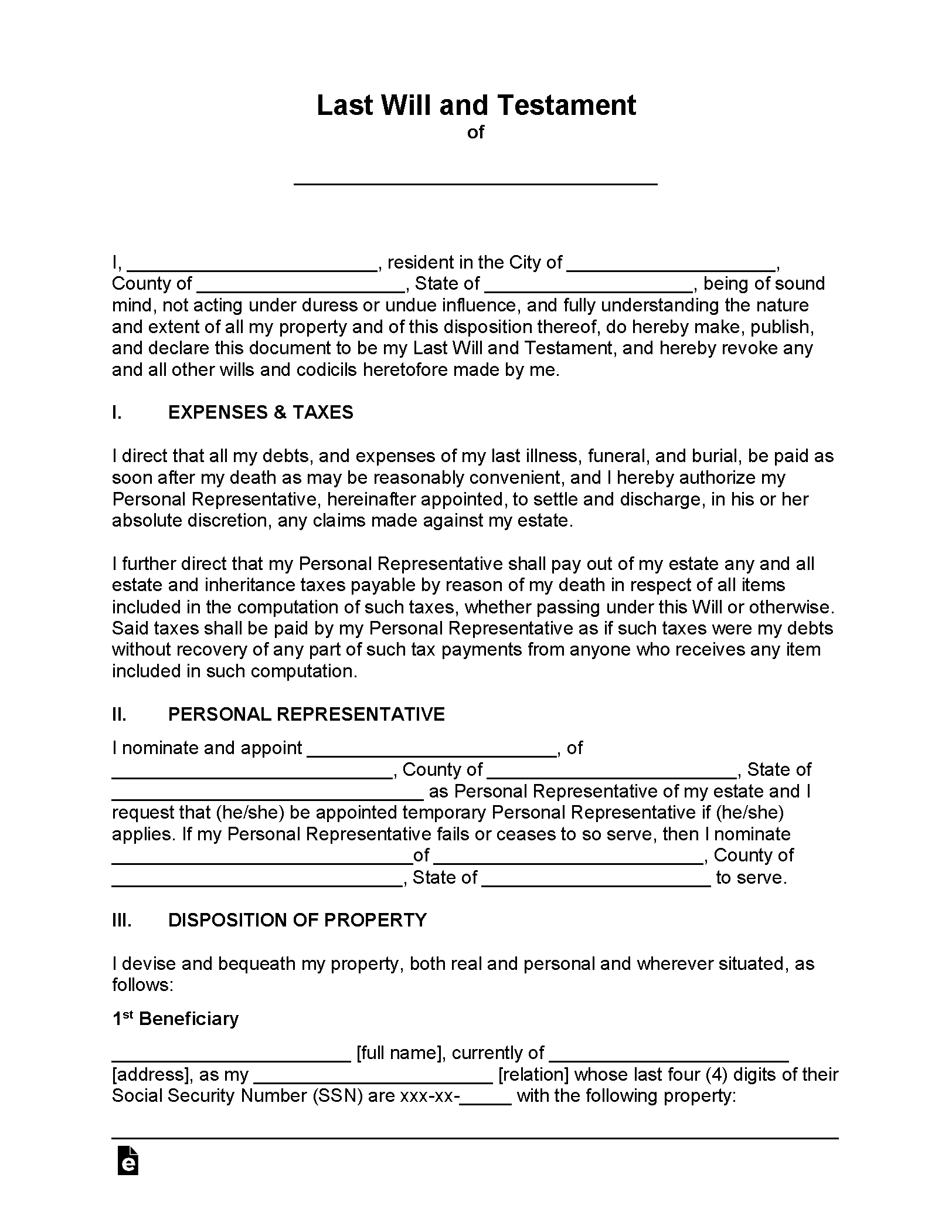
How do I create a last will and testament?
Writing a testament, commonly known as a will, is a critical legal act that allows you to control the distribution of your assets and the care of any dependents after your death.
Under estate law, a valid will must generally satisfy several key legal requirements: the testator (you) must be of sound mind and of legal age (usually 18 or older); the document must be in writing; it must clearly express the intent to distribute property upon death; and it must be signed by the testator in the presence of witnesses.
In most jurisdictions, at least two disinterested witnesses—individuals who are not beneficiaries under the will—must also sign the will in the testator’s presence. Failing to observe these formalities can render a will invalid or contestable, leading to intestate succession, where the estate is distributed according to state law rather than your wishes.
It’s also important to be specific and unambiguous in identifying beneficiaries and describing the assets you intend to distribute. You may also include provisions appointing an executor to oversee your estate and, if applicable, a guardian for minor children.
If your estate involves complex holdings—such as real estate in multiple states, foreign assets, or blended family arrangements—then incorporating a testamentary trust or consulting an estate attorney may be advisable to ensure your intent is fully honored. While a handwritten (holographic) will may be valid in some states without witnesses, these are more vulnerable to legal challenges. Therefore, ensuring compliance with your jurisdiction’s statutory requirements is key to making your testament legally enforceable and less susceptible to disputes.
0
Last Will and Testament
Full Conversation
I need to write a testament.
Lexi, Chatbot
Writing a testament is an important task. Have you already decided who you want to include in your will?
I don't know.
Lexi, Chatbot
Are there any specific assets or belongings you want to ensure are included in your testament?
I don't know.
Legal Eagle
Good afternoon and welcome. Please give me a moment to review your question.
Legal Eagle
Writing a testament, commonly known as a will, is a critical legal act that allows you to control the distribution of your assets and the care of any dependents after your death.
Under estate law, a valid will must generally satisfy several key legal requirements: the testator (you) must be of sound mind and of legal age (usually 18 or older); the document must be in writing; it must clearly express the intent to distribute property upon death; and it must be signed by the testator in the presence of witnesses.
In most jurisdictions, at least two disinterested witnesses—individuals who are not beneficiaries under the will—must also sign the will in the testator’s presence. Failing to observe these formalities can render a will invalid or contestable, leading to intestate succession, where the estate is distributed according to state law rather than your wishes.
It’s also important to be specific and unambiguous in identifying beneficiaries and describing the assets you intend to distribute. You may also include provisions appointing an executor to oversee your estate and, if applicable, a guardian for minor children.
If your estate involves complex holdings—such as real estate in multiple states, foreign assets, or blended family arrangements—then incorporating a testamentary trust or consulting an estate attorney may be advisable to ensure your intent is fully honored. While a handwritten (holographic) will may be valid in some states without witnesses, these are more vulnerable to legal challenges. Therefore, ensuring compliance with your jurisdiction’s statutory requirements is key to making your testament legally enforceable and less susceptible to disputes.
15
6
Answered 4 days ago
Disclaimer
By messaging AskaLawyer.com, you agree to our Terms and have read our Privacy Policy.
The information provided on AskaLawyer.com is for general informational purposes only and does not constitute legal advice. While we strive to ensure the accuracy and timeliness of the information presented, we make no guarantees regarding its completeness or applicability to your specific circumstances.
Use of this website does not create an attorney-client relationship between you and AskaLawyer.com or any of its attorneys. Communications through this website, including any responses from attorneys, are not privileged or confidential. For advice tailored to your individual situation, we recommend consulting a licensed attorney in your jurisdiction.
AskaLawyer.com disclaims any liability for actions taken or not taken based on the content of this site. We are not responsible for any third-party content that may be accessed through this website. Reliance on any information provided herein is solely at your own risk.