[TX] [TX] How do I designate beneficiaries for specific items on a transfer on death deed?
Yes, your daughters will not receive the home until both of you are deceased if you are using a transfer on death deed (TX Est Code § 114.103(a)).
For the anti-lapse, if one of your named primary beneficiaries (e.g., one of your daughters) dies before you, this option allows their share to go to their heirs (typically their children). This follows the principle of "anti-lapse" laws, which prevent a gift from failing if the named beneficiary predeceases you (TX Est Code § 255.153).
For the second one, if one of your daughters predeceases you, this option redistributes that daughter’s share among the other surviving primary beneficiaries (your other daughters). This means the deceased daughter’s heirs (such as her children) would not inherit.
To summarize, if you want your deceased daughter’s share to go to her children (your grandchildren), then select Anti-Lapse Election. If you want your deceased daughter’s share to go only to your surviving daughters, then select Surviving Primary Beneficiaries Election.
0
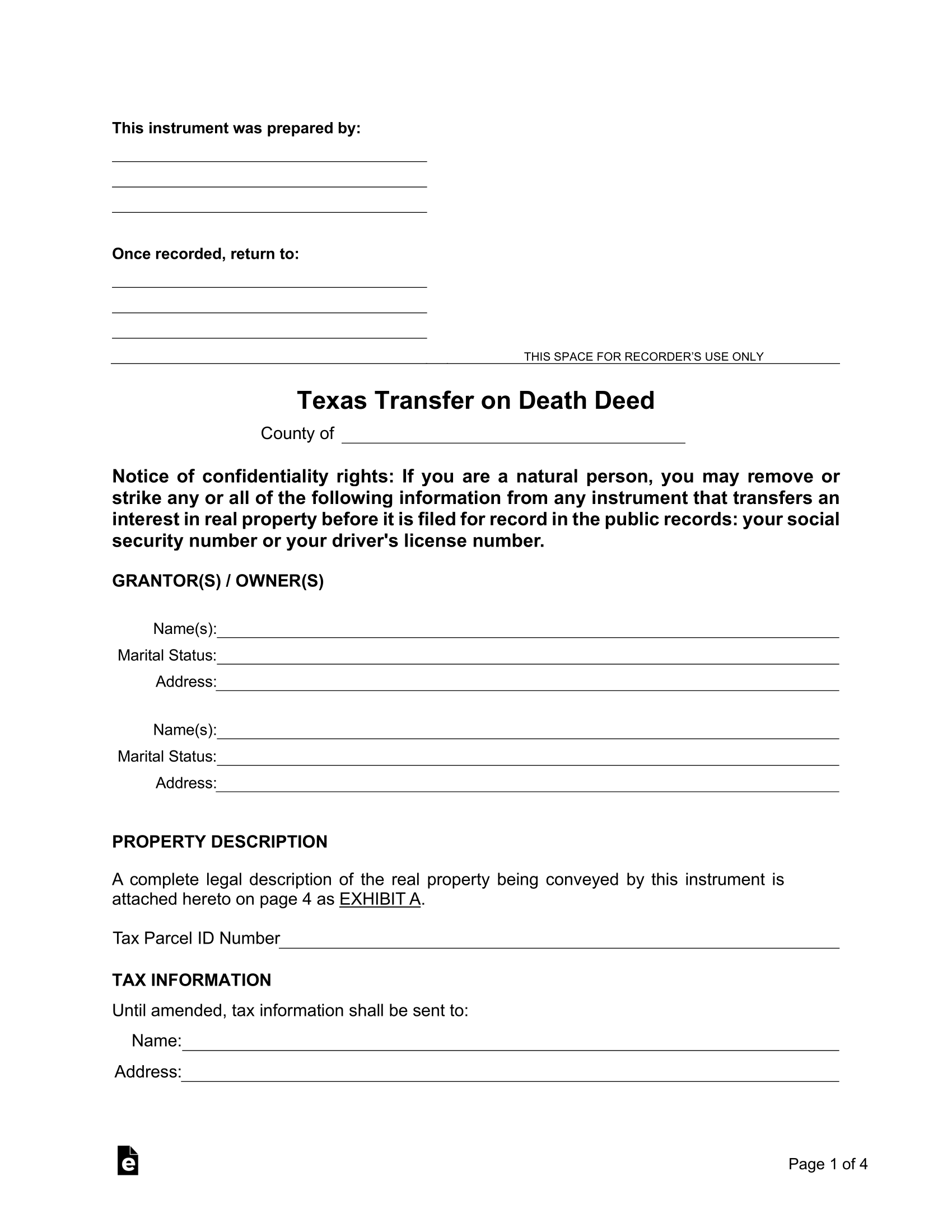
Texas Transfer on Death Deed
Full Conversation
I have questions about which items to choose on the transfer on death deed.
Lexi, Chatbot
I understand you have questions about choosing items on the transfer on death deed. Can you please specify which state the property is located in?
Texas.
Lexi, Chatbot
Are you looking to designate specific beneficiaries for certain items on the transfer on death deed?
Yes.
Lexi, Chatbot
Is there anything else the Lawyer should know before I connect you? Rest assured they'll be able to help with designating beneficiaries on the transfer on death deed.
I just want to make sure I am filling it out correctly.
Legal Eagle
Hello! Legal Eagle here. I'm reviewing your issue in detail.
This is the deed to real estate?
Yes.
Legal Eagle
Understood! Now that I have this info, what is your legal question for me?
So, at the beginning of the document, I would put me and my husband as the owners of the property. We want to leave the property to our two girls when both of us are deceased. Therefore, they would be the primary beneficiaries?
Legal Eagle
You got it, yes!
So, our daughters will not receive the home until we are both deceased? The questions underneath (A. If at least one primary beneficiary survives us) are asking about (1) Anti-Lapse Election or (2) Surviving Primary Beneficiaries Election. Which one do I choose?
Legal Eagle
Yes, your daughters will not receive the home until both of you are deceased if you are using a transfer on death deed (TX Est Code § 114.103(a)).
For the anti-lapse, if one of your named primary beneficiaries (e.g., one of your daughters) dies before you, this option allows their share to go to their heirs (typically their children). This follows the principle of "anti-lapse" laws, which prevent a gift from failing if the named beneficiary predeceases you (TX Est Code § 255.153).
For the second one, if one of your daughters predeceases you, this option redistributes that daughter’s share among the other surviving primary beneficiaries (your other daughters). This means the deceased daughter’s heirs (such as her children) would not inherit.
To summarize, if you want your deceased daughter’s share to go to her children (your grandchildren), then select Anti-Lapse Election. If you want your deceased daughter’s share to go only to your surviving daughters, then select Surviving Primary Beneficiaries Election.
Legal Eagle
Hello! I want to make sure ALL of your concerns were addressed. Did you have any concerns about this that still need to be addressed? I'm happy to help.
Legal Eagle
So I haven't heard from you in a while, but that's okay! I hope I’ve provided the information you were seeking. If you need more help, please let me know so I can continue to assist you.
15
6
Answered 4 days ago
Disclaimer
By messaging AskaLawyer.com, you agree to our Terms and have read our Privacy Policy.
The information provided on AskaLawyer.com is for general informational purposes only and does not constitute legal advice. While we strive to ensure the accuracy and timeliness of the information presented, we make no guarantees regarding its completeness or applicability to your specific circumstances.
Use of this website does not create an attorney-client relationship between you and AskaLawyer.com or any of its attorneys. Communications through this website, including any responses from attorneys, are not privileged or confidential. For advice tailored to your individual situation, we recommend consulting a licensed attorney in your jurisdiction.
AskaLawyer.com disclaims any liability for actions taken or not taken based on the content of this site. We are not responsible for any third-party content that may be accessed through this website. Reliance on any information provided herein is solely at your own risk.