[MI] [MI] Does a lady bird deed pass only if both owners die?
Thank you for explaining your goals so clearly—what you’re trying to accomplish is a very common and understandable estate planning objective, and you’re on the right track by considering a Lady Bird deed.
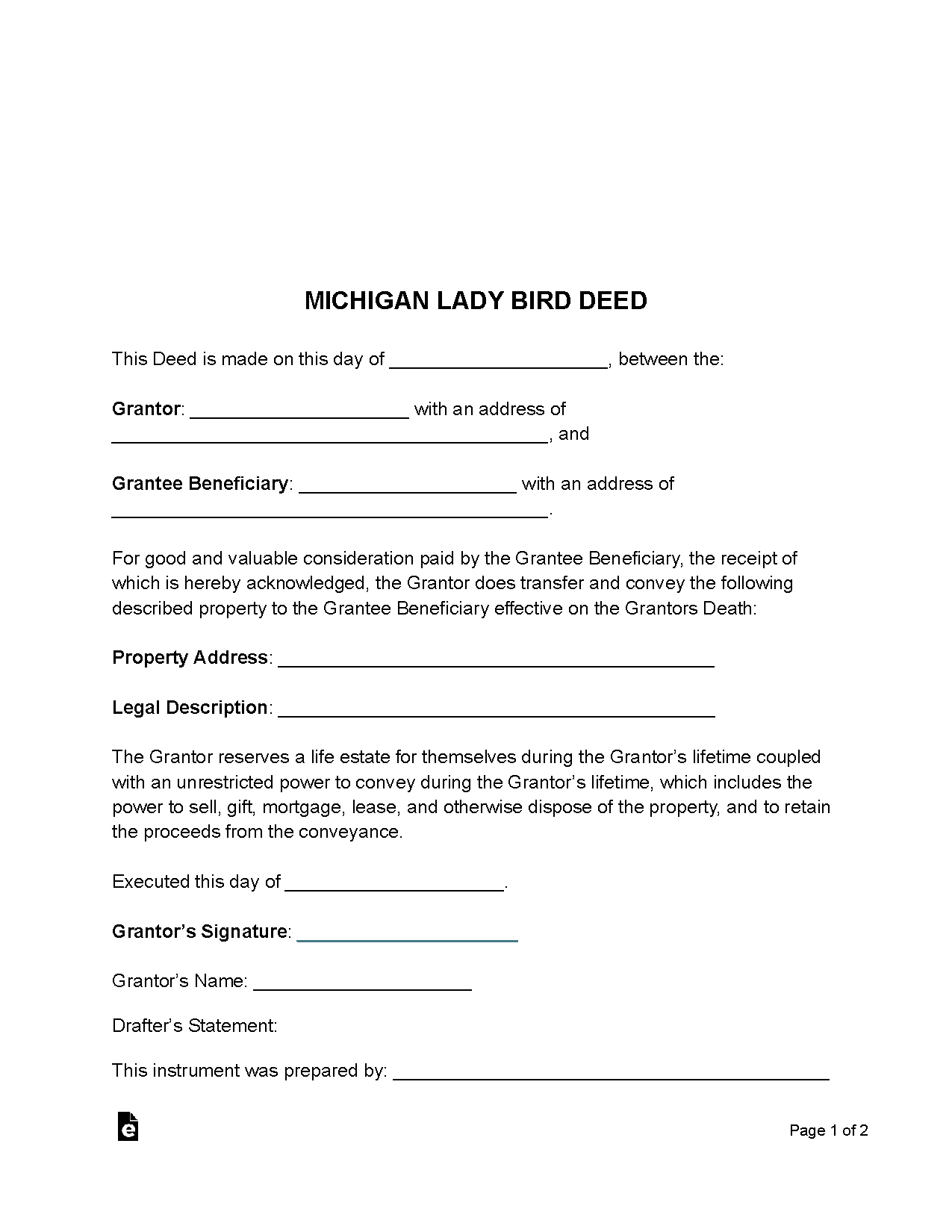
To clarify: yes, under a properly drafted and executed Lady Bird deed (also known as an enhanced life estate deed), your children—as the named remainder beneficiaries—would only take full ownership upon the death of both current owners. Until then, you and the other named owner retain full control over the property, including the right to live there, sell it, mortgage it, or even revoke the deed if you choose.
Here’s a breakdown of how this works under Michigan law:
While Both Owners Are Alive:
You and your co-owner retain complete ownership and control. The named beneficiaries have no legal rights or authority over the property.
If One Owner Passes Away:
The surviving owner continues to hold full rights during their lifetime. The deed does not transfer ownership to the children at this point.
Upon Death of Both Owners:
Title passes automatically to the named beneficiaries (your two children) without probate. They become the legal owners at that time.
This mechanism can be very useful for avoiding probate and preserving control during your lifetime. However, it is critical that the Lady Bird deed be properly drafted and recorded with the county Register of Deeds to ensure it is valid and enforceable.
If the deed was not prepared or reviewed by an attorney, I highly recommend having a local real estate or estate planning attorney examine the language to ensure it meets Michigan’s legal standards for a Lady Bird deed. You can find qualified attorneys at avvo.com.
Does this answer your question, and do you understand the answer completely? Please let me know if you have any follow-up questions.
0
Lady Bird Deed
Full Conversation
This lady bird deed will only go to named beneficiaries if both named owners are deceased. Is this true?
Lexi, Chatbot
I understand you have a question about a lady bird deed. Can you confirm if you are one of the named owners on the deed?
Yes, I am the second named owner.
Lexi, Chatbot
Have you consulted with a lawyer or legal professional regarding the specifics of the lady bird deed in question?
No, but we have one on another property we own which was filed by a lawyer.
Lexi, Chatbot
Is there anything else the lawyer should know before I connect you? Rest assured they’ll be able to help with the lady bird deed.
The beneficiaries only inherit the property if both owners are deceased, is this correct? If we are both deceased our beneficiaries would automatically own our home, is this true?
Blake
Hello, my name is Blake and I am a licensed attorney — I will be happy to help you today! Please keep in mind that this conversation is for informational purposes only and does not establish an attorney-client relationship or constitute legal advice. THIS ENTIRE DISCUSSION SHOULD BE CONSIDERED GENERAL LEGAL INFORMATION ONLY AND MAY NOT BE RELIED UPON AS ADVICE.
You must hire an attorney if you need legal advice for your specific situation.
Your question is important, and I'll provide a helpful response as soon as possible. Feel free to reach out with any additional concerns or questions. Your satisfaction is my priority, and I'll make sure to communicate effectively and use a tone that you can understand. Together, we’ll find the best solutions for your needs.
Let’s get started! First of all, how long ago did this happen, and where was it located?
We are both living at this time, just planning for the future. We purchased a home located in Michigan in November 2024 and have a clear deed.
Blake
Understood, thank you. How would you like to see this situation resolved?
At the time both of the owners have passed, we would like our two children to automatically be on the deed as owners. They should not have any authority over the property until our passing.
Blake
Thank you for explaining your goals so clearly—what you’re trying to accomplish is a very common and understandable estate planning objective, and you’re on the right track by considering a Lady Bird deed.
To clarify: yes, under a properly drafted and executed Lady Bird deed (also known as an enhanced life estate deed), your children—as the named remainder beneficiaries—would only take full ownership upon the death of both current owners. Until then, you and the other named owner retain full control over the property, including the right to live there, sell it, mortgage it, or even revoke the deed if you choose.
Here’s a breakdown of how this works under Michigan law:
While Both Owners Are Alive:
You and your co-owner retain complete ownership and control. The named beneficiaries have no legal rights or authority over the property.
If One Owner Passes Away:
The surviving owner continues to hold full rights during their lifetime. The deed does not transfer ownership to the children at this point.
Upon Death of Both Owners:
Title passes automatically to the named beneficiaries (your two children) without probate. They become the legal owners at that time.
This mechanism can be very useful for avoiding probate and preserving control during your lifetime. However, it is critical that the Lady Bird deed be properly drafted and recorded with the county Register of Deeds to ensure it is valid and enforceable.
If the deed was not prepared or reviewed by an attorney, I highly recommend having a local real estate or estate planning attorney examine the language to ensure it meets Michigan’s legal standards for a Lady Bird deed. You can find qualified attorneys at avvo.com.
Does this answer your question, and do you understand the answer completely? Please let me know if you have any follow-up questions.
Thank you, my questions have been answered.
Blake
You're very welcome! I'm glad I was able to answer your question.
15
6
Answered 4 days ago
Disclaimer
By messaging AskaLawyer.com, you agree to our Terms and have read our Privacy Policy.
The information provided on AskaLawyer.com is for general informational purposes only and does not constitute legal advice. While we strive to ensure the accuracy and timeliness of the information presented, we make no guarantees regarding its completeness or applicability to your specific circumstances.
Use of this website does not create an attorney-client relationship between you and AskaLawyer.com or any of its attorneys. Communications through this website, including any responses from attorneys, are not privileged or confidential. For advice tailored to your individual situation, we recommend consulting a licensed attorney in your jurisdiction.
AskaLawyer.com disclaims any liability for actions taken or not taken based on the content of this site. We are not responsible for any third-party content that may be accessed through this website. Reliance on any information provided herein is solely at your own risk.