[NC] Does a home in joint ownership void the small estate?
In North Carolina, when a married couple owns a home together as "tenants by the entirety"—a common arrangement—the surviving spouse automatically becomes the sole owner when the other passes away. This is because the property transfers through what's called the "right of survivorship," which happens by law and doesn't require probate. So, the home's value isn’t counted when determining whether the rest of the estate qualifies as a small estate.
Since you and your husband owned the home jointly, you became the sole owner automatically when he passed. You don’t need to file anything with the court to prove this, but it can be helpful to record an affidavit of spousal death with the Register of Deeds, so the public records are up-to-date.
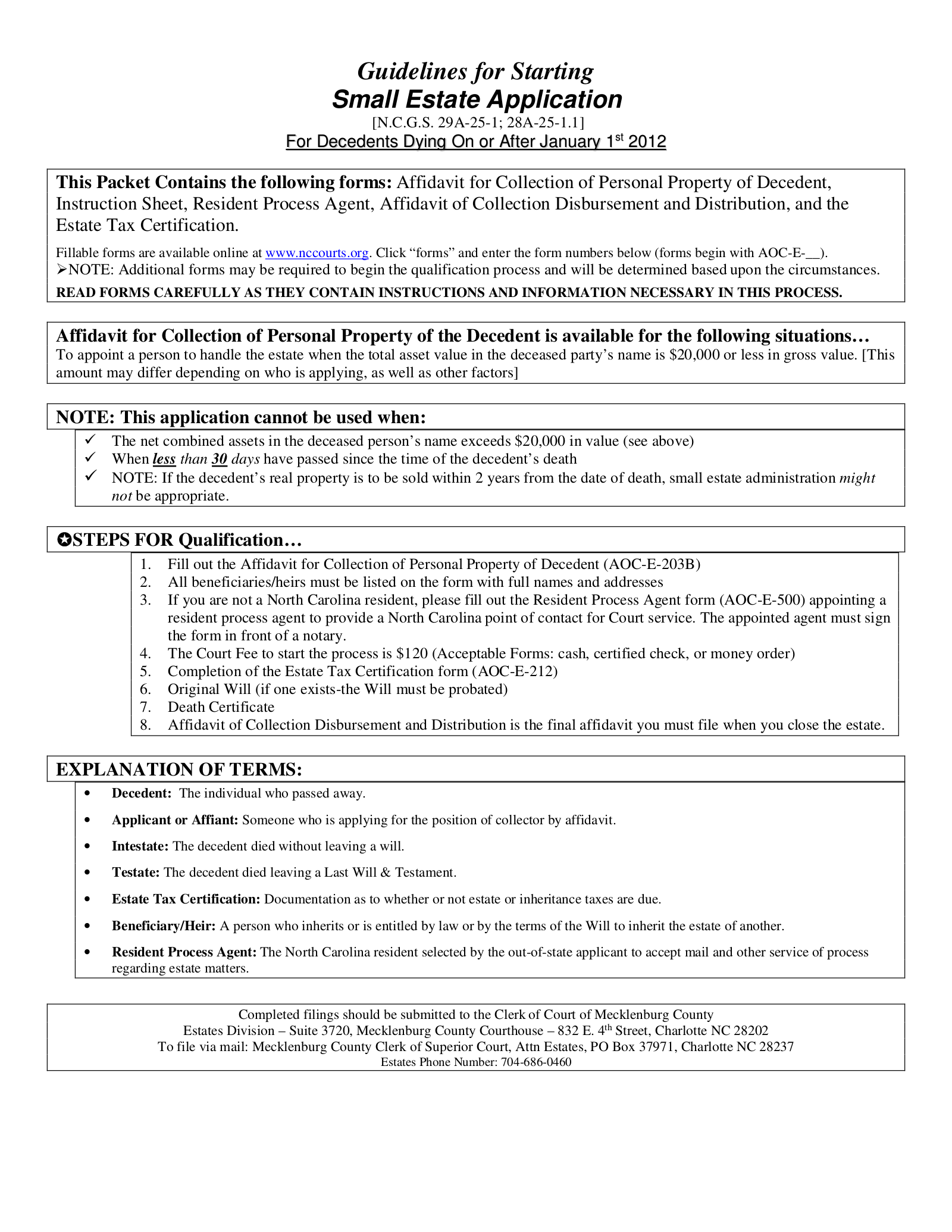
As for the rest of the estate, North Carolina offers a simplified probate process—a small estate affidavit—for cases involving limited personal property. If you're the only heir and your husband's personal property (like bank accounts in his name alone, vehicles, or household items) is worth no more than $30,000, you may qualify.
0
Small Estate Affidavit
Full Conversation
Does a home in joint ownership void the small estate?
Lexi, Chatbot
I understand that navigating joint ownership and estate matters can be confusing. Can you please share if the home in question is solely owned by you and another person, or are there additional owners involved?
It was just my husband and I.
Lexi, Chatbot
Have you already started the process of settling the estate, or are you looking for guidance on how to begin?
I never filed anything as everything was joint.
Lexi, Chatbot
Is there anything else the Estate Lawyer should know before I connect you? Rest assured they’ll be able to help with joint ownership and estate matters.
I don’t know.
Jon
Hello and thank you for reaching out! I’m Jon, a licensed attorney with over 13 years of experience, and I’m here to help.
I know legal matters can feel overwhelming, but you're in good hands. I’ll do my best to make things clear and provide you with the guidance you need. Let’s work together to find the right solution for your situation.
Jon
The small estate leaving it to your kids, or between you two?
Thank you.
Jon
Are you referring to if one of you passes, or when you both do to your children?
My husband is deceased. All between us.
Jon
I'm very sorry to hear that.
Jon
What state are you in?
Thank you.
Jon
What state is the house located in?
I don’t think so.
North Carolina
Jon
Got it! I just need a few minutes to finish typing out a complete response for you. It won’t take long—around 4 or 5 minutes—as I want to make sure I provide you with a thorough and thoughtful reply.
Okay
Jon
In North Carolina, when a married couple owns a home together as "tenants by the entirety"—a common arrangement—the surviving spouse automatically becomes the sole owner when the other passes away. This is because the property transfers through what's called the "right of survivorship," which happens by law and doesn't require probate. So, the home's value isn’t counted when determining whether the rest of the estate qualifies as a small estate.
Since you and your husband owned the home jointly, you became the sole owner automatically when he passed. You don’t need to file anything with the court to prove this, but it can be helpful to record an affidavit of spousal death with the Register of Deeds, so the public records are up-to-date.
As for the rest of the estate, North Carolina offers a simplified probate process—a small estate affidavit—for cases involving limited personal property. If you're the only heir and your husband's personal property (like bank accounts in his name alone, vehicles, or household items) is worth no more than $30,000, you may qualify.
Jon
Assets that were jointly owned, had a payable-on-death (POD) beneficiary, or named you directly (like life insurance or retirement accounts) aren’t part of the probate estate and don’t count toward that $30,000 cap. If most of your assets were jointly owned, there’s a good chance you won’t need to file a small estate affidavit at all.
For joint bank accounts, you’ll likely just need to give the bank a copy of your husband’s death certificate to have them put in your name. If there are any accounts or assets that were solely in his name and their total value is under $30,000, the small estate affidavit can help you claim them without going through full probate.
Keep in mind that while the property transfers to you automatically, any debts—like a mortgage—remain. It’s important to address those and make sure everything is properly handled.
Thank you. The house was the concern. We had no other debt. I have made mortgage payments monthly.
Jon
Great, then yes, the house automatically passes to you. Make sure you check with the county Register of Deeds to make sure that is done.
On the small estate affidavit I listed the house but said it is joint. Should that be removed or can it be.
Jon
As we discussed, since you and your husband owned the home as tenants by the entirety, it automatically transferred to you by right of survivorship.
This means it was never part of his probate estate. Including it in a document meant for probate assets is incorrect, so please remove it.
Okay. Thank you for all your help.
Jon
You're very welcome! I do hope the information I provided was helpful and addressed your question. If there's anything else you need, please don't hesitate to reach out—I’m always happy to assist. Wishing you a fantastic day ahead!
Disclaimer
By messaging AskaLawyer.com, you agree to our Terms and have read our Privacy Policy.
The information provided on AskaLawyer.com is for general informational purposes only and does not constitute legal advice. While we strive to ensure the accuracy and timeliness of the information presented, we make no guarantees regarding its completeness or applicability to your specific circumstances.
Use of this website does not create an attorney-client relationship between you and AskaLawyer.com or any of its attorneys. Communications through this website, including any responses from attorneys, are not privileged or confidential. For advice tailored to your individual situation, we recommend consulting a licensed attorney in your jurisdiction.
AskaLawyer.com disclaims any liability for actions taken or not taken based on the content of this site. We are not responsible for any third-party content that may be accessed through this website. Reliance on any information provided herein is solely at your own risk.