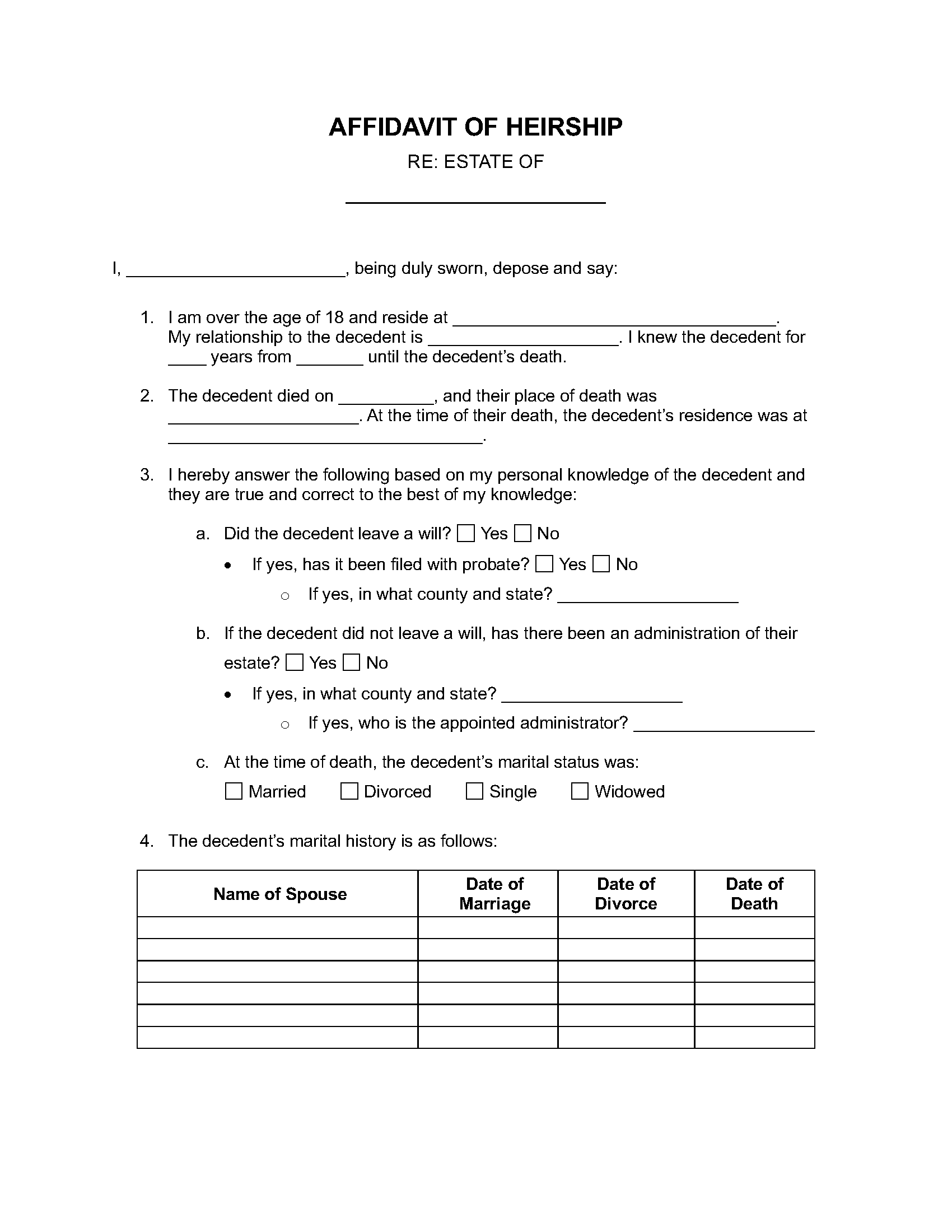
[TX] Who should I put as the affiant on an Affidavit of Heirship?

I am trying to fill out this affidavit and not sure who the affiant is. I thought it was the person who knew the decedent the longest. However, the first line is confusing me.

18

7

Andres Sanchez
Andres Sanchez

22,292 satisfied customers

View context
Solved

In your situation, the "affiant" is the person signing the affidavit—the one swearing to the truth of the statements in it. This does not necessarily have to be the daughter of the deceased, though it can be. It could also be a neighbor, family friend, or anyone with personal knowledge of the facts stated in the affidavit (e.g., relationship history, family structure, who lived where, etc.).

To clarify:

  • The affiant = the person making and signing the sworn statement.
  • If the affidavit begins with: “I, [name], being of lawful age and residing at...”—that name is the affiant.

If the purpose is to establish who the heirs are under Texas intestacy laws, the affiant should be someone who knew the decedent well enough to state:

  • Whether they were married,
  • Who their children were (and whether any children predeceased them),
  • That they died intestate (without a will), etc.

If this is an Affidavit of Heirship, Texas law requires it be signed by two disinterested witnesses—people who are not heirs and have no financial interest in the estate. (Texas Estates Code § 202.151(b)(1))

1

Affidavit of Heirship

Full Conversation


I am trying to fill out this affidavit and not sure who the affiant is. I thought it was the person who knew the decedent the longest. However, the first line is confusing me.

Lexi

Lexi, Chatbot

I understand that the first line of the affidavit is confusing you. Who is listed on the first line of the document?

The neighbor... should it be the daughter of the deceased?

Lexi

Lexi, Chatbot

Could you provide more details about the purpose of the affidavit and what information it is requesting from the affiant?

Yes, my dad is trying to get a homestead for property and we were told that since the deceased has a daughter (not his daughter) that she will own 50% and we have to have this.

Andres Sanchez

Andres Sanchez

Hello! I’m Andres Sanchez, an expert in estate law. I understand you're navigating an affidavit for your father's homestead property, and I'm here to help.

What state are you in?

Texas.

Andres Sanchez

Andres Sanchez

In your situation, the "affiant" is the person signing the affidavit—the one swearing to the truth of the statements in it. This does not necessarily have to be the daughter of the deceased, though it can be. It could also be a neighbor, family friend, or anyone with personal knowledge of the facts stated in the affidavit (e.g., relationship history, family structure, who lived where, etc.).

To clarify:

  • The affiant = the person making and signing the sworn statement.
  • If the affidavit begins with: “I, [name], being of lawful age and residing at...”—that name is the affiant.

If the purpose is to establish who the heirs are under Texas intestacy laws, the affiant should be someone who knew the decedent well enough to state:

  • Whether they were married,
  • Who their children were (and whether any children predeceased them),
  • That they died intestate (without a will), etc.

If this is an Affidavit of Heirship, Texas law requires it be signed by two disinterested witnesses—people who are not heirs and have no financial interest in the estate. (Texas Estates Code § 202.151(b)(1))

So would I have to do two affidavits?

Andres Sanchez

Andres Sanchez

Yes, you’ll typically need two separate Affidavits of Heirship, each signed by a different disinterested witness.

And that is it... does the daughter need to sign too? She will be signing over the deed to him because she wants no interest in the property.

Andres Sanchez

Andres Sanchez

Yes. If the daughter is an heir and wants to give up her interest, she will need to sign a deed—not the affidavit. The Affidavit of Heirship is just for disinterested witnesses who knew the decedent.

Now the other question I have is—it states the decedent did not have any interest in real property. Would the real property be the address in question or any other real property?

Andres Sanchez

Andres Sanchez

That statement means the affiant is swearing that the decedent did not own any real estate anywhere—not just the specific property in question.

In your case:

If the decedent did own the property (alongside your father), then that statement is false and should be removed or corrected.

Instead, the affidavit should state:

“The decedent owned real property located at [insert property address or legal description].”

You can cross out or edit that clause if it appears automatically and replace it with accurate information.

OK, yes, they both owned it so I can edit the document.

Andres Sanchez

Andres Sanchez

Exactly. You want the document to be true and reflect the decedent’s ownership accurately.

Looking to see if I need anything else... OK so 2 disinterested parties for affidavit and then notarized, correct?

Andres Sanchez

Andres Sanchez

Yes, that’s correct.

Andres Sanchez

Andres Sanchez

22,292 satisfied customers

Andres Sanchez
Welcome! Have a similar question?

5 lawyers online now

Jessica B
Jessica B

Attorney

4.75 (29,480)

[OH] How do I file a small estate affidavit for transferring stock?

12

3

Answered 1 week ago

Disclaimer


By messaging AskaLawyer.com, you agree to our Terms and have read our Privacy Policy.

The information provided on AskaLawyer.com is for general informational purposes only and does not constitute legal advice. While we strive to ensure the accuracy and timeliness of the information presented, we make no guarantees regarding its completeness or applicability to your specific circumstances.

Use of this website does not create an attorney-client relationship between you and AskaLawyer.com or any of its attorneys. Communications through this website, including any responses from attorneys, are not privileged or confidential. For advice tailored to your individual situation, we recommend consulting a licensed attorney in your jurisdiction.

AskaLawyer.com disclaims any liability for actions taken or not taken based on the content of this site. We are not responsible for any third-party content that may be accessed through this website. Reliance on any information provided herein is solely at your own risk.

Ask a Lawyer Logo
Ask a Lawyer Logo
Intake Questions
Step of 3
Loading...
Loading...

How do you like to pay?

By proceeding with payment, you agree to our Terms and Privacy Policy. You authorize us to charge $ today and $ thereafter until canceled. You may cancel anytime in the My Account section to stop future charges.

Total Due:

After purchasing, your chat will begin with an attorney.

By proceeding with payment, you agree to our Terms and Privacy Policy. You authorize us to charge $ today and $ thereafter until canceled. You may cancel anytime in the My Account section to stop future charges.

Total Due:

After purchasing, your chat will begin with an attorney.

It looks like you already have an account with Ask a Lawyer.

We have sent you a magic link to . Click the link in your email to sign in and continue your chat.

spin

Step of 6 •

You'll receive an email at as soon as the lawyer joins the conversation 🙏🏻😊

Over 90% of lawyers connect within 5 minutes. If you're not online at that moment, don't worry — the lawyer will reply to your message while you're away.

You're also welcome to stay in the chat while waiting to be connected 💬✨

Waiting for lawyer