[TX] [TX] If I die before my spouse, will they be the parent in charge of our children and their inheritance?

TX Family

I am assuming that if I pass before my spouse that my wife would be tasked with taking care of our children. Is this correct? My wife and I are intending on creating Mirror Wills regarding our children’s future, so I just want to make sure.

28

10

Andres Sanchez
Andres Sanchez

22,292 satisfied customers

View context
Solved

Yes, if you pass before your spouse, she would automatically continue to have full parental rights and responsibilities for your children under Texas law (TX Fam Code § 151.001(a)). There would be no need for court intervention unless there was a dispute or special circumstances (such as her being deemed unfit or unable to care for them).

However, your Mirror Wills are essential to plan for what happens if you both pass. Listing her parents and sister as Guardians 1 and 2 ensures that your wishes are documented and can help guide the court’s decision if necessary.

Additional Considerations for Texas Guardianship:

  • Guardian Designation in a Will Holds Weight but Requires Court Confirmation: Texas courts generally honor a parent's choice of guardian, but a judge will still have to formally appoint the guardian. If no one contests the guardianship, the process is usually straightforward.
  • Backup Guardian Considerations: It’s a good idea to name at least two alternates in case your first choice cannot serve. You might want to include a statement in your will explaining why you chose them to help prevent potential legal challenges.
  • Temporary Guardianship Provisions: You may want to draft a separate document granting temporary guardianship to your chosen individuals in case of emergencies, such as if both parents are incapacitated but still alive.
  • Trust or Financial Planning: Consider setting up a trust to ensure that financial resources are managed appropriately for your children if you and your spouse pass. You can name a trustee (who can be different from the guardian) to oversee the children’s inheritance.

0

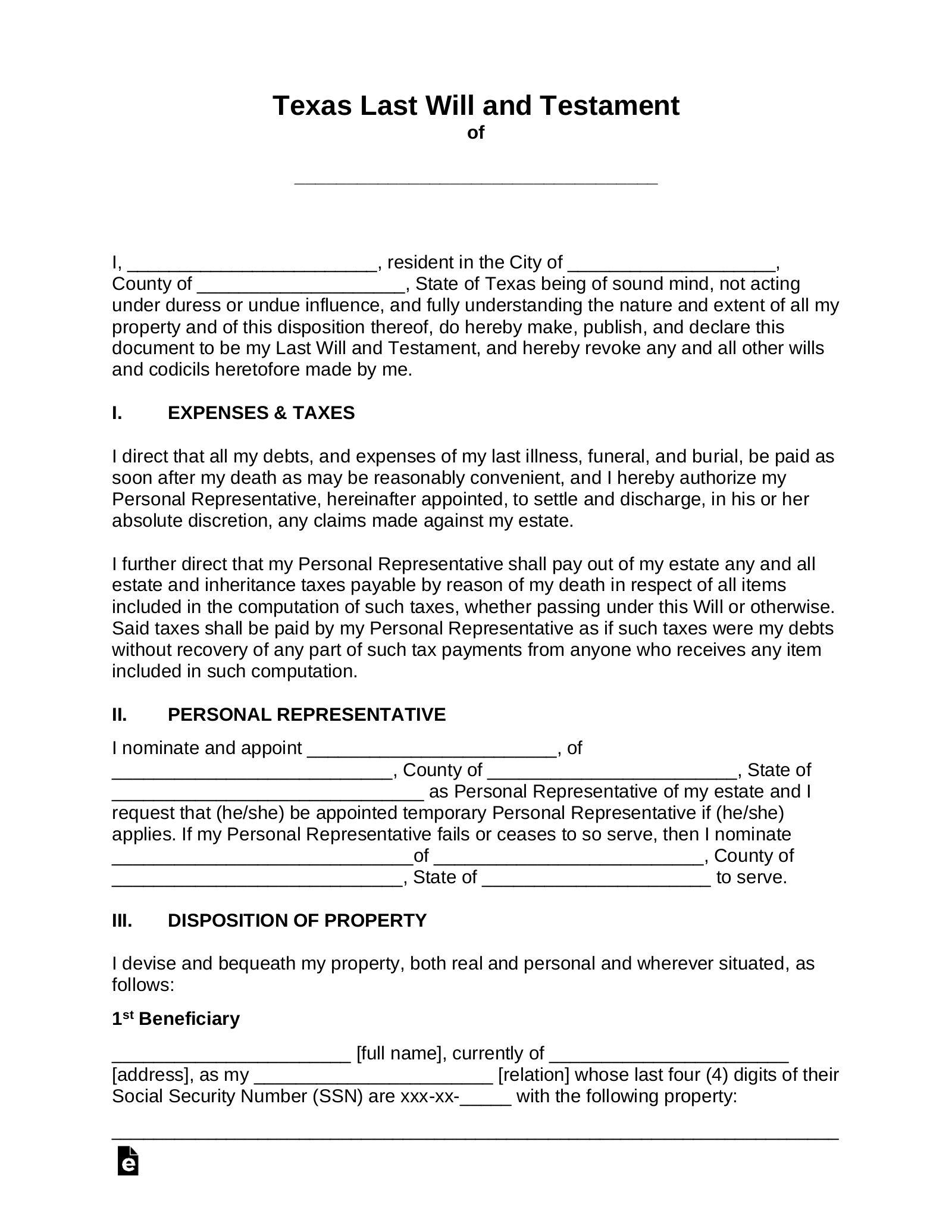
Texas Last Will and Testament

Full Conversation


Is it assumed that If I pass before my spouse that she would continue to be parent in charge of our children?

Lexi

Lexi, Chatbot

I understand your concern. In the event of your passing, do you and your spouse currently have any legal documentation in place regarding guardianship of your children?

Nope. I am working on that now. We are going to create Mirror Wills that list her parents and sister as Guardians 1 and 2 should we both pass.

Lexi

Lexi, Chatbot

Have you and your spouse discussed who you would prefer to be the guardian of your children if both of you were to pass away?

Yes.

Lexi

Lexi, Chatbot

Is there anything else the Family Lawyer should know before I connect you? Rest assured they’ll be able to help with guardianship arrangements.

Not at this time.

Andres Sanchez

Andres Sanchez

Hello! I'm Andres Sanchez, a Family Law expert here to assist you with your concerns about guardianship and wills. It's great to hear that you're taking proactive steps in ensuring the best care for your children. What state are you in?

Texas.

I am assuming that if I pass before my spouse that my wife would be tasked with taking care of our children. Is this correct? My wife and I are intending on creating Mirror Wills regarding our children’s future, so I just want to make sure.

Andres Sanchez

Andres Sanchez

Yes, if you pass before your spouse, she would automatically continue to have full parental rights and responsibilities for your children under Texas law (TX Fam Code § 151.001(a)). There would be no need for court intervention unless there was a dispute or special circumstances (such as her being deemed unfit or unable to care for them).

However, your Mirror Wills are essential to plan for what happens if you both pass. Listing her parents and sister as Guardians 1 and 2 ensures that your wishes are documented and can help guide the court’s decision if necessary.

Additional Considerations for Texas Guardianship:

  • Guardian Designation in a Will Holds Weight but Requires Court Confirmation: Texas courts generally honor a parent's choice of guardian, but a judge will still have to formally appoint the guardian. If no one contests the guardianship, the process is usually straightforward.
  • Backup Guardian Considerations: It’s a good idea to name at least two alternates in case your first choice cannot serve. You might want to include a statement in your will explaining why you chose them to help prevent potential legal challenges.
  • Temporary Guardianship Provisions: You may want to draft a separate document granting temporary guardianship to your chosen individuals in case of emergencies, such as if both parents are incapacitated but still alive.
  • Trust or Financial Planning: Consider setting up a trust to ensure that financial resources are managed appropriately for your children if you and your spouse pass. You can name a trustee (who can be different from the guardian) to oversee the children’s inheritance.

My other question is regarding insurance payouts. Can I control that through my will (via a trust) or is the insurance money distributed to the beneficiaries regardless? I have two children from a prior marriage and I want to make sure their mother does not have access to that money.

Andres Sanchez

Andres Sanchez

Yes, I see your concern regarding insurance payouts upon death and ensuring that your ex-wife does not have access to the money intended for your children from your prior marriage. You absolutely have control over when and how those benefits are released by setting up a trust.

How to Ensure Your Ex-Wife Does Not Control the Insurance Payouts:

  1. Name a Trust as the Beneficiary, NOT Your Minor Children

    • If you name your minor children directly, the funds may be managed by their surviving parent (your ex-wife) until they turn 18.

    • Instead, set up a trust and name it as the beneficiary of your life insurance.

  2. Create a Living or Testamentary Trust

    • Living Trust: Created while you’re alive. Avoids probate. Immediate control.

    • Testamentary Trust: Created through your will. Goes into effect after death and must pass through probate.

  3. Specify Distribution Rules

    • You control how and when the funds are distributed (e.g., age-based, education-based, discretionary).

  4. Choose the Right Trustee

    • Do not name your ex-wife. Choose someone you trust or a professional institution.

  5. Update Your Beneficiary Designations

    • Ensure your insurance provider has the trust—not your children—listed as the beneficiary.

  6. Include Specific Language in Your Will

    • Explicitly state your ex-wife is not to manage any assets for your children.

Since I have children from a prior marriage and children with my current wife, should I create two separate documents?

Andres Sanchez

Andres Sanchez

Yes, it may be prudent to do that.

Okay. Thank you for that clarification.

I have one final question: What is the difference between Living and Testamentary Trust?

Andres Sanchez

Andres Sanchez

Difference Between a Living Trust and a Testamentary Trust
Both types of trusts help you control how your assets (including life insurance payouts) are managed and distributed to your children, but they have key differences in timing, setup, and management.

1. Living Trust (Revocable or Irrevocable)
✅ Created While You’re Alive
✅ Avoids Probate
✅ Immediate Control & Management

How It Works:
You transfer assets (e.g., life insurance payouts, property, savings) into the trust.
You name a trustee (yourself or someone else) to manage the trust.
If you become incapacitated or pass away, the successor trustee takes over without needing court approval.
Your assets pass directly to beneficiaries (your children) without going through probate.

Best for:
If you want immediate control over how your assets are managed and avoid probate.
If you want stronger control over how and when your children receive money.
If you have assets beyond life insurance (e.g., real estate, savings) that you want to protect.

Drawbacks:
Requires active management (you must fund it while alive).
More upfront costs (legal fees to set it up).
Irrevocable versions cannot be changed easily.

2. Testamentary Trust
✅ Created in Your Will
✅ Only Goes into Effect Upon Your Death
❌ Goes Through Probate

How It Works:
Your will creates the trust upon your death.
A court appoints the trustee (someone you name in the will).
Your assets, including the life insurance payout, go through probate first before funding the trust.
The trustee manages and distributes assets according to the instructions in your will.

Best for:
If you only want to control the life insurance payout after your death, without managing a trust now.
If you are okay with probate but want to prevent your ex-wife from controlling the money.

Drawbacks:
Does not avoid probate, meaning delays and court involvement.
No control during your lifetime (it only activates after death).
More vulnerable to legal challenges (since probate is public and allows disputes).

Why would a trust have to go through probate if it is set and designated through the Testamentary trust? Does that mean the ex-wife could fight the established trust?

Andres Sanchez

Andres Sanchez

A Testamentary Trust is created through your will, which means that it does not exist until you pass away. Because of this, it must go through the probate process first before the trust can be established and funded.

Here’s why:
Probate is Required to Validate the Will:
A will must be filed with the probate court and go through legal review before assets can be distributed.
The court ensures the will is valid, debts are paid, and assets are correctly assigned.

The Trust is Created Only After Probate is Completed:
Unlike a Living Trust, which exists immediately and bypasses probate, a Testamentary Trust only comes into existence after your will is processed in probate.
The probate court oversees the appointment of the trustee and the transfer of assets into the trust.

Your Ex-Wife Could Contest It During Probate:
Since probate is a public legal process, your ex-wife (or any other interested party) could challenge your will or the trust itself.
If she argues that the will is invalid, coerced, or improperly executed, she could delay or potentially disrupt the trust’s creation.
If your children are minors, she could petition to be appointed as their guardian of the estate, arguing she should have control over their inheritance.

How to Prevent Your Ex-Wife from Accessing the Money
If you want to ensure your ex-wife has zero control over the funds, a Living Trust is a much safer option because:

✅ It avoids probate completely—no court involvement where she could challenge the trust.
✅ It already exists before you pass, meaning you fully control who the trustee is and how funds are distributed.
✅ She cannot challenge it as part of your estate—it operates independently of your will.

If you still prefer a Testamentary Trust, you can:

✔️ Clearly state in your will that she should not be the guardian of any financial assets for the children.
✔️ Name a trusted person as Trustee (like your parents or a financial institution) to control the money.
✔️ Include language restricting access to the funds until your children reach a specific age.

Would or I guess could the testamentary trust ever impact the wording of the will itself? I guess I just want to make sure that my sons from my prior marriage get the money I have set aside for them while still allowing my wife to manage the funds I have set aside for our boys.

Andres Sanchez

Andres Sanchez

Yes, a Testamentary Trust is part of your will, meaning its terms and structure are dictated by how your will is written. This means that if the will is challenged, altered, or invalidated in probate, it could impact the trust as well. Here’s how that works and how to ensure your sons from your prior marriage receive their share while your wife manages funds for your other children.

How a Testamentary Trust Relates to a Will
The Testamentary Trust is created by your will, so it does not exist as a separate entity until after you pass.
Since the trust’s creation depends on the probate process, any issues with your will (such as challenges from your ex-wife or disputes from other family members) could impact how the trust is funded or whether it functions as intended.

The language in your will must be clear to ensure that:
The funds for your sons from your prior marriage are protected.
Your wife has control only over the funds meant for your children together.

Ways to Ensure Proper Distribution

  1. Specify Separate Testamentary Trusts in Your Will
    ✅ Trust for Sons from Prior Marriage → Managed by a trustee you choose (NOT your ex-wife).
    ✅ Trust for Sons with Your Current Wife → Managed by your wife as trustee.
    This ensures that your ex-wife cannot control the inheritance meant for your older sons, while your wife can manage funds for your children together.

  2. Make Sure the Will Includes Clear Trust Terms
    Your will should explicitly state:
    Who is the trustee for each trust.
    How and when funds are distributed (e.g., upon reaching certain ages, for education, etc.).
    That your ex-wife is not entitled to manage or access funds for your sons from your prior marriage.

  3. Consider Using a Living Trust for Your Sons from Your Prior Marriage
    To fully protect their inheritance and prevent delays or challenges, you might want to set up a Living Trust now for your sons from your prior marriage while keeping a Testamentary Trust in your will for your children with your wife.

Living Trust for Sons from Prior Marriage:
Ensures immediate control over the funds.
No probate involvement, meaning your ex-wife cannot interfere.
You can name a trustee of your choosing (such as a sibling or financial institution).

Testamentary Trust for Sons with Your Wife:
Allows your wife to manage their funds after you pass.
Follows probate, but since there’s no conflict, it shouldn’t cause problems.

So ex-wife could slow things down with delays in probate? Would that be null and void once my older boys both turn 18?

Andres Sanchez

Andres Sanchez

Yes, your ex-wife could slow things down with delays in probate if you use a Testamentary Trust instead of a Living Trust. Since the Testamentary Trust is created through your will, it must go through probate first. During that process, your ex-wife (or anyone else with standing) could:

  • Contest the will—arguing it was improperly executed or that she should have some say in the children’s funds.

  • Petition for guardianship of the estate—if your sons are still minors, she could try to control their inheritance.

  • Create unnecessary legal delays—probate in Texas can take months or even years if there are disputes.

What Happens When Your Sons Turn 18?
Once both of your older boys turn 18, your ex-wife no longer has any legal control over their inheritance. However, until that point, she could try to insert herself into probate proceedings, especially if the funds are set to go into a Testamentary Trust that hasn’t been funded yet.

Last question - While this is an important decision, I cannot afford costly legal fees associated with drawing up the documents, fees etc. If I had to use an online tool to help me, with the aid of attorney’s through their sites, is there an online agency you would recommend?

Andres Sanchez

Andres Sanchez

Sorry, there is not.

I understand. Thank you for your time and expertise today.

Andres Sanchez

Andres Sanchez

You're welcome. I hope everything works out for you.

Andres Sanchez

Andres Sanchez

22,292 satisfied customers

Andres Sanchez
Welcome! Have a similar question?

5 lawyers online now

Brandon
Brandon

Attorney

4.56 (16,155)

[CA] [CA] What are the minimum legal requirements for a postnup?

16

6

Answered 3 days ago

Andres Sanchez
Andres Sanchez

Attorney

4.73 (22,292)

[FL] [FL] Can a POA be signed in multiple states?

20

7

Answered 4 days ago

TJ, Esq.
TJ, Esq.

4.68 (17,778)

[GA] [GA] How do I legally change my name and gender?

14

5

Answered 4 days ago

Disclaimer


By messaging AskaLawyer.com, you agree to our Terms and have read our Privacy Policy.

The information provided on AskaLawyer.com is for general informational purposes only and does not constitute legal advice. While we strive to ensure the accuracy and timeliness of the information presented, we make no guarantees regarding its completeness or applicability to your specific circumstances.

Use of this website does not create an attorney-client relationship between you and AskaLawyer.com or any of its attorneys. Communications through this website, including any responses from attorneys, are not privileged or confidential. For advice tailored to your individual situation, we recommend consulting a licensed attorney in your jurisdiction.

AskaLawyer.com disclaims any liability for actions taken or not taken based on the content of this site. We are not responsible for any third-party content that may be accessed through this website. Reliance on any information provided herein is solely at your own risk.

Ask a Lawyer Logo
Ask a Lawyer Logo
Intake Questions
Step of 3
Loading...
Loading...

How do you like to pay?

By proceeding with payment, you agree to our Terms and Privacy Policy. You authorize us to charge $ today and $ thereafter until canceled. You may cancel anytime in the My Account section to stop future charges.

Total Due:

After purchasing, your chat will begin with an attorney.

By proceeding with payment, you agree to our Terms and Privacy Policy. You authorize us to charge $ today and $ thereafter until canceled. You may cancel anytime in the My Account section to stop future charges.

Total Due:

After purchasing, your chat will begin with an attorney.

It looks like you already have an account with Ask a Lawyer.

We have sent you a magic link to . Click the link in your email to sign in and continue your chat.

spin

Step of 6 •

You'll receive an email at as soon as the lawyer joins the conversation 🙏🏻😊

Over 90% of lawyers connect within 5 minutes. If you're not online at that moment, don't worry — the lawyer will reply to your message while you're away.

You're also welcome to stay in the chat while waiting to be connected 💬✨

Waiting for lawyer