What forms do I need to travel abroad with my nephew?
Thank you for explaining the travel plans. You already have the essentials in place — parental consent forms, notarisation, apostille, and the nephew’s birth certificate. For long stays like yours, the Spanish and UK border authorities usually look for clear proof that you have lawful authority to travel with and care for a minor. A notarised and apostilled parental authorisation with both parents’ signatures generally satisfies this.
It is also advisable that the consent form clearly authorises you and your wife not only to make travel decisions but also to take medical decisions if required. Spanish law requires a “permiso de viaje” when a minor leaves the country without their legal guardians (Article 156 of the Civil Code places parental authority jointly in both parents). The UK does not impose a statutory form but the Home Office expects a “letter of consent” covering travel and guardianship; immigration officers may ask to see it on arrival.
In both countries, border officers often request proof of onward travel and accommodation to ensure the minor is not being taken abroad indefinitely without parental knowledge.
You should therefore carry with you copies of the nephew’s parents’ passports or ID cards, the original consent and power of attorney documents, and the nephew’s medical insurance papers. For medical purposes, some hospitals in Spain and the UK may also ask for an insurance authorisation or “delegation” in writing, so it is best that the parents add a clause explicitly permitting you to consent to medical treatment.
If the child will be enrolled in school during the nine-month period, you may also need an additional notarised guardianship letter translated into Spanish and English so that local authorities accept your parental authority for enrolment.
To avoid any issue at border control, keep the documents together in a single folder and have certified translations into Spanish for Spain and into English for the UK, even though the apostille itself is internationally recognised. That way there can be no argument about comprehension by local officials.
Do you plan to have your nephew attend school in Spain or the UK during your stay, or will he be home-schooled? This may affect whether we also prepare an additional guardianship letter specifically for school registration, which I could draft for you under Premium Service. Would you like me to outline such a draft?
0
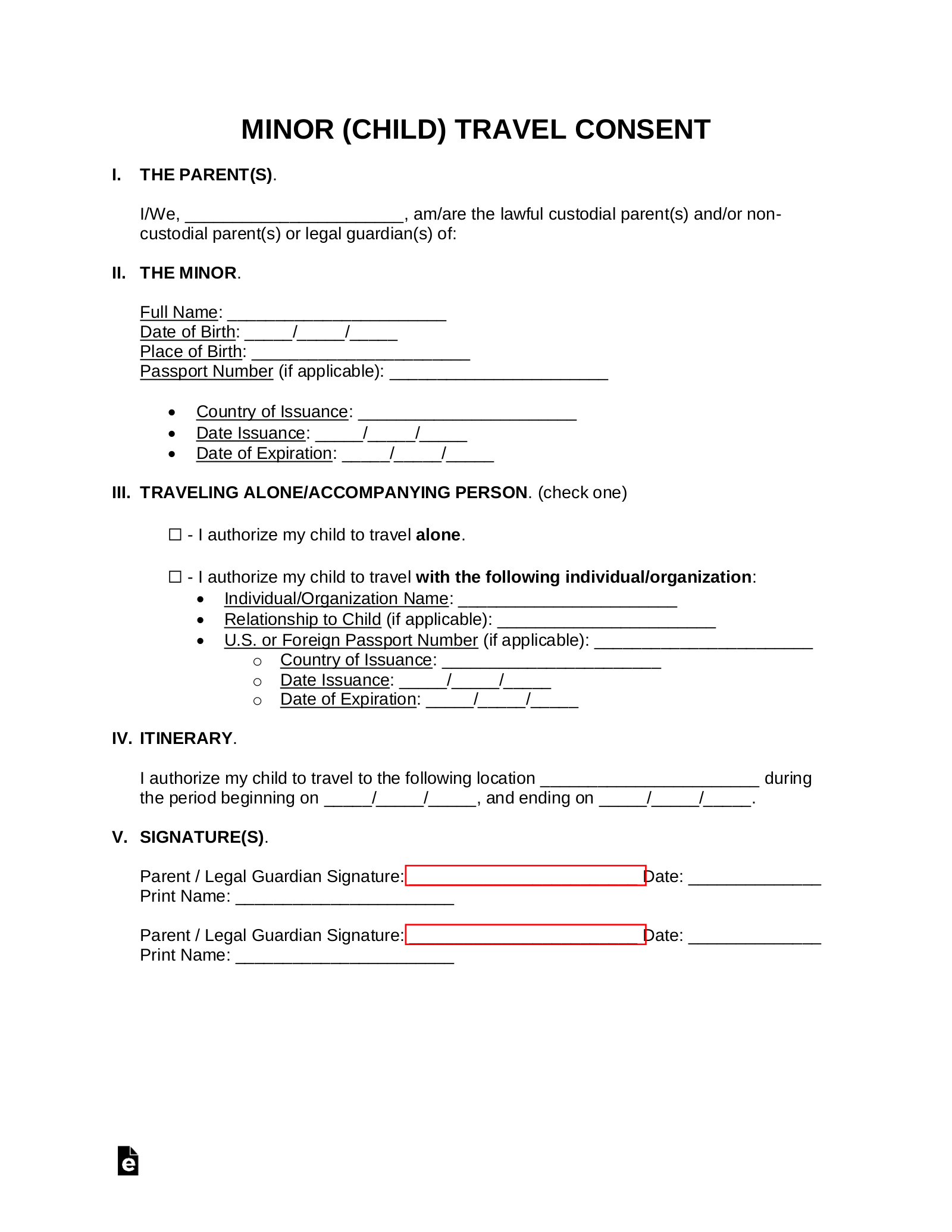
Minor Travel Consent
Full Conversation
My family (Me, wife, sons ages 10 and 8) are traveling to Spain and UK for approximately 9 months. My nephew, my wife's sister's son age 14) will be travelling with us. His mother will accompany us on the first flight and afterwards he will be under our care. We are filling out power of attorney and minor consent travel forms. We will have them notarized and signed by both of his parents and apostilled. We will also have his birth certificate. Is there anything else we will need?
Lexi, Chatbot
That sounds like quite a journey you have planned! Have you consulted with a family lawyer regarding the power of attorney and minor consent travel forms?
No, just searched online.
Lexi, Chatbot
Will your nephew's parents be providing any specific instructions or requirements for his care during the trip?
No
Lexi, Chatbot
Is there anything else the Family Lawyer should know before I connect you? Rest assured they'll be able to help with your travel consent forms.
It's really just day to day living decisions and medical decisions if needed.
AnanK Lawyer
Thank you for explaining the travel plans. You already have the essentials in place — parental consent forms, notarisation, apostille, and the nephew’s birth certificate. For long stays like yours, the Spanish and UK border authorities usually look for clear proof that you have lawful authority to travel with and care for a minor. A notarised and apostilled parental authorisation with both parents’ signatures generally satisfies this.
It is also advisable that the consent form clearly authorises you and your wife not only to make travel decisions but also to take medical decisions if required. Spanish law requires a “permiso de viaje” when a minor leaves the country without their legal guardians (Article 156 of the Civil Code places parental authority jointly in both parents). The UK does not impose a statutory form but the Home Office expects a “letter of consent” covering travel and guardianship; immigration officers may ask to see it on arrival.
In both countries, border officers often request proof of onward travel and accommodation to ensure the minor is not being taken abroad indefinitely without parental knowledge.
You should therefore carry with you copies of the nephew’s parents’ passports or ID cards, the original consent and power of attorney documents, and the nephew’s medical insurance papers. For medical purposes, some hospitals in Spain and the UK may also ask for an insurance authorisation or “delegation” in writing, so it is best that the parents add a clause explicitly permitting you to consent to medical treatment.
If the child will be enrolled in school during the nine-month period, you may also need an additional notarised guardianship letter translated into Spanish and English so that local authorities accept your parental authority for enrolment.
To avoid any issue at border control, keep the documents together in a single folder and have certified translations into Spanish for Spain and into English for the UK, even though the apostille itself is internationally recognised. That way there can be no argument about comprehension by local officials.
Do you plan to have your nephew attend school in Spain or the UK during your stay, or will he be home-schooled? This may affect whether we also prepare an additional guardianship letter specifically for school registration, which I could draft for you under Premium Service. Would you like me to outline such a draft?
His mother will be traveling with us to Spain to enroll him in school (she will return to the US after 2 weeks) so that service will not be required. In addition to travelling to the UK we will likely visit France and Italy. Are French and Italian certified translations necessary? The only travel to and from the Schengen will be Spain-UK and Spain US.
AnanK Lawyer
Thank you for clarifying. Since your nephew’s mother will personally accompany him to Spain for the initial enrolment, you will avoid the more delicate issue of registering him in school without a parent present. After she returns to the US, the day-to-day authority will rest on the notarised, apostilled consent you are carrying.
On translations: Spain and the UK will be satisfied with the apostilled English originals, but in practice Spanish border police or local authorities may prefer a Spanish translation to avoid language disputes. For France and Italy, certified translations are not strictly required by statute if the documents already carry an apostille — the Hague Apostille Convention ensures recognition. However, at practical level, French gendarmes or Italian polizia di frontiera often insist on understanding the contents directly. A certified translation into French and Italian is therefore not legally mandatory but highly recommended for ease at border checks, emergency medical treatment, or any administrative dealings.
Given your travel pattern, the most efficient approach would be: keep the original notarised English consent with apostille, plus translations into Spanish and English for your main bases (Spain and UK). For France and Italy, a simple sworn translation into French and Italian will serve as an additional safeguard. You can usually obtain these from certified translators in the US before travel, or locally from court-registered translators (“traducteur assermenté” in France, “traduttore giurato” in Italy).
The fact that your Schengen entry and exit is only through Spain is important. Once admitted into Schengen legally, your nephew can travel to France and Italy with you without fresh border checks between member states. The issue arises if he is stopped for an identity check within France or Italy, or if medical care is needed, where officials may expect to see documentation in their language. Carrying the certified translations avoids delays or suspicion of trafficking.
Would you like me to prepare a model multilingual consent form that contains Spanish, French, and Italian text alongside English, so you carry one harmonised document rather than separate translations? This can be done as part of Premium Service and gives you a single instrument acceptable across all countries.
AnanK Lawyer
If you have no further questions, I will now close this chat. Thank you for using AskaLawyer!
Disclaimer
By messaging AskaLawyer.com, you agree to our Terms and have read our Privacy Policy.
The information provided on AskaLawyer.com is for general informational purposes only and does not constitute legal advice. While we strive to ensure the accuracy and timeliness of the information presented, we make no guarantees regarding its completeness or applicability to your specific circumstances.
Use of this website does not create an attorney-client relationship between you and AskaLawyer.com or any of its attorneys. Communications through this website, including any responses from attorneys, are not privileged or confidential. For advice tailored to your individual situation, we recommend consulting a licensed attorney in your jurisdiction.
AskaLawyer.com disclaims any liability for actions taken or not taken based on the content of this site. We are not responsible for any third-party content that may be accessed through this website. Reliance on any information provided herein is solely at your own risk.