How much notice do I give a tenant to vacate?
Hi Anthony. Since you're dealing with a month-to-month (oral) tenancy and you’re planning to sell the property, the required notice period typically depends on your state law. Most states require either 30 or 60 days’ written notice to terminate a month-to-month tenancy. Here’s a general breakdown:
If you're in California: You must give 60 days' notice if the tenant has been there 1 year or more. If less than 1 year, 30 days is sufficient. (CIV § 1946.1(b) and CIV § 1946.1(c))
If you're in New York: Tenancy over 2 years (or tenant is over 62), you must give 90 days’ notice. If between 1-2 years, 60 days. Less than a year, 30 days.
If you're in most other states: Typically 30 days’ notice is required for a month-to-month tenancy regardless of how long they’ve lived there, but some states require more.
To be safe, many landlords choose to give 60 days’ written notice when there’s no written lease and the tenant has been in place for several years. Make sure the notice is properly served (hand delivery, certified mail, etc., depending on local requirements).
0
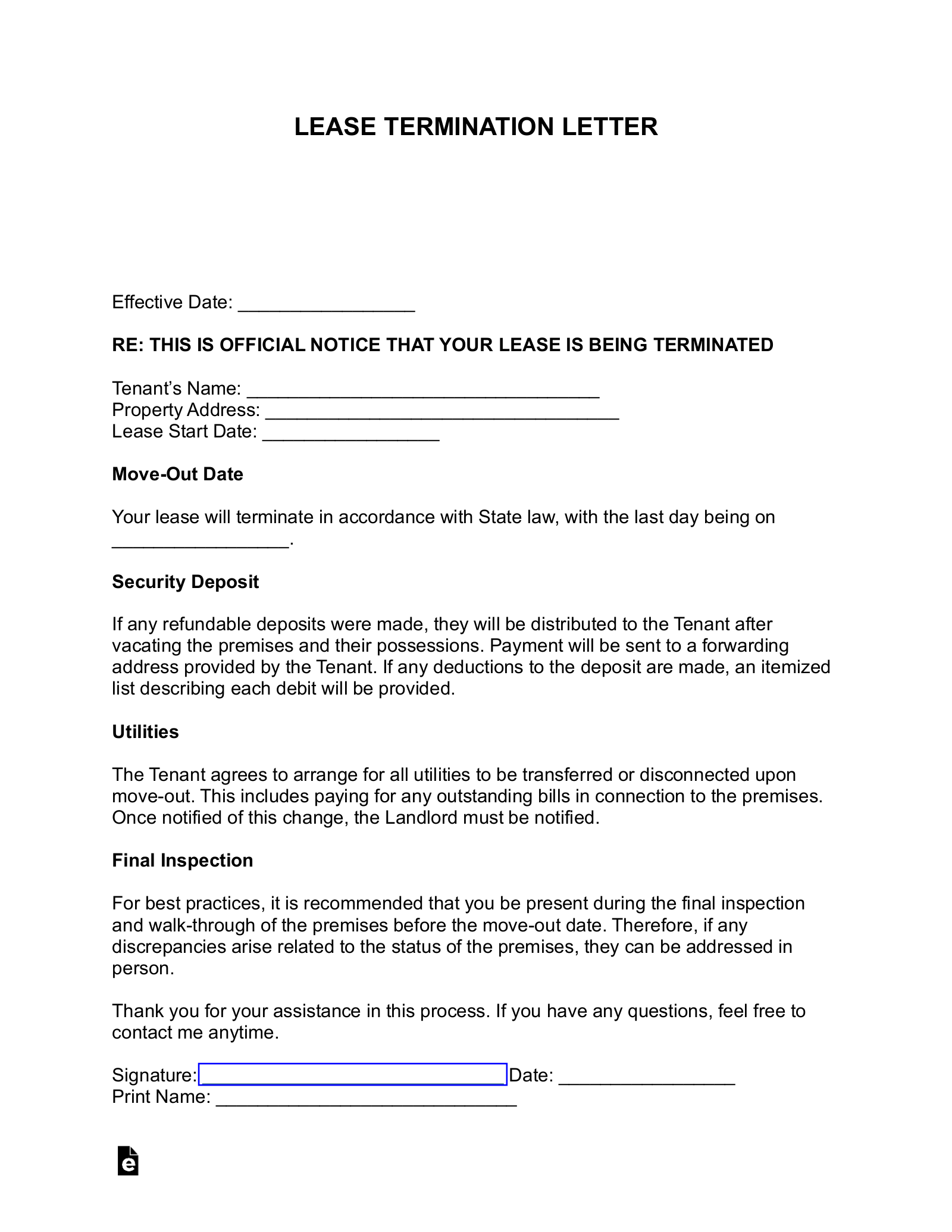
Lease Termination Letter
Full Conversation
I have a tenant with a verbal lease. I am selling the house. Should I give her 30 or 60 days notice to vacate?
A few years.
Lexi, Chatbot
Have you already discussed the sale of the house with the tenant, or is this the first time you're notifying them?
First time.
Lexi, Chatbot
Is there anything else the landlord-tenant lawyer should know before I connect you? Rest assured they'll be able to help with your tenant notice.
No
Richard
Hello. My name is Richard and I have been a licensed attorney for over 25 years and hope to be of assistance.
Please be advised that this website is for information purposes only, and I cannot formally represent customers of this website or perform actual legal services on your behalf. I know your question is important, and I’m working on typing an answer to your question now.
Sometimes responses and replies take time, and we ask you to be courteous and patient to allow the expert to type your answers to you and also to others.
Richard
Hi Anthony. Since you're dealing with a month-to-month (oral) tenancy and you’re planning to sell the property, the required notice period typically depends on your state law. Most states require either 30 or 60 days’ written notice to terminate a month-to-month tenancy. Here’s a general breakdown:
If you're in California: You must give 60 days' notice if the tenant has been there 1 year or more. If less than 1 year, 30 days is sufficient. (CIV § 1946.1(b) and CIV § 1946.1(c))
If you're in New York: Tenancy over 2 years (or tenant is over 62), you must give 90 days’ notice. If between 1-2 years, 60 days. Less than a year, 30 days.
If you're in most other states: Typically 30 days’ notice is required for a month-to-month tenancy regardless of how long they’ve lived there, but some states require more.
To be safe, many landlords choose to give 60 days’ written notice when there’s no written lease and the tenant has been in place for several years. Make sure the notice is properly served (hand delivery, certified mail, etc., depending on local requirements).
20
6
Answered 3 days ago
11
4
Answered 4 days ago
Disclaimer
By messaging AskaLawyer.com, you agree to our Terms and have read our Privacy Policy.
The information provided on AskaLawyer.com is for general informational purposes only and does not constitute legal advice. While we strive to ensure the accuracy and timeliness of the information presented, we make no guarantees regarding its completeness or applicability to your specific circumstances.
Use of this website does not create an attorney-client relationship between you and AskaLawyer.com or any of its attorneys. Communications through this website, including any responses from attorneys, are not privileged or confidential. For advice tailored to your individual situation, we recommend consulting a licensed attorney in your jurisdiction.
AskaLawyer.com disclaims any liability for actions taken or not taken based on the content of this site. We are not responsible for any third-party content that may be accessed through this website. Reliance on any information provided herein is solely at your own risk.