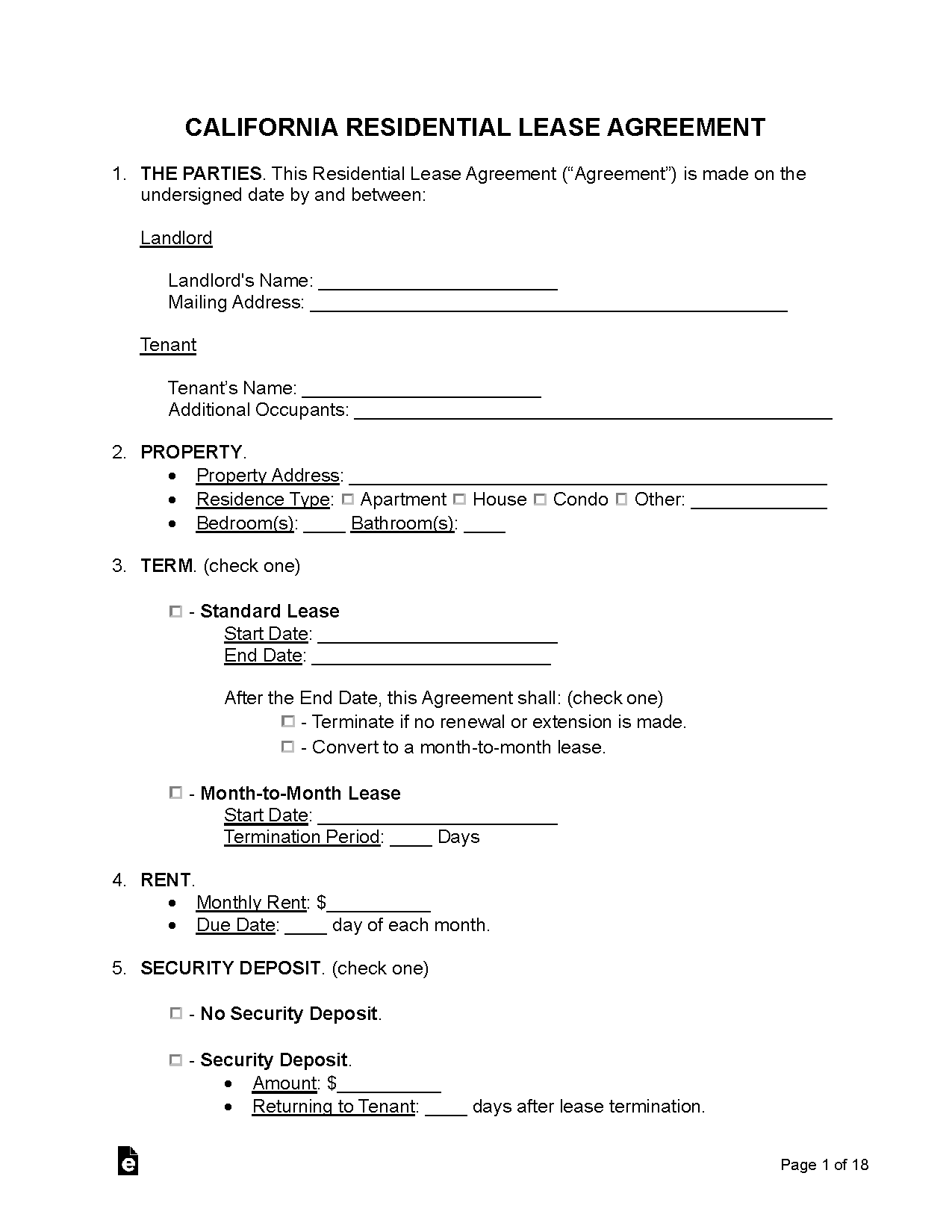
[CA] Am I stuck in my lease if I signed sight unseen?
In California, signing a lease sight unseen — meaning you signed without personally inspecting the property — does not automatically give you the right to break the lease. Once you’ve signed, it’s a legally binding contract, and you’re generally obligated to its terms unless certain exceptions apply.
Here are some potential legal grounds for terminating your lease early:
1. Uninhabitable Conditions:
If the unit violates health or safety standards — for example, serious plumbing, electrical, pest, or mold issues — California Civil Code §1942 allows you to terminate the lease if the landlord fails to fix the problem after proper notice.
2. Landlord Misrepresentation or Fraud:
If the landlord knowingly misled you about the condition of the unit — for example, showing you a model unit that’s in significantly better condition than the actual one without disclosing material differences — you may argue the lease was signed under false pretenses. That could make it voidable, but this can be hard to prove and may require an attorney’s help.
3. Landlord Harassment or Privacy Violations:
If the landlord repeatedly violates your right to quiet enjoyment (unauthorized entries, harassment, etc.), you could have grounds to break the lease.
Next Steps
1. Document Everything:
Take photos and videos of the damaged hardwood floors and any other issues. Keep copies of emails or messages with management.
2. Provide Written Notice:
Send a detailed written notice to your landlord describing the problems and requesting a fix within a reasonable time (usually 14 days).
3. Negotiate a Termination:
If you haven’t moved in or only just did, sometimes landlords will agree to let you out of the lease early — especially if they can re-rent quickly.
4. Legal Caution:
Breaking the lease without legal justification could leave you responsible for unpaid rent and potentially damages, though California landlords must try to mitigate losses by re-renting the unit.
0
California Residential Lease Agreement
Full Conversation
Am I stuck in my lease if I signed sight unseen?
Lexi, Chatbot
I understand your concern about your lease. Have there been any issues with the property since you moved in?
Yeah, the hardwood floors are messed up.
Lexi, Chatbot
Have you discussed your concerns with the landlord or property management company?
Yeah, they said they couldn’t help — apparently it’s like that in most of the units, but the model unit I toured didn’t have this issue.
Lexi, Chatbot
Is there anything else the lawyer should know before I connect you?
Yes.
Andres Sanchez
Hello, my name is Andres Sanchez. I’m an attorney with 20 years of experience. What state are you in?
California.
Andres Sanchez
In California, signing a lease sight unseen — meaning you signed without personally inspecting the property — does not automatically give you the right to break the lease. Once you’ve signed, it’s a legally binding contract, and you’re generally obligated to its terms unless certain exceptions apply.
Here are some potential legal grounds for terminating your lease early:
1. Uninhabitable Conditions:
If the unit violates health or safety standards — for example, serious plumbing, electrical, pest, or mold issues — California Civil Code §1942 allows you to terminate the lease if the landlord fails to fix the problem after proper notice.
2. Landlord Misrepresentation or Fraud:
If the landlord knowingly misled you about the condition of the unit — for example, showing you a model unit that’s in significantly better condition than the actual one without disclosing material differences — you may argue the lease was signed under false pretenses. That could make it voidable, but this can be hard to prove and may require an attorney’s help.
3. Landlord Harassment or Privacy Violations:
If the landlord repeatedly violates your right to quiet enjoyment (unauthorized entries, harassment, etc.), you could have grounds to break the lease.
Next Steps
1. Document Everything:
Take photos and videos of the damaged hardwood floors and any other issues. Keep copies of emails or messages with management.
2. Provide Written Notice:
Send a detailed written notice to your landlord describing the problems and requesting a fix within a reasonable time (usually 14 days).
3. Negotiate a Termination:
If you haven’t moved in or only just did, sometimes landlords will agree to let you out of the lease early — especially if they can re-rent quickly.
4. Legal Caution:
Breaking the lease without legal justification could leave you responsible for unpaid rent and potentially damages, though California landlords must try to mitigate losses by re-renting the unit.
I wish I could send pictures. I really messed up signing sight unseen. They said there’s one more unit available for $175 more a month, but it has the same issue. The model unit they showed me didn’t have this problem.
Andres Sanchez
I understand — that’s frustrating. Unfortunately, your best options are to document the issue, request repairs or a lease termination in writing, and negotiate directly with your landlord.
Do you have any references for lawyers around Santa Rosa, California?
Andres Sanchez
The best way is to search the California State Bar’s website at www.calbar.ca.gov. You can use their “Find an Attorney” feature to locate licensed landlord–tenant attorneys in your area.
20
6
Answered 3 days ago
11
4
Answered 4 days ago
Disclaimer
By messaging AskaLawyer.com, you agree to our Terms and have read our Privacy Policy.
The information provided on AskaLawyer.com is for general informational purposes only and does not constitute legal advice. While we strive to ensure the accuracy and timeliness of the information presented, we make no guarantees regarding its completeness or applicability to your specific circumstances.
Use of this website does not create an attorney-client relationship between you and AskaLawyer.com or any of its attorneys. Communications through this website, including any responses from attorneys, are not privileged or confidential. For advice tailored to your individual situation, we recommend consulting a licensed attorney in your jurisdiction.
AskaLawyer.com disclaims any liability for actions taken or not taken based on the content of this site. We are not responsible for any third-party content that may be accessed through this website. Reliance on any information provided herein is solely at your own risk.