[CA] [CA] Can I increase my tenants’ utilities fees?
Yes, you can increase the flat utility fee when renewing your lease in Alameda County, but there are important legal limitations to consider. Since your lease is up for renewal, you're in a good position to propose new terms, including adjusting that $200 monthly utility fee that's not covering your actual costs. However, the key thing to understand is that utility fees are generally considered part of the total rent under both state and local rent control laws, so any increase must comply with applicable rent increase limits.
Under California's AB 1482 (Tenant Protection Act), most rental properties are subject to annual rent increase caps of 5% plus the local Consumer Price Index, with a maximum total increase of 10% per year. This applies to the combined total of base rent plus your utility fee. There are some exceptions for single-family homes and condos if you provided proper exemption notices, but most multi-unit properties are covered.
Many cities in Alameda County have their own rent control ordinances that can be more restrictive than state law. Cities like Oakland, Berkeley, Alameda, and Fremont each have specific rules and often lower allowable increase percentages. For example, the City of Alameda's current Annual General Adjustment is just 1.0% for the 2025-2026 period, which is significantly lower than the state maximum.
When calculating your allowable increase, add your current base rent plus the $200 utility fee to get your total current rent, then apply the maximum percentage increase allowed in your jurisdiction. So if your total current rent is $2,200 ($2,000 base + $200 utilities) and you're allowed a 5% increase, your maximum new total would be $2,310.
You'll need to provide proper written notice - 30 days for increases under 10% of the total rent, or 90 days for increases of 10% or more. Make sure your new lease clearly states the breakdown between base rent and utility fees.
Keep detailed records of your actual utility costs over the past year to justify the increase. While you don't need to show these to tenants under most circumstances, having documentation helps demonstrate that your increases are reasonable and based on actual expenses rather than arbitrary.
The bottom line is that you can increase the utility fee at renewal, but you need to treat it as part of the total rent for calculation purposes and stay within legal limits. Given the complexity of local ordinances, I'd recommend checking your specific city's requirements before finalizing any increases.
0
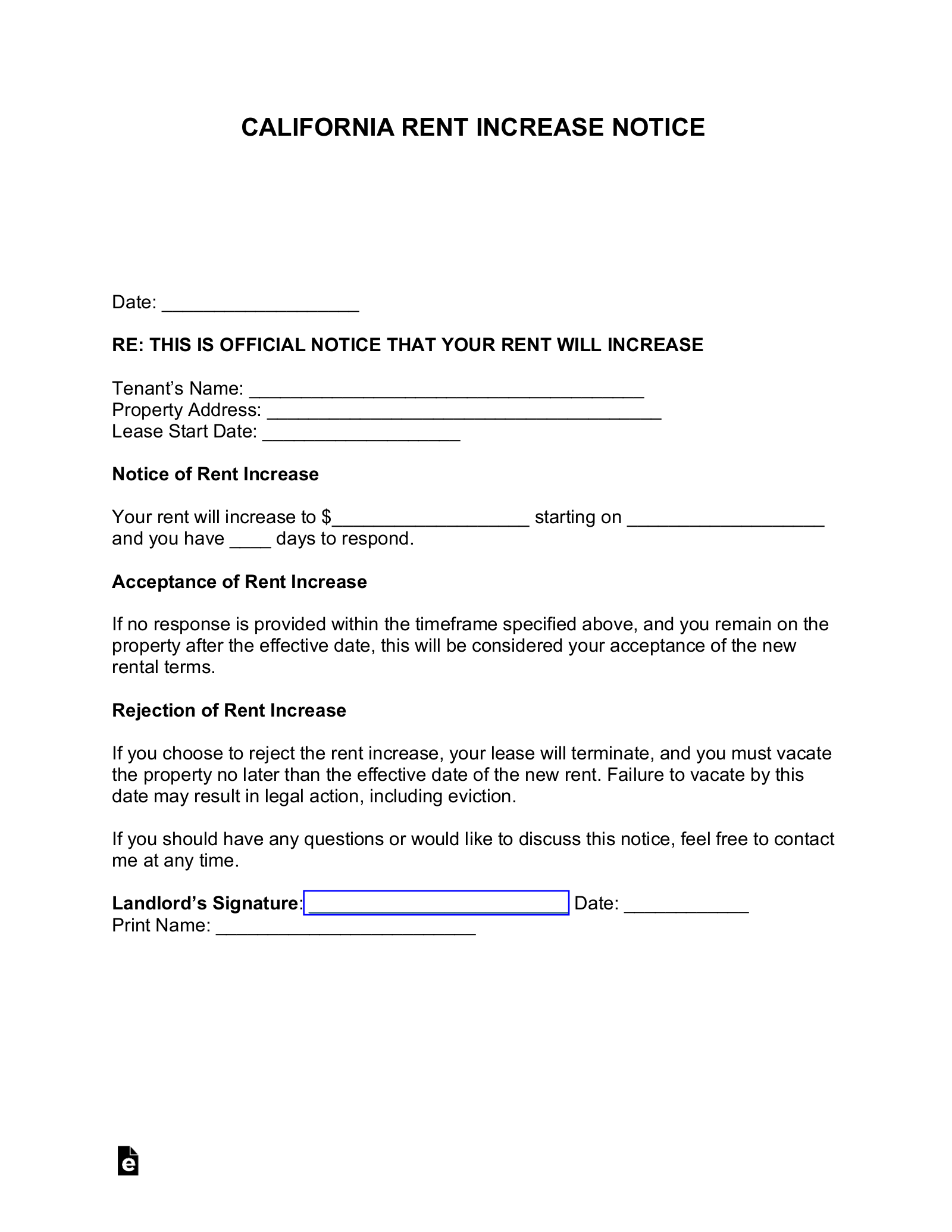
Rent Increase Notice
Full Conversation
If I had a rental agreement in which the tenants paid a flat fee for utilities am I able to increase this?
Lexi, Chatbot
I understand that you're concerned about the terms of your rental agreement regarding utility fees. Have you already discussed this potential increase with your tenants?
Not yet
Lexi, Chatbot
What specific changes are you considering for the utility fee structure?
They pay $200 a month for utilities but this is not covering everything
Lexi, Chatbot
Is there anything else the Landlord-Tenant Lawyer should know before I connect you? Rest assured they'll be able to help with your utility fee issue.
I am looking to increase the rent as it's been a year now and the lease is up
Randy M.
Hi, my name is Attorney Randy and I'm happy to assist you today. What county and state are you located? And are you talking about rental agreements that are already executed? Or agreements that haven't been executed yet?
Alameda County, California
I have a rental agreement executed already but I am in the process of renewing it
Randy M.
Okay, thanks for clarifying. I'll check for your location.
Randy M.
Yes, you can increase the flat utility fee when renewing your lease in Alameda County, but there are important legal limitations to consider. Since your lease is up for renewal, you're in a good position to propose new terms, including adjusting that $200 monthly utility fee that's not covering your actual costs. However, the key thing to understand is that utility fees are generally considered part of the total rent under both state and local rent control laws, so any increase must comply with applicable rent increase limits.
Under California's AB 1482 (Tenant Protection Act), most rental properties are subject to annual rent increase caps of 5% plus the local Consumer Price Index, with a maximum total increase of 10% per year. This applies to the combined total of base rent plus your utility fee. There are some exceptions for single-family homes and condos if you provided proper exemption notices, but most multi-unit properties are covered.
Many cities in Alameda County have their own rent control ordinances that can be more restrictive than state law. Cities like Oakland, Berkeley, Alameda, and Fremont each have specific rules and often lower allowable increase percentages. For example, the City of Alameda's current Annual General Adjustment is just 1.0% for the 2025-2026 period, which is significantly lower than the state maximum.
When calculating your allowable increase, add your current base rent plus the $200 utility fee to get your total current rent, then apply the maximum percentage increase allowed in your jurisdiction. So if your total current rent is $2,200 ($2,000 base + $200 utilities) and you're allowed a 5% increase, your maximum new total would be $2,310.
You'll need to provide proper written notice - 30 days for increases under 10% of the total rent, or 90 days for increases of 10% or more. Make sure your new lease clearly states the breakdown between base rent and utility fees.
Keep detailed records of your actual utility costs over the past year to justify the increase. While you don't need to show these to tenants under most circumstances, having documentation helps demonstrate that your increases are reasonable and based on actual expenses rather than arbitrary.
The bottom line is that you can increase the utility fee at renewal, but you need to treat it as part of the total rent for calculation purposes and stay within legal limits. Given the complexity of local ordinances, I'd recommend checking your specific city's requirements before finalizing any increases.
Randy M.
Do you have any additional questions for me?
Using your example of $2,200 which would increase to $2,310. When drawing up the notice with the new amount, how can I calculate what is the increase to the rent and what is the utility fee? Or can I just lump that all together?
Do I need to specify how much is the actual rent vs utilities cost?
Randy M.
You have two options for structuring your rent increase notice:
Randy M.
Present it as a single rent increase: "Total monthly rent increases from $2,200 to $2,310." This is simpler and avoids potential disputes about utility cost breakdowns.
Option 2: Itemized
Allocate the $110 increase however you want between base rent and utilities, such as:
- Base rent: $2,000 → $2,050 (+$50)
- Utilities: $200 → $260 (+$60)
The total increase amount must stay within legal limits - how you split that increase between rent and utilities is generally your choice. Both approaches are legally acceptable as long as you're clear and consistent in your notice and lease documents.
The lump sum approach is typically cleaner and less likely to trigger tenant questions about actual utility costs. Whichever you choose, make sure your written notice and renewed lease agreement use the same structure.
To answer your last question, no, you don't need to specify the breakdown between rent and utilities in your notice or lease. Most jurisdictions only require you to state the total rent amount and effective date of the increase. You can treat the entire amount as "rent" without itemizing components.
If you currently itemize (like your $2,000 rent + $200 utilities), it's generally better to maintain consistency. Suddenly lumping everything together might confuse tenants or raise questions.
If you want to simplify, you can switch to a single "monthly rent" amount of $2,310 without any breakdown. This is perfectly legal and often easier for future management.
Perfect, thank you!
Randy M.
You're very welcome. Have a great night!
20
6
Answered 3 days ago
11
4
Answered 4 days ago
Disclaimer
By messaging AskaLawyer.com, you agree to our Terms and have read our Privacy Policy.
The information provided on AskaLawyer.com is for general informational purposes only and does not constitute legal advice. While we strive to ensure the accuracy and timeliness of the information presented, we make no guarantees regarding its completeness or applicability to your specific circumstances.
Use of this website does not create an attorney-client relationship between you and AskaLawyer.com or any of its attorneys. Communications through this website, including any responses from attorneys, are not privileged or confidential. For advice tailored to your individual situation, we recommend consulting a licensed attorney in your jurisdiction.
AskaLawyer.com disclaims any liability for actions taken or not taken based on the content of this site. We are not responsible for any third-party content that may be accessed through this website. Reliance on any information provided herein is solely at your own risk.