[NY] How do I evict a tenant for non-payment of rent in New York State?
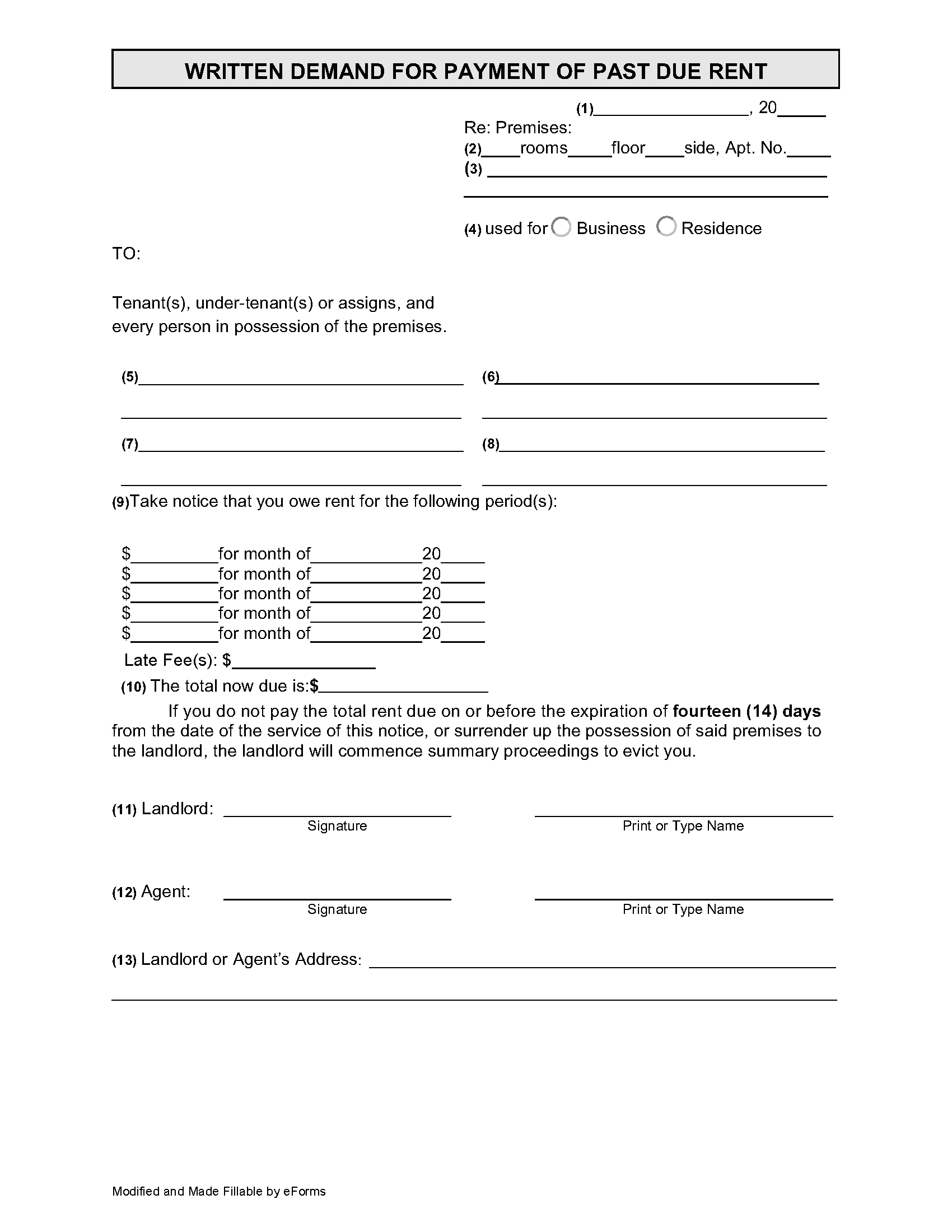
The first step is to give the tenant a written 14-day notice to pay rent or vacate. (RPA § 711(2)) There is no state-mandated notice you have to use. You just need to give them a 14-day written notice signed by you, stating how much they owe and that they must pay within 14 days to cure the default.
There are 3 acceptable service methods for the 14-day notice to pay rent or vacate:
- Personal Delivery: Hand it directly to the tenant.
- Substituted Service: If the tenant isn’t home, give it to a responsible person at the residence and mail a copy (certified + regular mail).
- Conspicuous Place ("Nail & Mail"): After reasonable attempts, tape it in a visible place (e.g., door) and mail a copy. (RPA § 735(1))
After the 14-day notice period ends, file the Eviction Petition with the court. Then have the Notice of Court Date served by a constable, marshal, or sheriff.
0
New York 14-Day Notice to Quit (Demand for Rent) | Non-Payment
Full Conversation
Hi I jus want to know if I am giving the tenant the right documents. I am in New York state and I want her gone for non-payment.
Lexi, Chatbot
I understand you're dealing with a difficult situation regarding your tenant in New York. Have you already provided the tenant with a notice for non-payment of rent?
I have an eviction notice to pay or quit — 14 days. I was going to give today.
Lexi, Chatbot
Can you confirm if you have a written lease agreement with the tenant outlining the terms of the tenancy and the consequences for non-payment of rent?
Yes
Lexi, Chatbot
Is there anything else the Lawyer should know before I connect you? Rest assured they'll be able to help with your eviction process.
No that is it.
Barrister
Hello and welcome to the site! My name is Barrister and I am a licensed attorney. I’ve read your post and I’m sorry you’re having to deal with this — it can definitely be frustrating.
Barrister
The first step is to give the tenant a written 14-day notice to pay rent or vacate. (RPA § 711(2)) There is no state-mandated notice you have to use. You just need to give them a 14-day written notice signed by you, stating how much they owe and that they must pay within 14 days to cure the default.
There are 3 acceptable service methods for the 14-day notice to pay rent or vacate:
- Personal Delivery: Hand it directly to the tenant.
- Substituted Service: If the tenant isn’t home, give it to a responsible person at the residence and mail a copy (certified + regular mail).
- Conspicuous Place ("Nail & Mail"): After reasonable attempts, tape it in a visible place (e.g., door) and mail a copy. (RPA § 735(1))
After the 14-day notice period ends, file the Eviction Petition with the court. Then have the Notice of Court Date served by a constable, marshal, or sheriff.
Perfect. Thanks.
Then after 14 days what do I do with the affidavit of service? And can I serve on the weekend?
Barrister
Keep the affidavit of service in your records for court. Yes, you can serve on weekends.
Okay and I just fill that affidavit out if I’m the one serving?
I don’t see a notary spot — does it need to be notarized?
Barrister
No notary required. It's just a sworn statement by the person who served the notice.
Ok. Is there anything else I should know? We already lost in court. Don’t want to lose again. We didn’t have the right paperwork. We provided a 30-day notice and didn’t have good cause.
Barrister
Just follow the proper legal process described above.
To serve the court documents? I shouldn’t get someone else to serve it?
Barrister
Correct. You can’t serve the lawsuit yourself. The notice you can serve yourself, but not the legal filing. Use a licensed process server, constable, marshal, sheriff, or any adult not part of the case. I prefer law enforcement — it's more credible and can intimidate the tenant into possibly leaving.
Got it, makes sense. As long as I have the 14-day and the affidavit, I should be fine. All other court documents were from court. And the affidavit — it has to be dated after the 14 days?
Barrister
The date at the top of the affidavit is the date you delivered the notice.
And if there are 2 tenants on lease but only one receives it, what do I put on the recipient line? Or what if someone else opens the door — do I put just her name?
Barrister
Two tenants = Two notices. The safest thing is to serve each tenant their own notice. You can name both tenants on one lawsuit later, but serve them separately.
Wait — so I need to bring 2 separate notices? Even if both names are on one?
Barrister
Yes. It’s best to give each tenant their own 14-day notice. That way you avoid issues in court.
Okay, makes sense. I can serve them both at the same time, right? Both documents together? I think the tenant’s daughter will open the door and grab the papers, not one of them. Do I need to get the name of the person I am giving it to? The affidavit asks who is the recipient.
Barrister
Yes, you can serve both at the same time or post them together and take a picture. If you give the documents to someone else, ask their name. If they won’t give it, take a picture of them or just post the notices on the door.
Barrister
Hope this clears things up. Feel free to reach out again anytime. Take care and good luck!
20
6
Answered 3 days ago
11
4
Answered 4 days ago
Disclaimer
By messaging AskaLawyer.com, you agree to our Terms and have read our Privacy Policy.
The information provided on AskaLawyer.com is for general informational purposes only and does not constitute legal advice. While we strive to ensure the accuracy and timeliness of the information presented, we make no guarantees regarding its completeness or applicability to your specific circumstances.
Use of this website does not create an attorney-client relationship between you and AskaLawyer.com or any of its attorneys. Communications through this website, including any responses from attorneys, are not privileged or confidential. For advice tailored to your individual situation, we recommend consulting a licensed attorney in your jurisdiction.
AskaLawyer.com disclaims any liability for actions taken or not taken based on the content of this site. We are not responsible for any third-party content that may be accessed through this website. Reliance on any information provided herein is solely at your own risk.