How do I evict a violent tenant from a transitional housing program?
Yes, you would need to go through a standard eviction. Under common law, a tenant is someone who has been granted the right to occupy a property by the owner of the property. This right can be granted through a lease, a rental agreement, or even by simply allowing the tenant to live on the property. The law does not specify that rent has to be exchanged, or that the tenancy must be for some specific length of time.
So I recommend you give the tenant a notice that their tenancy is being terminated, and if that is not possible, mail a copy to the property and post it on the front door.
If they don't leave, you have a right to pursue an action in court:
1. File a case in a local court. This includes getting the proper forms from the courthouse (or online in some cases) and listing out the basic address and tenant info and the reasons for the eviction.
2. Serve the tenant with a copy of the complaint and summons. The tenant must be served the document in person by someone not involved in the case (e.g., a process server or a sheriff or any adult).
- The tenant has usually anywhere between 5–7 days to reply.
3. The court schedules a hearing where the landlord explains the basis for the eviction. The tenant has a right to try to defend their case.
- If the tenant loses, the landlord gets a judgment, that they then have to take to the sheriff who comes to the property usually within 10 days to post a 24-hour notice to vacate.
0
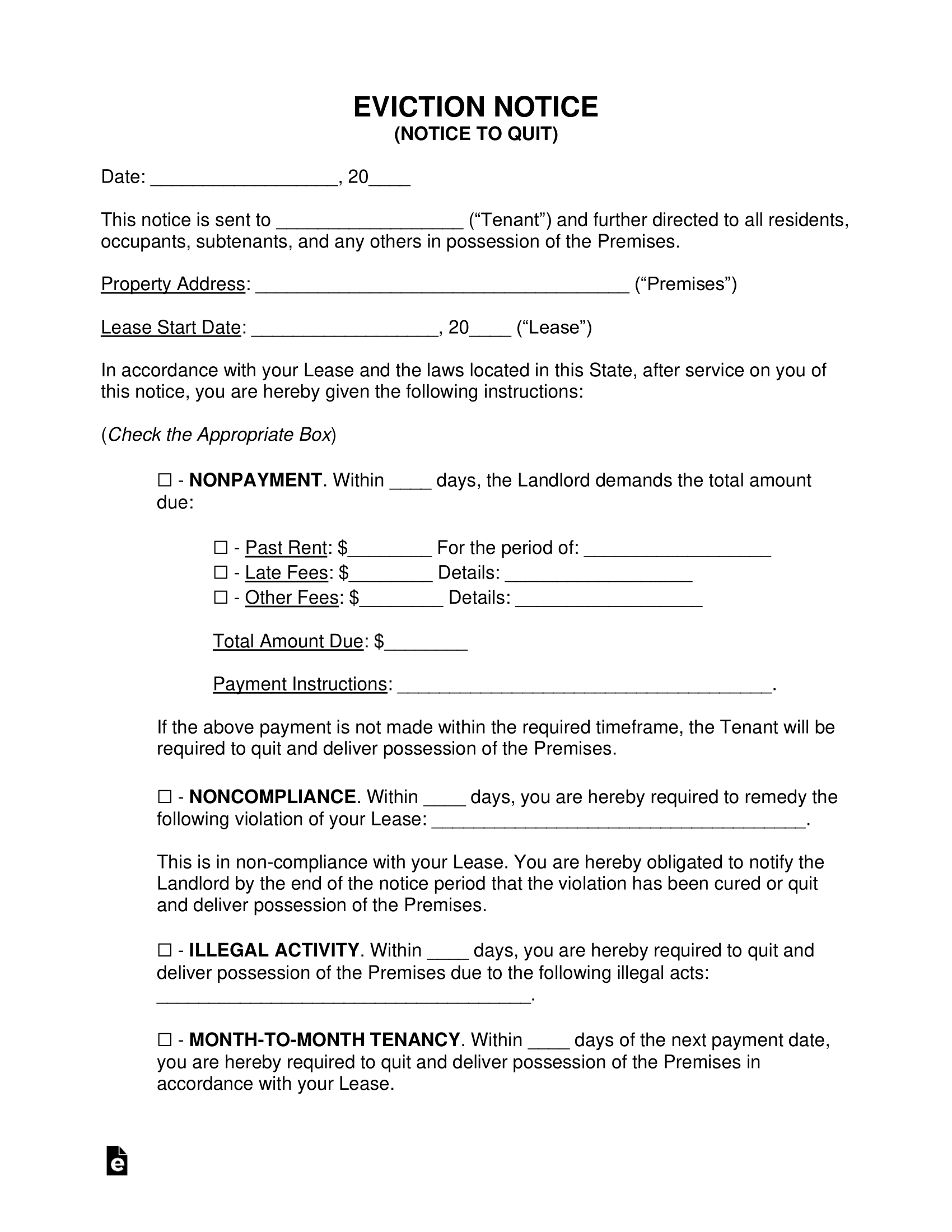
Eviction Notice to Quit Template Form
Full Conversation
We operate a transitional housing program where tenants live on site in the place where we provide other homeless services. We have a participant who is harassing a staff member. This participant previously acted out violently against a roommate and was arrested. We need to evict for the safety of staff, and possibly other clients. Is this a standard eviction?
How do I evict a violent tenant from a transitional housing program?
Lexi, Chatbot
I'm sorry to hear about the situation with the participant in your transitional housing program. Have you already documented the incidents of harassment and violence involving this participant?
Yes.
Lexi, Chatbot
Are there any specific clauses in the participant's lease agreement regarding behavior or safety that could support the eviction process?
Not that specific.
Lexi, Chatbot
Is there anything else the Lawyer should know before I connect you? Rest assured they’ll be able to help with eviction.
No.
Legal Eagle
Hello! Legal Eagle here, and I am an attorney specializing in your area of law. I am more than happy to help you with your situation! What was the outcome of the violent incident?
She was convicted and given probation and I believe assignment to behavioral health court.
She pepper sprayed another client.
Legal Eagle
Yes, you would need to go through a standard eviction. Under common law, a tenant is someone who has been granted the right to occupy a property by the owner of the property. This right can be granted through a lease, a rental agreement, or even by simply allowing the tenant to live on the property. The law does not specify that rent has to be exchanged, or that the tenancy must be for some specific length of time.
So I recommend you give the tenant a notice that their tenancy is being terminated, and if that is not possible, mail a copy to the property and post it on the front door.
If they don't leave, you have a right to pursue an action in court:
1. File a case in a local court. This includes getting the proper forms from the courthouse (or online in some cases) and listing out the basic address and tenant info and the reasons for the eviction.
2. Serve the tenant with a copy of the complaint and summons. The tenant must be served the document in person by someone not involved in the case (e.g., a process server or a sheriff or any adult).
- The tenant has usually anywhere between 5–7 days to reply.
3. The court schedules a hearing where the landlord explains the basis for the eviction. The tenant has a right to try to defend their case.
- If the tenant loses, the landlord gets a judgment, that they then have to take to the sheriff who comes to the property usually within 10 days to post a 24-hour notice to vacate.
Legal Eagle
Hello! I want to make sure ALL of your concerns were addressed. Did you have any concerns about this that still need to be addressed? I'm happy to help.
20
6
Answered 3 days ago
11
4
Answered 4 days ago
Disclaimer
By messaging AskaLawyer.com, you agree to our Terms and have read our Privacy Policy.
The information provided on AskaLawyer.com is for general informational purposes only and does not constitute legal advice. While we strive to ensure the accuracy and timeliness of the information presented, we make no guarantees regarding its completeness or applicability to your specific circumstances.
Use of this website does not create an attorney-client relationship between you and AskaLawyer.com or any of its attorneys. Communications through this website, including any responses from attorneys, are not privileged or confidential. For advice tailored to your individual situation, we recommend consulting a licensed attorney in your jurisdiction.
AskaLawyer.com disclaims any liability for actions taken or not taken based on the content of this site. We are not responsible for any third-party content that may be accessed through this website. Reliance on any information provided herein is solely at your own risk.