[IL] How long do I have to collect on a judgment granted in my favor in Illinois?
Statute of Limitations on Collecting a Judgment in Illinois
In Illinois, a money judgment is valid for 7 years from the date it was entered (735 ILCS 5/12-108(a)). That means you have 7 years to collect on it before it must be renewed. If you don’t renew it before the 7 years are up, the judgment becomes unenforceable. The good news is that if you're still within that time frame, or even close to it, you can take steps now to enforce it. And if the 7 years is about to run out, you can file a motion to revive the judgment, which gives you another 7 years to collect.
How to Collect on the Judgment
Since you mentioned your former tenant gets public benefits (likely through guardianship of her sister’s kids), it may be difficult to garnish those funds directly, because many public assistance payments are exempt from collection (735 ILCS 5/12-1001(g)(1)). However, if she has a job, bank account, or any other source of non-exempt income, you can ask the court for a wage garnishment or bank garnishment order. You can also try a citation to discover assets, which requires her to appear in court and answer questions about her income and property. If she doesn’t show up, the court can issue a body attachment (similar to a bench warrant) for failing to appear.
Next Steps
You can go back to the court that issued the judgment and file the necessary enforcement paperwork—like a wage deduction order, citation to discover assets, or bank garnishment. It helps to have her current address or employer, so you might want to check public records, social media, or even ask neighbors if you’re still in contact.
0
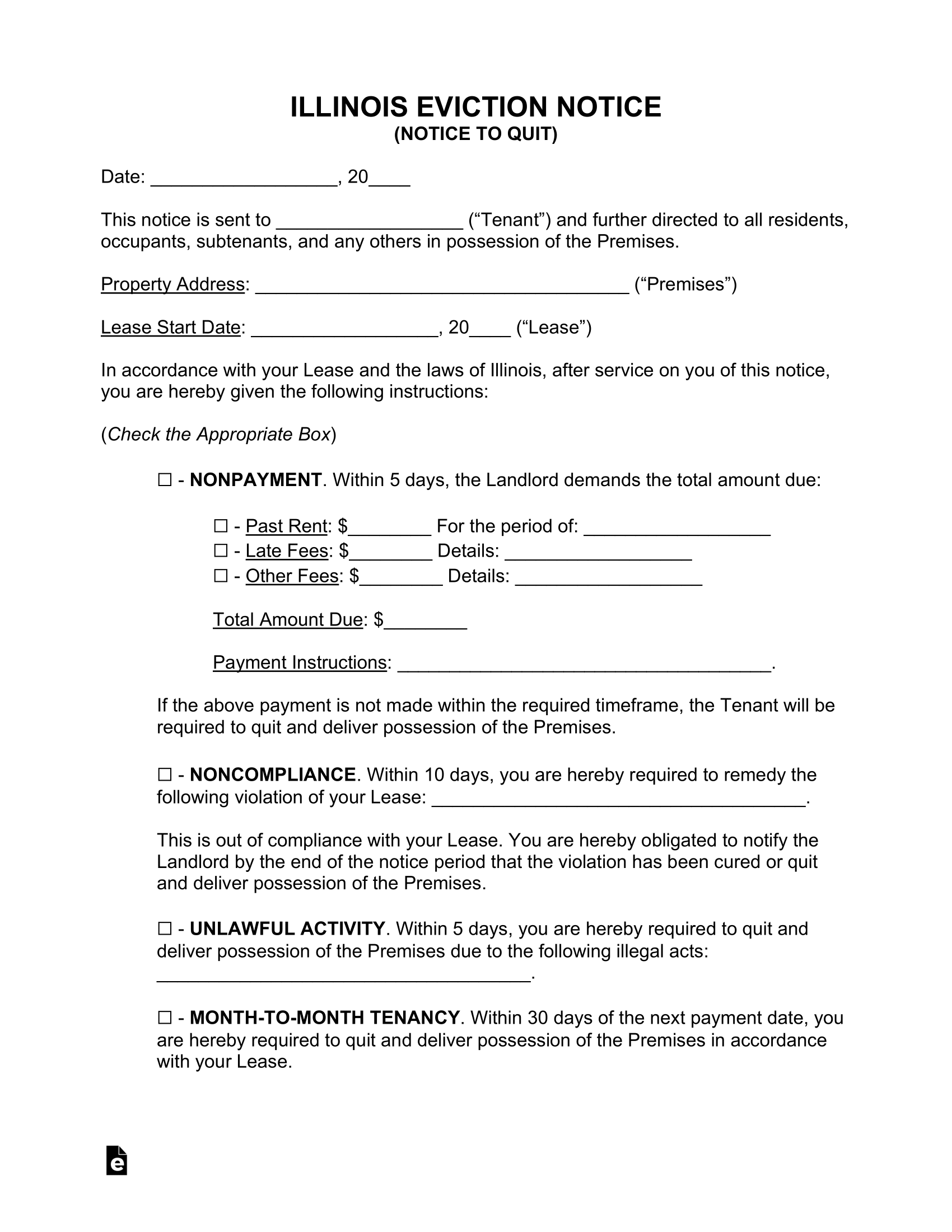
Illinois Eviction Notice Form
Full Conversation
Hi, I was a landlord in Illinois at the time. Is there a statute of limitations on collecting a judgment granted in my favor from my evicted tenant? I have not received any of the award money. How can I collect?
Lexi, Chatbot
I understand your situation. Have you already obtained a judgment against your evicted tenant in Illinois?
Yes, but it has been a few years. I thought it would have been paid by now.
Lexi, Chatbot
Do you know if your evicted tenant has any assets or income that could be used to satisfy the judgment?
Only thing I know is that she was awarded her sister's kids, and that’s how she paid her rent. The money was put on a debit card, and she would pay me from that in cash. She said when she lost the card, she had to go before a judge to reissue her a new one.
Lexi, Chatbot
Is there anything else the Lawyer should know before I connect you? Rest assured they'll be able to help with collecting the judgment.
No, I don't think so.
Gurney P
Welcome and thank you for using AskaLawyer. My name is Gurney, and I'm the attorney who will be assisting with your question.
Gurney P
Have you checked if the judgment has expired?
No, I didn’t know they expire.
Gurney P
We learn something every day! Ok, thank you for clarifying.
Gurney P
Statute of Limitations on Collecting a Judgment in Illinois
In Illinois, a money judgment is valid for 7 years from the date it was entered (735 ILCS 5/12-108(a)). That means you have 7 years to collect on it before it must be renewed. If you don’t renew it before the 7 years are up, the judgment becomes unenforceable. The good news is that if you're still within that time frame, or even close to it, you can take steps now to enforce it. And if the 7 years is about to run out, you can file a motion to revive the judgment, which gives you another 7 years to collect.
How to Collect on the Judgment
Since you mentioned your former tenant gets public benefits (likely through guardianship of her sister’s kids), it may be difficult to garnish those funds directly, because many public assistance payments are exempt from collection (735 ILCS 5/12-1001(g)(1)). However, if she has a job, bank account, or any other source of non-exempt income, you can ask the court for a wage garnishment or bank garnishment order. You can also try a citation to discover assets, which requires her to appear in court and answer questions about her income and property. If she doesn’t show up, the court can issue a body attachment (similar to a bench warrant) for failing to appear.
Next Steps
You can go back to the court that issued the judgment and file the necessary enforcement paperwork—like a wage deduction order, citation to discover assets, or bank garnishment. It helps to have her current address or employer, so you might want to check public records, social media, or even ask neighbors if you’re still in contact.
Gurney P
And I’ll be here for you if more questions come up along the way! Does that help?
Thank you so much for this information.
Gurney P
Sure thing! I’m glad that helps. Did you have more questions on your mind today?
Is there any way I can check the status of the judgment without driving downtown to the courthouse?
Gurney P
The classic alternative is calling the courthouse, since the clerk of the court can look into his or her computer database and see what's the status of the judgment that way. That's what I do! Visiting the courthouse is a hassle.
Thank you so much. If I don’t have the case number, can they look it up by name?
Gurney P
They prefer case numbers but names may be enough for them to locate your case.
Thank you. I will try to reach out to my Sheriff friend at the courthouse, and ask if they can go the extra mile for me.
Gurney P
I think they should! Until then, how else can I help for now?
You have been my blessing. I hope I’m not too late. Thank you a lot, and a blessed one.
Gurney P
You blessed me with some great questions! Thank you too for letting me answer your questions today. And if more questions come up later, I’m always available for you in a new chat.
20
6
Answered 3 days ago
11
4
Answered 4 days ago
Disclaimer
By messaging AskaLawyer.com, you agree to our Terms and have read our Privacy Policy.
The information provided on AskaLawyer.com is for general informational purposes only and does not constitute legal advice. While we strive to ensure the accuracy and timeliness of the information presented, we make no guarantees regarding its completeness or applicability to your specific circumstances.
Use of this website does not create an attorney-client relationship between you and AskaLawyer.com or any of its attorneys. Communications through this website, including any responses from attorneys, are not privileged or confidential. For advice tailored to your individual situation, we recommend consulting a licensed attorney in your jurisdiction.
AskaLawyer.com disclaims any liability for actions taken or not taken based on the content of this site. We are not responsible for any third-party content that may be accessed through this website. Reliance on any information provided herein is solely at your own risk.