[ME] How should I present text messages as evidence for an eviction hearing?

We are working on collecting evidence for an eviction hearing for our tenants. Some of our evidence is in text messages. Is there a standard that is best to present them in?

15

5

Jon
Jon

556 satisfied customers

View context
Solved

1. Presenting Text Messages and Digital Evidence in Maine Eviction Court

There’s no single “official” format required under Maine law, but courts prefer clear, organized, and complete printouts that make it easy for the judge to understand and verify the messages.

Here’s the best practice for presenting text messages and similar evidence:

  • Capture the Texts Clearly
    • Take full screenshots showing the date, time, sender, and recipient.
    • Avoid cropping or editing; any alteration may affect credibility.
    • For long conversations, use software that stitches screenshots together (for example, iMazing or SMS Backup & Restore).
  • Create Organized Exhibits
    • Print the text message threads in chronological order (oldest to newest).
    • Include entire conversations for context, not just selected snippets.
    • Label each page clearly, such as:
      • “Exhibit 3 – Text Messages between Landlord and Tenant (June 2024)”
    • You can highlight or underline key statements, but don’t write comments or notes directly on the exhibit pages.
  • Authentication
    • You’ll need to confirm the messages are authentic — meaning they came from and were sent to the right person and haven’t been altered. You can do this by:
    • Testifying under oath that these are true, unedited copies of messages from your phone.
    • Bringing your phone to court with the original texts in case the judge wants to verify them.
    • Pointing out identifying information (like contact names, phone numbers, or distinctive language) that shows who sent them.
  • Use Printouts, Not Your Phone
    • Printed copies are preferred to showing texts on your phone. They can be marked as official exhibits and entered into the record. The judge may ask to see your phone for verification, but the printed version will go in the court file.
  • Relevance
    • Make sure every message you include is relevant to the eviction — for example:
      • Tenant’s acknowledgment of missed rent;
      • Discussions of lease violations or notices;
      • Statements that confirm they received communication from you.

2. Other Evidence: Photos, Emails, and Timelines

  • For your photos, documents, and timeline:
    • Photos: Print them in color and label each one with a date, description, and location.
    • Emails: Print the full thread, showing sender, recipient, date, and subject.
    • Timeline: Create a clear summary of events with dates and references to exhibits (e.g., “See Exhibit 5 – Notice to Quit dated May 1, 2024”).

3. Tenant Appeals in Maine

  • If the tenants file an appeal after an eviction judgment:
    • They have a very short window to do so — typically before the Writ of Possession issues (within 7 days of judgment) or up to 30 days after judgment, whichever comes first.
    • The appeal moves the case to Maine Superior Court, which generally reviews questions of law, not new evidence.
    • This process can take weeks or months, depending on the court’s schedule and briefing deadlines.
    • While the appeal is pending, the eviction is paused unless the tenant fails to pay rent into the court during the appeal period (as required under Title 14 §6008).

4. Presenting Firsthand Conversations

  • If you had in-person or phone conversations with your tenant:
    • You’ll testify under oath about what was said, by whom, and when.
    • Stick to facts and avoid paraphrasing. Example:
      • “On May 10th, the tenant told me, ‘I’ll pay rent next week,’ but never did.”
  • Your testimony itself is considered direct evidence — you don’t need a recording, though contemporaneous notes can support your credibility.

0

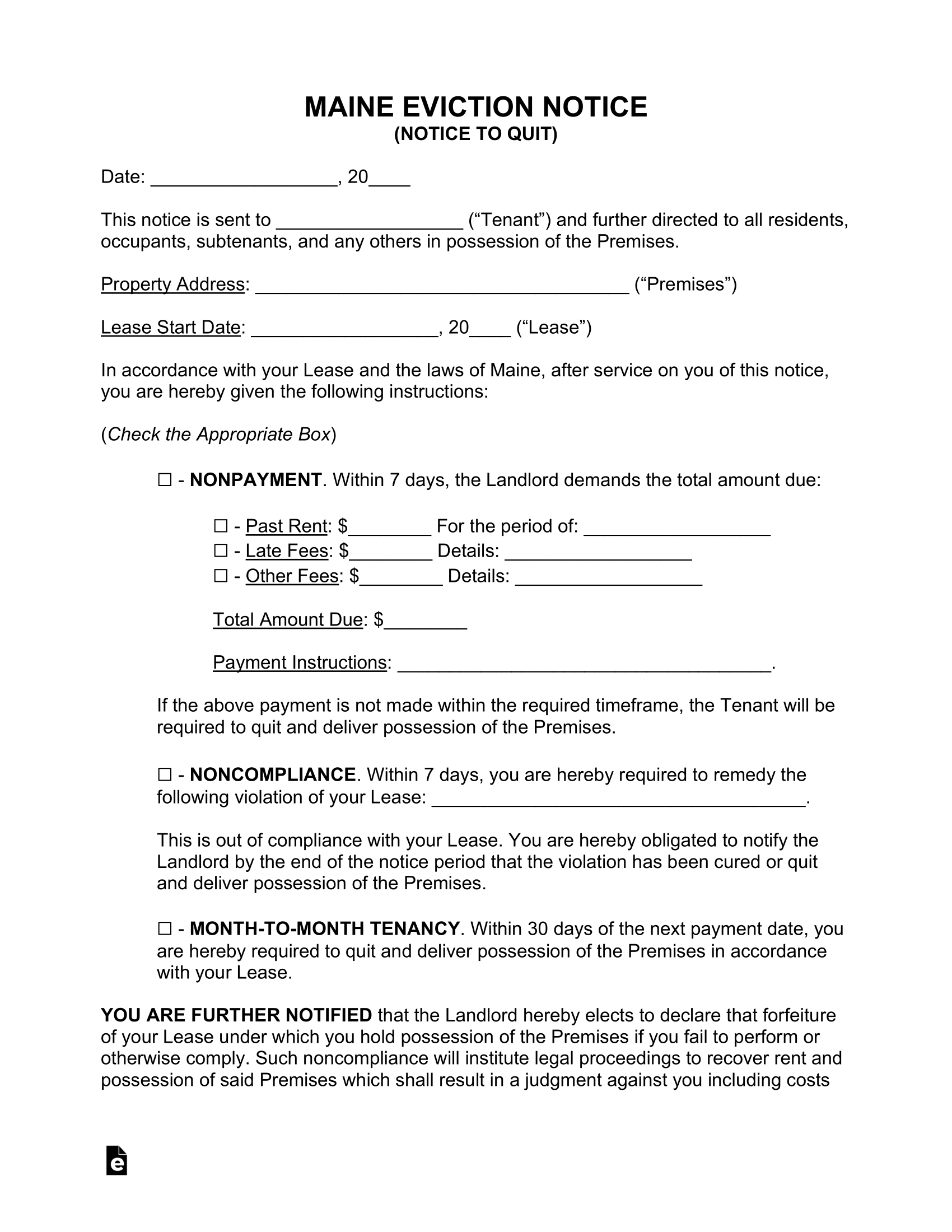
Maine Eviction Notice to Quit

Full Conversation


We are working on collecting evidence for an eviction hearing for our tenants. Some of our evidence is in text messages. Is there a standard that is best to present them in?

Lexi

Lexi, Chatbot

I understand the importance of presenting your evidence effectively. Have you already saved these text messages in a specific format for the hearing?

Not yet — is there a preferred format?

Lexi

Lexi, Chatbot

Are you looking for guidance on how to authenticate these text messages for the eviction hearing?

We want to know the best format to submit them.

Lexi

Lexi, Chatbot

Is there anything else the landlord-tenant lawyer should know before I connect you?

No.

Jon

Jon

Hello! I’m delighted that you’ve chosen to contact us for assistance. My name is Jon, and I’m here to assist you as an attorney. I know eviction cases can be stressful, but I’ll help you make sure your evidence is properly prepared and presented.

Jon

Jon

What state are you filing this case in?

Maine.

Jon

Jon

Understood. You’d like to know how to present text messages — and I see you also want to know how an appeal might affect the timeline. I’ll cover both for you.

Jon

Jon

1. Presenting Text Messages and Digital Evidence in Maine Eviction Court

There’s no single “official” format required under Maine law, but courts prefer clear, organized, and complete printouts that make it easy for the judge to understand and verify the messages.

Here’s the best practice for presenting text messages and similar evidence:

  • Capture the Texts Clearly
    • Take full screenshots showing the date, time, sender, and recipient.
    • Avoid cropping or editing; any alteration may affect credibility.
    • For long conversations, use software that stitches screenshots together (for example, iMazing or SMS Backup & Restore).
  • Create Organized Exhibits
    • Print the text message threads in chronological order (oldest to newest).
    • Include entire conversations for context, not just selected snippets.
    • Label each page clearly, such as:
      • “Exhibit 3 – Text Messages between Landlord and Tenant (June 2024)”
    • You can highlight or underline key statements, but don’t write comments or notes directly on the exhibit pages.
  • Authentication
    • You’ll need to confirm the messages are authentic — meaning they came from and were sent to the right person and haven’t been altered. You can do this by:
    • Testifying under oath that these are true, unedited copies of messages from your phone.
    • Bringing your phone to court with the original texts in case the judge wants to verify them.
    • Pointing out identifying information (like contact names, phone numbers, or distinctive language) that shows who sent them.
  • Use Printouts, Not Your Phone
    • Printed copies are preferred to showing texts on your phone. They can be marked as official exhibits and entered into the record. The judge may ask to see your phone for verification, but the printed version will go in the court file.
  • Relevance
    • Make sure every message you include is relevant to the eviction — for example:
      • Tenant’s acknowledgment of missed rent;
      • Discussions of lease violations or notices;
      • Statements that confirm they received communication from you.

2. Other Evidence: Photos, Emails, and Timelines

  • For your photos, documents, and timeline:
    • Photos: Print them in color and label each one with a date, description, and location.
    • Emails: Print the full thread, showing sender, recipient, date, and subject.
    • Timeline: Create a clear summary of events with dates and references to exhibits (e.g., “See Exhibit 5 – Notice to Quit dated May 1, 2024”).

3. Tenant Appeals in Maine

  • If the tenants file an appeal after an eviction judgment:
    • They have a very short window to do so — typically before the Writ of Possession issues (within 7 days of judgment) or up to 30 days after judgment, whichever comes first.
    • The appeal moves the case to Maine Superior Court, which generally reviews questions of law, not new evidence.
    • This process can take weeks or months, depending on the court’s schedule and briefing deadlines.
    • While the appeal is pending, the eviction is paused unless the tenant fails to pay rent into the court during the appeal period (as required under Title 14 §6008).

4. Presenting Firsthand Conversations

  • If you had in-person or phone conversations with your tenant:
    • You’ll testify under oath about what was said, by whom, and when.
    • Stick to facts and avoid paraphrasing. Example:
      • “On May 10th, the tenant told me, ‘I’ll pay rent next week,’ but never did.”
  • Your testimony itself is considered direct evidence — you don’t need a recording, though contemporaneous notes can support your credibility.

If part of our evidence is firsthand conversations, how can we credibly present that?

Jon

Jon

The most credible way is through sworn testimony. When you take the stand, explain clearly:

  • Who you spoke with;
  • What each person said;
  • When and where it happened.

Stick to facts relevant to your eviction claim — like rent discussions, warnings, or admissions of violations.

Great, thank you — that helps.

Jon

Jon

556 satisfied customers

Jon
Welcome! Have a similar question?

5 lawyers online now

Disclaimer


By messaging AskaLawyer.com, you agree to our Terms and have read our Privacy Policy.

The information provided on AskaLawyer.com is for general informational purposes only and does not constitute legal advice. While we strive to ensure the accuracy and timeliness of the information presented, we make no guarantees regarding its completeness or applicability to your specific circumstances.

Use of this website does not create an attorney-client relationship between you and AskaLawyer.com or any of its attorneys. Communications through this website, including any responses from attorneys, are not privileged or confidential. For advice tailored to your individual situation, we recommend consulting a licensed attorney in your jurisdiction.

AskaLawyer.com disclaims any liability for actions taken or not taken based on the content of this site. We are not responsible for any third-party content that may be accessed through this website. Reliance on any information provided herein is solely at your own risk.

Ask a Lawyer Logo
Ask a Lawyer Logo
Intake Questions
Step of 3
Loading...
Loading...

How do you like to pay?

By proceeding with payment, you agree to our Terms and Privacy Policy. You authorize us to charge $ today and $ thereafter until canceled. You may cancel anytime in the My Account section to stop future charges.

Total Due:

After purchasing, your chat will begin with an attorney.

By proceeding with payment, you agree to our Terms and Privacy Policy. You authorize us to charge $ today and $ thereafter until canceled. You may cancel anytime in the My Account section to stop future charges.

Total Due:

After purchasing, your chat will begin with an attorney.

It looks like you already have an account with Ask a Lawyer.

We have sent you a magic link to . Click the link in your email to sign in and continue your chat.

spin

Step of 6 •

You'll receive an email at as soon as the lawyer joins the conversation 🙏🏻😊

Over 90% of lawyers connect within 5 minutes. If you're not online at that moment, don't worry — the lawyer will reply to your message while you're away.

You're also welcome to stay in the chat while waiting to be connected 💬✨

Waiting for lawyer