[TX] [TX] What should a beginner landlord know before leasing property?
Great—since you’re planning to enter into long-term leases in Texas, here’s a summary of key tenant rights under Texas landlord-tenant law, along with some landlord responsibilities to be aware of:
Basic Tenant Rights in Texas
Right to a Habitable Premises
Tenants have the right to a safe, sanitary, and livable unit. This includes functioning plumbing, heating, water, and no infestation. Landlords are required to make repairs that materially affect health or safety.
Right to Timely Repairs
After proper written notice, you must repair dangerous conditions within a reasonable time (usually 7 days). Failure to do so could entitle the tenant to remedies like lease termination or repair-and-deduct (under strict conditions).
Right to Privacy
There is no statutory notice requirement for entry, but entering without consent or notice could lead to claims of trespass or invasion of privacy. It’s recommended to give at least 24 hours’ notice unless it's an emergency.
Right to Due Process Before Eviction
A landlord must provide at least 3 days’ notice to vacate (unless the lease specifies otherwise) before filing an eviction suit. Tenants have the right to contest the eviction in court.
Right to Return of Security Deposit
You must return the tenant’s security deposit within 30 days after they move out, minus any lawful deductions. You must provide an itemized list of deductions if any amount is withheld.
Right Against Retaliation
You cannot retaliate against a tenant for exercising a legal right—such as reporting code violations or joining a tenant’s union—by increasing rent, decreasing services, or filing for eviction.
Key Responsibilities for Landlords
- Maintain the property to meet health and safety codes.
- Install keyless deadbolts and window latches as required by the Texas Property Code.
- Provide a copy of the lease agreement and any applicable rules.
- Follow the proper legal process for lease termination and eviction.
- Comply with fair housing laws—discrimination based on race, gender, disability, religion, etc., is prohibited.
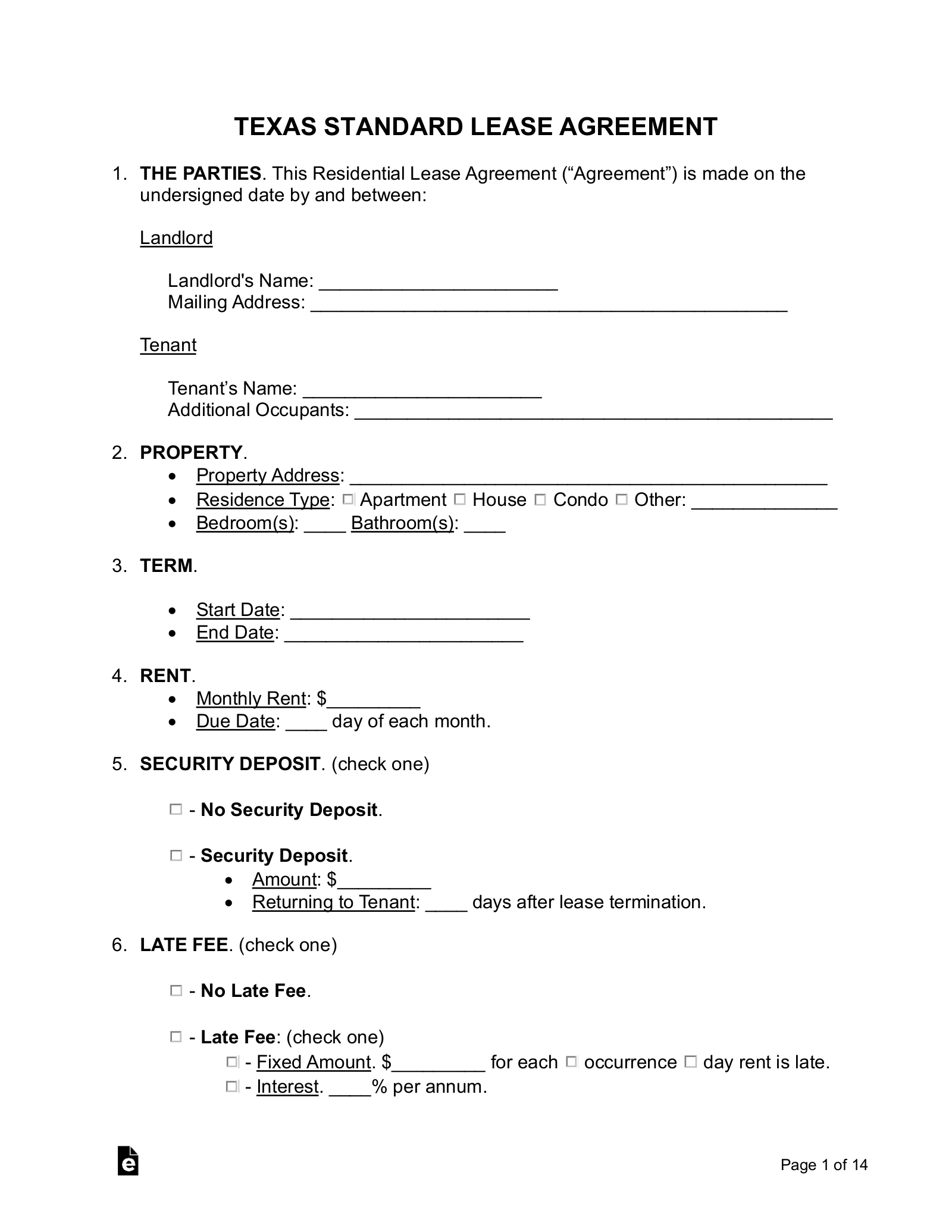
If you’re new to leasing, I recommend using a solid written lease that outlines rent amount, due dates, late fees, repair responsibilities, pet policies, and termination procedures. The Texas Apartment Association (TAA) provides leases widely used by landlords across the state.
0
Texas Residential Lease Agreement
Full Conversation
Texas landlord tenant law.
Lexi, Chatbot
I understand you have a question about Texas landlord-tenant law. Can you please tell me if you are a landlord or a tenant?
Landlord
Lexi, Chatbot
Are you facing any specific issues or disputes with your landlord or tenant that you need assistance with?
No, not specifically
Lexi, Chatbot
Is there anything else the landlord-tenant lawyer should know before I connect you? Rest assured they'll be able to help with Texas landlord-tenant law.
How else can I assist you today?
No.
Richard
Hello. My name is Richard, and I have been a licensed attorney for over 25 years and hope to be of assistance.
Please be advised that this website is for information purposes only and I cannot formally represent customers of this website or perform actual legal services on your behalf.
I know your question is important, and I’m working on typing an answer to your question now. Sometimes responses and replies take time, and we ask you to be courteous and patient to allow the expert to type your answers to you and also to others.
Richard
Hello. What is your legal question regarding Texas Landlord law?
Not a specific question, I just wanted general knowledge. I've acquired some real estate and am looking for a basic understanding going into renting.
Richard
Are you planning on having a long term lease or month to month?
Long term lease
Richard
Great—since you’re planning to enter into long-term leases in Texas, here’s a summary of key tenant rights under Texas landlord-tenant law, along with some landlord responsibilities to be aware of:
Basic Tenant Rights in Texas
Right to a Habitable Premises
Tenants have the right to a safe, sanitary, and livable unit. This includes functioning plumbing, heating, water, and no infestation. Landlords are required to make repairs that materially affect health or safety.
Right to Timely Repairs
After proper written notice, you must repair dangerous conditions within a reasonable time (usually 7 days). Failure to do so could entitle the tenant to remedies like lease termination or repair-and-deduct (under strict conditions).
Right to Privacy
There is no statutory notice requirement for entry, but entering without consent or notice could lead to claims of trespass or invasion of privacy. It’s recommended to give at least 24 hours’ notice unless it's an emergency.
Right to Due Process Before Eviction
A landlord must provide at least 3 days’ notice to vacate (unless the lease specifies otherwise) before filing an eviction suit. Tenants have the right to contest the eviction in court.
Right to Return of Security Deposit
You must return the tenant’s security deposit within 30 days after they move out, minus any lawful deductions. You must provide an itemized list of deductions if any amount is withheld.
Right Against Retaliation
You cannot retaliate against a tenant for exercising a legal right—such as reporting code violations or joining a tenant’s union—by increasing rent, decreasing services, or filing for eviction.
Key Responsibilities for Landlords
- Maintain the property to meet health and safety codes.
- Install keyless deadbolts and window latches as required by the Texas Property Code.
- Provide a copy of the lease agreement and any applicable rules.
- Follow the proper legal process for lease termination and eviction.
- Comply with fair housing laws—discrimination based on race, gender, disability, religion, etc., is prohibited.
If you’re new to leasing, I recommend using a solid written lease that outlines rent amount, due dates, late fees, repair responsibilities, pet policies, and termination procedures. The Texas Apartment Association (TAA) provides leases widely used by landlords across the state.
Thank you. In the case of eviction, is Texas more lenient to the landlord or the renter? Also, what is the condensed version of the process, just in case I run into it?
What is the eviction process?
Richard
You're welcome. In Texas, the law generally leans more in favor of landlords, especially compared to states with stronger tenant protections like California or New York. The eviction process in Texas is relatively fast and landlord-friendly, provided you follow the correct legal steps.
Eviction Process in Texas (Condensed Version)
- Serve a Written Notice to Vacate
Required before filing an eviction. 3 days’ notice is the default, unless the lease specifies a different period. Can be delivered in person, by mail, or posted on the inside of the main entry door. - File an Eviction Suit
File a "Forcible Entry and Detainer" suit in the Justice Court in the precinct where the property is located. Include the lease, notice to vacate, and any relevant documentation. Filing fee is usually around $100–$150 plus service fees. - Court Hearing
Scheduled 6–10 days after the petition is filed. Tenant can appear and contest the eviction. If the landlord wins, the judge grants a judgment for possession. - Appeal Period
The tenant has 5 calendar days to appeal the ruling. If no appeal is filed, proceed to the next step. - Writ of Possession
After the 5 days, request a Writ of Possession from the court. Constable posts a 24-hour notice at the property. After 24 hours, the constable can forcibly remove the tenant if they haven't left.
Summary
- Favorable to landlords: Yes.
- Total time: As little as 2–3 weeks if uncontested.
- Cost: Roughly $150–$300 depending on service and court fees.
- Common pitfalls: Improper notice, retaliation claims, or discriminatory motives.
Got it! As a beginner landlord, is there anything you would advise including in a rental agreement?
Richard
Nothing specific. I would use the standard form I mentioned in my original response. It covers most issues.
Any advice for must-have inclusions for a beginner landlord rental agreement?
Richard
My opinion is that everything you need will be in that standard form with the TAA.
Got it. Thankyou.
Lastly, what about military? A vast majority of tenants are military. Anything specific to that I should know?
Richard
The only issue that can come up with military is if they are active duty and are deployed they can break a lease.
20
6
Answered 3 days ago
11
4
Answered 4 days ago
Disclaimer
By messaging AskaLawyer.com, you agree to our Terms and have read our Privacy Policy.
The information provided on AskaLawyer.com is for general informational purposes only and does not constitute legal advice. While we strive to ensure the accuracy and timeliness of the information presented, we make no guarantees regarding its completeness or applicability to your specific circumstances.
Use of this website does not create an attorney-client relationship between you and AskaLawyer.com or any of its attorneys. Communications through this website, including any responses from attorneys, are not privileged or confidential. For advice tailored to your individual situation, we recommend consulting a licensed attorney in your jurisdiction.
AskaLawyer.com disclaims any liability for actions taken or not taken based on the content of this site. We are not responsible for any third-party content that may be accessed through this website. Reliance on any information provided herein is solely at your own risk.