[MD] Code enforcement ordered my tenant to vacate the storage garage I rent to them, but they are refusing to comply. How should I proceed?
If Code Enforcement comes out and condemns the property, they can call the police to have the tenant removed immediately.
Unfortunately, you don’t have the same authority to go in and cut locks or remove the person yourself if they refuse to vacate. You would need to pursue a formal court eviction case based on a violation of the lease terms.
If your lease is commercial, it should specify what notice (if any) you must give before filing an eviction case.
That said, if your lease specifically allows a lock-out for violations, then you can legally do so. However, you must wait until the person leaves — you cannot physically trap or remove them yourself, as that could violate criminal law and create liability for you.
Since you’ve spoken with Code Enforcement, you may be able to work with them to temporarily condemn the property so they can call the police to have the tenant removed. Once that happens, you can change the locks and secure the property and later have Code lift the condemnation order.
0
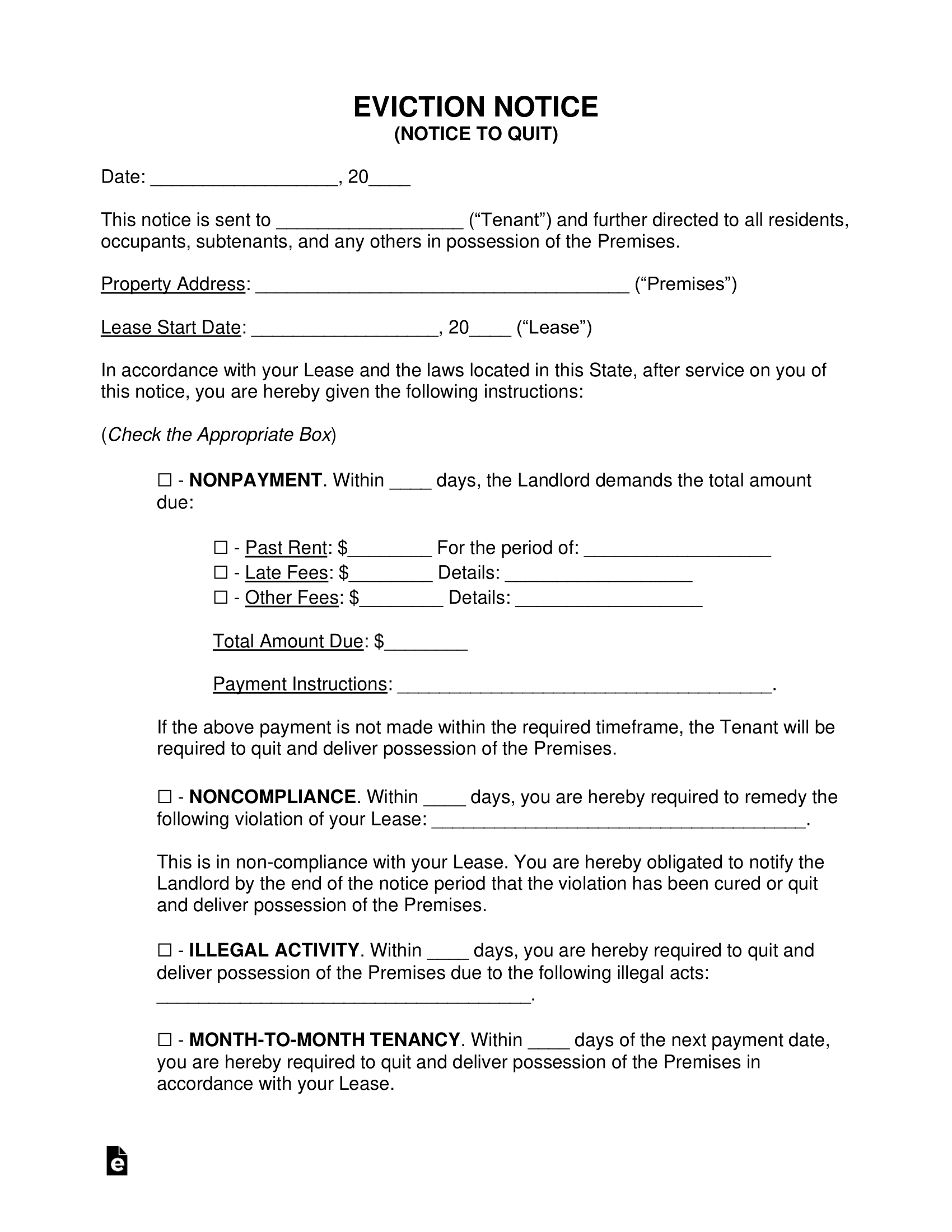
Eviction Notice to Quit Template
Full Conversation
I am a landlord that rented a storage garage on a month-to-month basis. I received a letter on May 7 from Code Enforcement in Maryland stating that an inspection was made and the tenant had set up housekeeping there and appeared to be using it as her residence.
The letter said that he would be at the property on May 9 to condemn the garage and that it must be vacated.
I confronted the tenant as soon as I received the letter, explained the letter, and informed her she needed to vacate in 48 hours. She has not vacated. What is the best course of action to remove her — or can I just cut the locks and remove her since she knows she has to vacate?
Lexi, Chatbot
I understand the urgency of your situation. Has the tenant provided any response or reason for not vacating the storage garage within the given timeframe?
She says that the code officer has never seen the inside of the garage, that she can put what she wants in it any way she wants to, and the lease does not say otherwise.
I talked with the officer, and he said that several code officers have driven by and it appeared she was living there — that she had a generator running.
Lexi, Chatbot
Have you reviewed the lease agreement with the tenant to see if there are any specific clauses regarding termination or eviction procedures?
The lease says the tenant shall not make any alterations or changes without landlord consent and to not use gasoline in any form on the premises.
It also says that if any default is made, the landlord may re-enter the premises and remove all persons, assume and take possession, and that the tenant waives the service of any notice to re-enter, notice to terminate the tenancy, or notice to quit or demand for possession.
Lexi, Chatbot
Is there anything else the landlord-tenant lawyer should know before I connect you? Rest assured they’ll be able to help with the eviction.
Yes.
Barrister
Hello and welcome to the site! My name is Barrister, and I am a licensed attorney here to help with your situation.
Barrister
If Code Enforcement comes out and condemns the property, they can call the police to have the tenant removed immediately.
Unfortunately, you don’t have the same authority to go in and cut locks or remove the person yourself if they refuse to vacate. You would need to pursue a formal court eviction case based on a violation of the lease terms.
If your lease is commercial, it should specify what notice (if any) you must give before filing an eviction case.
That said, if your lease specifically allows a lock-out for violations, then you can legally do so. However, you must wait until the person leaves — you cannot physically trap or remove them yourself, as that could violate criminal law and create liability for you.
Since you’ve spoken with Code Enforcement, you may be able to work with them to temporarily condemn the property so they can call the police to have the tenant removed. Once that happens, you can change the locks and secure the property and later have Code lift the condemnation order.
The lease does not use the term “lock-out.” It only says I can re-enter and remove all persons and take possession.
I did talk to the officer, and he said he’s willing to give some time, but he also mentioned he might be able to have a police officer remove them.
If he can do this legally, as you say, I will contact him and take that route.
Barrister
Ok, then that is not a lock-out clause. So, you may be stuck filing a formal eviction case in court.
You can still “re-enter and remove all persons,” but not immediately — you must follow proper procedures.
You should always include a lock-out clause in future commercial lease agreements.
Yes, definitely work with Code Enforcement and let them know you support whatever action they take to have the tenant removed by the police.
Are you saying that all the code officer has to do is, if they see the tenant at the garage, call the police and have them removed? The property has already been posted as condemned.
Barrister
That depends on your local ordinances, but in every case I’ve seen, yes — if Code Enforcement sees someone living on the property after it has been condemned, they can call the police to have them removed.
Thank you very much. You have been a great help. Should I post a letter on the garage warning the tenant that this is the approach I will take?
Barrister
If it were me, I’d work directly with Code Enforcement instead of giving the tenant a warning. If you warn her, she could try to hide from the officers and delay the process.
It’s better to let Code Enforcement see her there and call the police to have her removed on the spot.
20
6
Answered 3 days ago
11
4
Answered 4 days ago
Disclaimer
By messaging AskaLawyer.com, you agree to our Terms and have read our Privacy Policy.
The information provided on AskaLawyer.com is for general informational purposes only and does not constitute legal advice. While we strive to ensure the accuracy and timeliness of the information presented, we make no guarantees regarding its completeness or applicability to your specific circumstances.
Use of this website does not create an attorney-client relationship between you and AskaLawyer.com or any of its attorneys. Communications through this website, including any responses from attorneys, are not privileged or confidential. For advice tailored to your individual situation, we recommend consulting a licensed attorney in your jurisdiction.
AskaLawyer.com disclaims any liability for actions taken or not taken based on the content of this site. We are not responsible for any third-party content that may be accessed through this website. Reliance on any information provided herein is solely at your own risk.