[IN] What is the difference between an agent and a third party in a POA?
An agent is:
- Someone you specifically designate in the POA document to act on your behalf.
A third party is:
- A person or institution (like a bank, doctor, or insurance company) that relies on your agent’s authority.
- They don't act on your behalf — they just accept and act based on what your agent tells them, assuming the POA is valid.
- Third parties are not automatically agents.
0
Durable Power of Attorney
Full Conversation
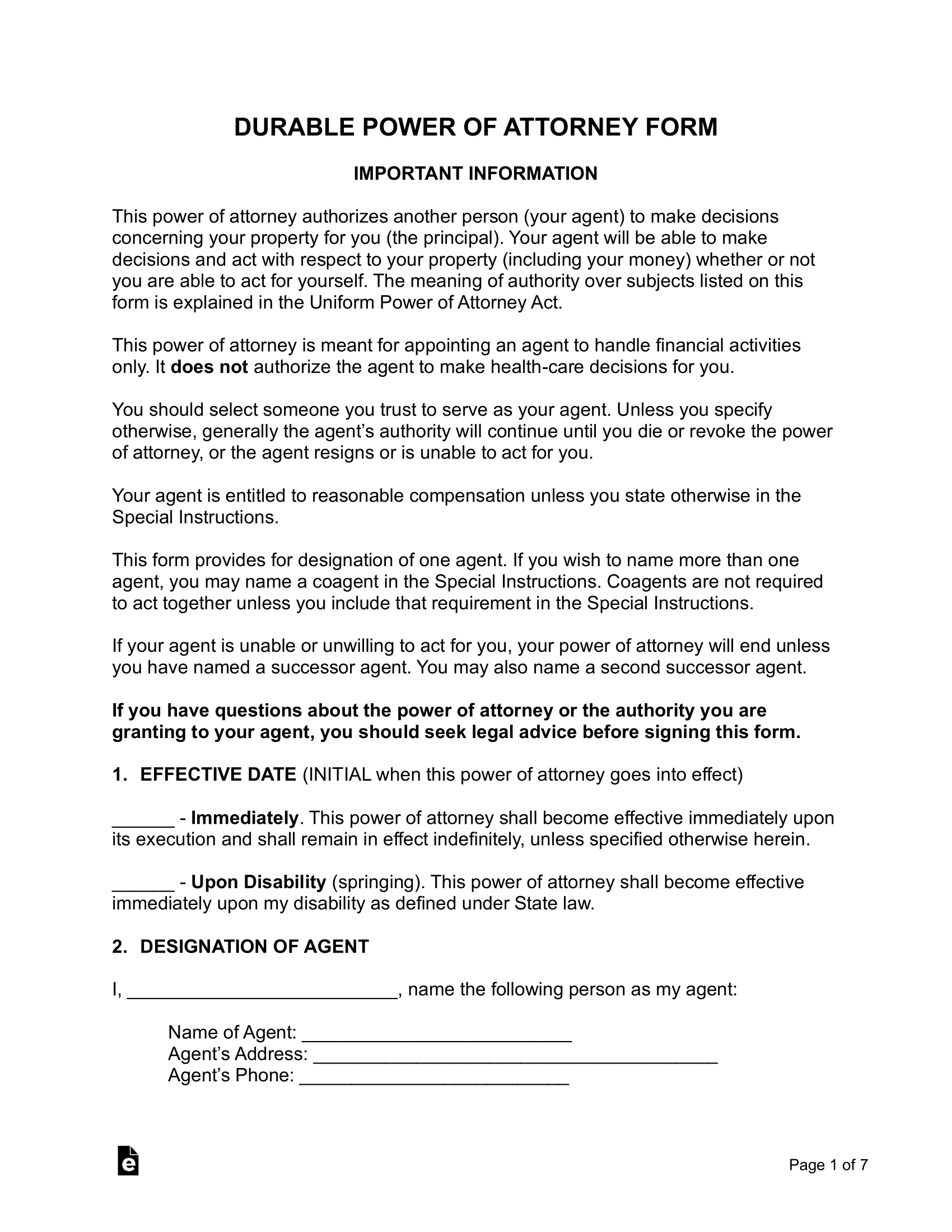
On my durable power of attorney, it says, "I agree that any third party who receives a copy of this document may act under it."
Does that mean if I hand a copy of the document to someone, they become an agent?
Lexi, Chatbot
Are you looking to grant someone power of attorney by providing them a copy of the document?
I'm wondering what that statement means. It's part of the document I'm filling out.
Lexi, Chatbot
Are you seeking legal advice on how the language in the document may impact the authority of the person receiving a copy?
Yes.
It also says, "Revocation of the POA is not effective as to a third party until the third party has actual knowledge of the revocation." I want to understand how this is different from assigning someone as an agent (attorney-in-fact).
Brandon
Hi there and welcome to AskaLawyer. My name is Brandon and I'm an attorney.
Where are you located?
Indiana.
Brandon
First, about the statement: "I agree that any third party who receives a copy of this document may act under it."
This means:
- Once you give a third party (like a bank, doctor, etc.) a copy of the POA, they are authorized to rely on it.
- It does not mean the third party becomes your agent.
- Only someone you specifically appoint in the POA is your agent (attorney-in-fact).
- The third party is simply someone who relies on the agent’s authority.
Brandon
Regarding: "Revocation is not effective as to a third party until the third party has actual knowledge of the revocation."
This protects you and the third party:
- If you revoke the POA but a third party (like your bank) hasn’t been notified, they can legally continue relying on the old POA until you tell them otherwise.
- It prevents situations where third parties accidentally act against your wishes without knowing the POA was revoked.
So, what is the difference between an agent and a third party?
If the third party can “act,” how is that different from being an agent?
Brandon
An agent is:
- Someone you specifically designate in the POA document to act on your behalf.
A third party is:
- A person or institution (like a bank, doctor, or insurance company) that relies on your agent’s authority.
- They don't act on your behalf — they just accept and act based on what your agent tells them, assuming the POA is valid.
- Third parties are not automatically agents.
So... If I decided I wanted my other daughter to act as an agent, could I just hand her a copy of the POA, without redoing it — as long as I've signed that part?
Brandon
Maybe, but only if:
- The POA already authorizes her as an agent (even as an alternate/successor agent).
- Or the POA allows for delegation (meaning your current agent could delegate authority to someone else).
Simply handing her a copy does not automatically make her an agent unless the POA names her or permits delegation.
You need to review the POA’s language carefully to be sure.
I guess what I’m asking: does the third party have the same power as the agent?
Brandon
No.
The agent has the authority to act on your behalf.
- Third parties simply accept and recognize that authority.
- Third parties don't make decisions for you.
- They just honor what the agent does.
That is very helpful. Thanks for helping me with this.
That’s all I need for now.
9
3
Answered 1 week ago
10
3
Answered 3 weeks ago
Disclaimer
By messaging AskaLawyer.com, you agree to our Terms and have read our Privacy Policy.
The information provided on AskaLawyer.com is for general informational purposes only and does not constitute legal advice. While we strive to ensure the accuracy and timeliness of the information presented, we make no guarantees regarding its completeness or applicability to your specific circumstances.
Use of this website does not create an attorney-client relationship between you and AskaLawyer.com or any of its attorneys. Communications through this website, including any responses from attorneys, are not privileged or confidential. For advice tailored to your individual situation, we recommend consulting a licensed attorney in your jurisdiction.
AskaLawyer.com disclaims any liability for actions taken or not taken based on the content of this site. We are not responsible for any third-party content that may be accessed through this website. Reliance on any information provided herein is solely at your own risk.