[NV] How do I enforce a verbal agreement?
It’s a tough spot. Verbal agreements can be enforceable, but proving them is the challenge — you need to show a “meeting of the minds” (both parties agreed to the same terms). The fact you bought furniture and offered rent assistance shows you relied on her promises, which supports your claim.
Her calling your behavior harassment is a common tactic to avoid accountability. Simply asking for money she agreed to pay (even repeatedly) is usually not “harassment” legally, especially when you’re enforcing a legitimate debt.
The next practical step after a demand letter is usually small claims court. Small claims is designed for people to represent themselves, and the $4,800 figure typically falls within small claims limits in many states (N. R. S. Chapter 73). You’d file a claim, bring evidence (texts, call logs, any witnesses, receipts for the $2,000 down payment, licensing costs, plane tickets, furniture receipts), and explain your case to a judge. If you win, collection can still be difficult if she lacks assets or income, but a judgment gives you legal tools to try to collect.
0
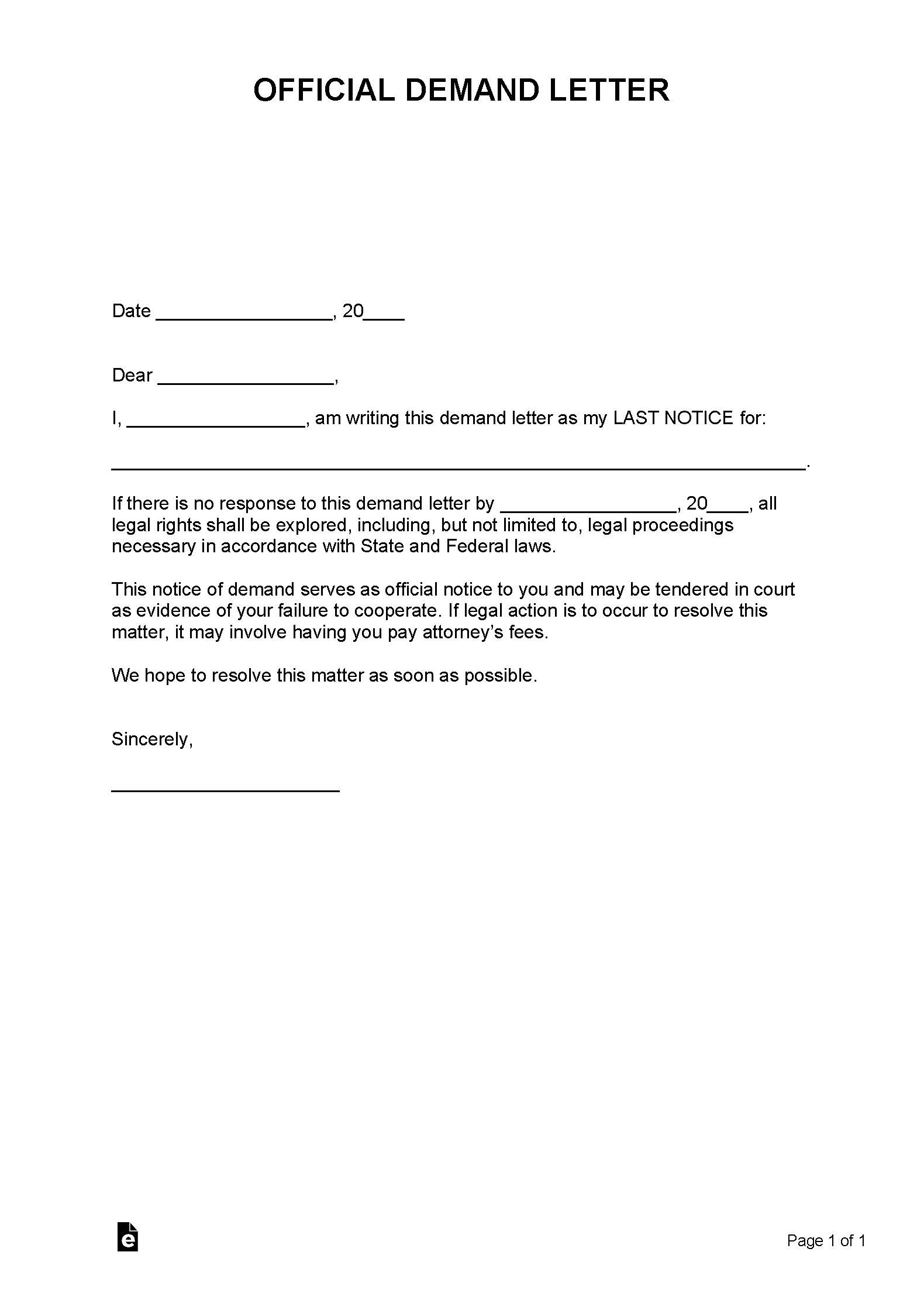
Payment Demand Letter
Full Conversation
So my daughter — she’s 20 — asked to move down to Vegas with me. She agreed to make the car payment but then backed out. She did agree to pay the down payment and licensing. Now she’s saying I’m harassing her because she backed out, and I’m expecting her to pay me $500 a month. She’s blocking me so she doesn’t have to pay after the demand letter. What do I do?
Lexi, Chatbot
I understand the situation with your daughter not fulfilling her agreement. Have you tried discussing this issue with her to find a resolution?
Yes, I have. She blocked me.
Lexi, Chatbot
Have you considered seeking legal advice on how to proceed with enforcing the agreement she made regarding the car payments?
That’s kind of what I’m doing right now.
Lexi, Chatbot
Is there anything else the lawyer should know before I connect you? Rest assured they’ll be able to help with enforcing the car payment agreement.
No — I just wasted $10,000 and I want to at least be compensated for some of it that she agreed to.
TJ, Esq.
Hello! My name is TJ and I’m an attorney. Thanks for the opportunity to assist you.
It’s really tough when family agreements go sideways like this. Generally, if there was a clear agreement — even verbal — about payments and then someone backs out, you might have a claim for breach of contract. Since she’s blocking you, pursuing compensation might require going through the legal system to enforce that agreement. Unfortunately, sometimes it’s really hard to get money back, especially from family. I’m sorry for that disappointing news.
QUESTIONS FOR YOU:
-
What was the total amount that she agreed to pay for the car payment, the down payment, and the licensing?
-
Did you have any witnesses when this agreement was made, or were there any written communications (like texts or emails) where she acknowledged these agreements?
-
In which state did this agreement take place and where do you and your daughter currently reside?
Hello, my 20-year-old daughter reached out saying she was getting kicked out of her boyfriend’s parents’ house. She asked to move in with me in Vegas, and I agreed. I told them they could have 6 months free rent to get on their feet. I bought a brand new bed, TV, and dresser, etc. for her to be comfortable. She then asked me to get her a vehicle. I asked if she could do a monthly payment and she said yes. We went to CarMax and before I signed I called her and told her price and everything. She agreed. Not even 24 hours later she called to tell me she doesn’t want the car anymore. I was calm and said I’ll try to figure something out. I was going to be stuck with the car payment so I asked her to pay back the $2,000 I put down and the cost of licensing since I did not need the vehicle and said she could still drive it when she moved down here on the 7th. Last night she called me and said she’s not coming at all. I told her she needs to make $500 payments a month to me to pay me back for the $4,800 altogether, and now she’s saying I'm harassing her so she doesn’t have to pay. I’m out $10,000 because of this move (plane tickets, etc.). She’s paying me back for those as well, so altogether she owes me $4,800. I need to know what I need to do to enforce that. I did a demand letter, and I’m mailing it to her, but I doubt she cares because she’s calling it harassment.
TJ, Esq.
Thanks for clarifying — that helps a lot. To confirm, was there a specific date or timeframe given for when she was supposed to start making those $500 monthly payments to you?
This Saturday, but she’s now claiming harassment so she doesn’t have to pay or talk to me.
TJ, Esq.
It’s a tough spot. Verbal agreements can be enforceable, but proving them is the challenge — you need to show a “meeting of the minds” (both parties agreed to the same terms). The fact you bought furniture and offered rent assistance shows you relied on her promises, which supports your claim.
Her calling your behavior harassment is a common tactic to avoid accountability. Simply asking for money she agreed to pay (even repeatedly) is usually not “harassment” legally, especially when you’re enforcing a legitimate debt.
The next practical step after a demand letter is usually small claims court. Small claims is designed for people to represent themselves, and the $4,800 figure typically falls within small claims limits in many states (N. R. S. Chapter 73). You’d file a claim, bring evidence (texts, call logs, any witnesses, receipts for the $2,000 down payment, licensing costs, plane tickets, furniture receipts), and explain your case to a judge. If you win, collection can still be difficult if she lacks assets or income, but a judgment gives you legal tools to try to collect.
Thanks.
9
3
Answered 1 week ago
10
3
Answered 3 weeks ago
Disclaimer
By messaging AskaLawyer.com, you agree to our Terms and have read our Privacy Policy.
The information provided on AskaLawyer.com is for general informational purposes only and does not constitute legal advice. While we strive to ensure the accuracy and timeliness of the information presented, we make no guarantees regarding its completeness or applicability to your specific circumstances.
Use of this website does not create an attorney-client relationship between you and AskaLawyer.com or any of its attorneys. Communications through this website, including any responses from attorneys, are not privileged or confidential. For advice tailored to your individual situation, we recommend consulting a licensed attorney in your jurisdiction.
AskaLawyer.com disclaims any liability for actions taken or not taken based on the content of this site. We are not responsible for any third-party content that may be accessed through this website. Reliance on any information provided herein is solely at your own risk.