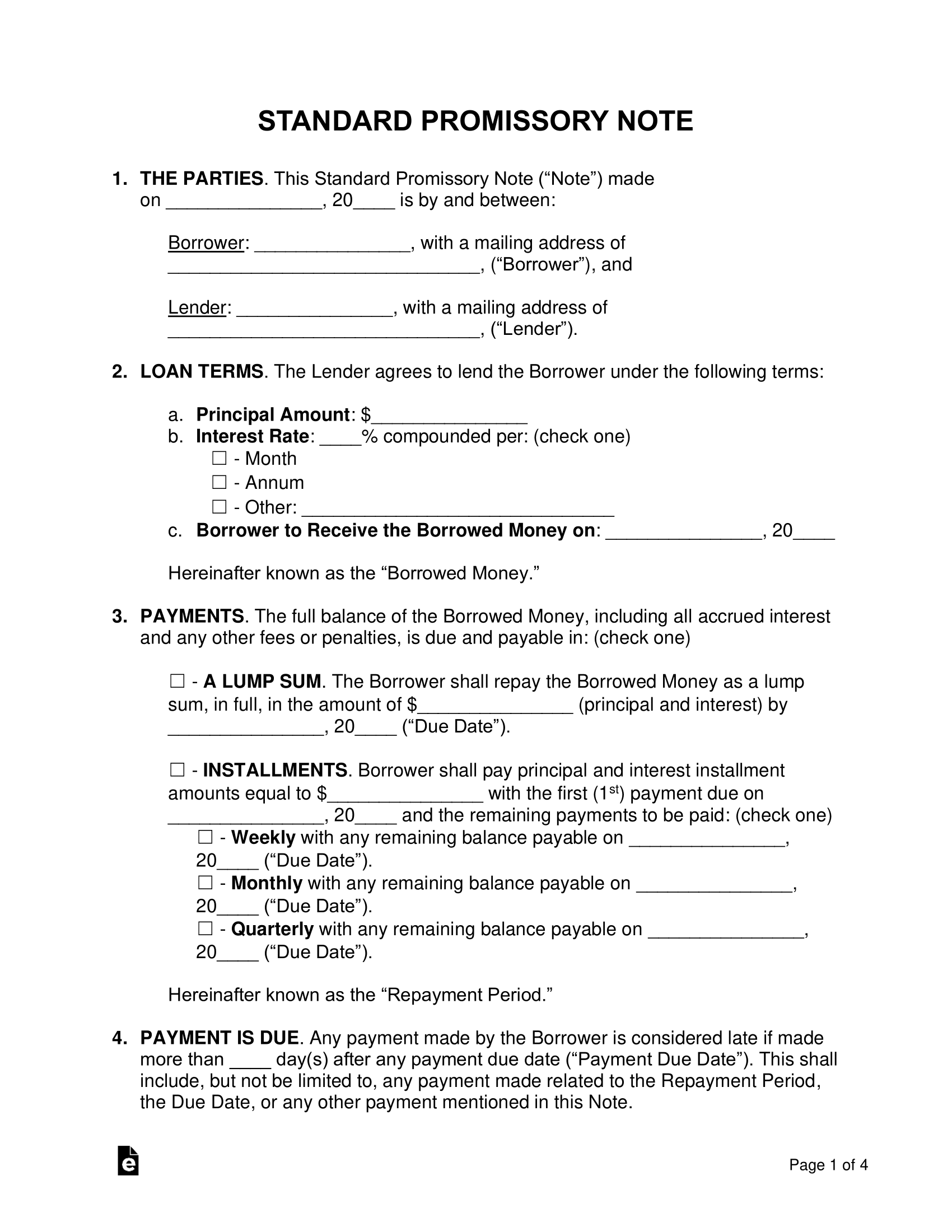
How do I complete a promissory note for a personal loan?
When you draft a promissory note for a personal loan with no interest, late fees, security, or penalties, you have more flexibility (UCC § 3-104). Still, I recommend keeping basic default language like "in the event of default" or "upon failure to pay." These clarify what constitutes a breach of the agreement without imposing penalties.
Such phrases can help if you ever need to enforce the note legally, as they indicate when the borrower hasn’t met their obligations. You can keep it simple—something like, “If the borrower fails to repay by the due date, the lender may take legal action to recover the amount owed,” without including any additional charges.
Also, make sure your repayment terms—due date or schedule—are clearly stated, even if you’ve discussed them informally. This helps prevent misunderstandings later.
0
Loan Agreement/Promissory Note
Full Conversation
Hello, I set up a promissory note to have a friend repay a personal loan. No interest, late fees, security, or penalties required. Do I need to keep language like "in the event of default" in the note in that case?
Lexi, Chatbot
I understand your concern about the language in your promissory note. Have you already discussed the repayment terms with your friend?
Yes, outside of this official note.
Lexi, Chatbot
Are there any specific consequences or actions you would like to outline in case your friend fails to repay the loan as agreed?
Not outside of what’s already in the note.
Lexi, Chatbot
Is there anything else the lawyer should know before I connect you?
Not that I know of.
Angelo M
Greetings! I hope this message finds you well. Thank you for choosing AskaLawyer. I’m Angelo, a licensed attorney with 40+ years of experience.
Hi.
Angelo M
When you draft a promissory note for a personal loan with no interest, late fees, security, or penalties, you have more flexibility (UCC § 3-104). Still, I recommend keeping basic default language like "in the event of default" or "upon failure to pay." These clarify what constitutes a breach of the agreement without imposing penalties.
Such phrases can help if you ever need to enforce the note legally, as they indicate when the borrower hasn’t met their obligations. You can keep it simple—something like, “If the borrower fails to repay by the due date, the lender may take legal action to recover the amount owed,” without including any additional charges.
Also, make sure your repayment terms—due date or schedule—are clearly stated, even if you’ve discussed them informally. This helps prevent misunderstandings later.
Thank you. I believe I understand, and you've affirmed what I thought. One more question. What does this mean?
“9. WAIVER OF PRESENTMENTS. Borrower waives presentment for payment, a notice of dishonor, protest, and notice of protest.”
Angelo M
Great question. That’s standard legal language in many promissory notes.
In plain terms, it means the borrower is waiving certain formal legal steps a lender usually must take when requesting payment or enforcing the loan:
- Presentment for payment: A formal demand that the borrower pay—like a notice or demand letter. Waiving this means the borrower agrees they don't need that formal demand to recognize the debt.
- Notice of dishonor: A notice stating the borrower didn’t make the required payment.
- Protest and notice of protest: Legal declarations that the payment was not made and the loan is in default.
By waiving these, the borrower allows the lender to proceed with legal steps without sending these formal notices. It streamlines enforcement and prevents the borrower from later arguing they weren’t properly notified.
9
3
Answered 1 week ago
10
3
Answered 3 weeks ago
Disclaimer
By messaging AskaLawyer.com, you agree to our Terms and have read our Privacy Policy.
The information provided on AskaLawyer.com is for general informational purposes only and does not constitute legal advice. While we strive to ensure the accuracy and timeliness of the information presented, we make no guarantees regarding its completeness or applicability to your specific circumstances.
Use of this website does not create an attorney-client relationship between you and AskaLawyer.com or any of its attorneys. Communications through this website, including any responses from attorneys, are not privileged or confidential. For advice tailored to your individual situation, we recommend consulting a licensed attorney in your jurisdiction.
AskaLawyer.com disclaims any liability for actions taken or not taken based on the content of this site. We are not responsible for any third-party content that may be accessed through this website. Reliance on any information provided herein is solely at your own risk.