What do I put in my sworn statement to fight a traffic ticket?
Here’s a simple sample you can use in your sworn statement:
“On [date], I was driving on [road/highway] when I approached the emergency vehicle. Due to [brief explanation—e.g., traffic conditions, visibility, or safety concerns], I was unable to safely move over but did slow down significantly as required.”
0
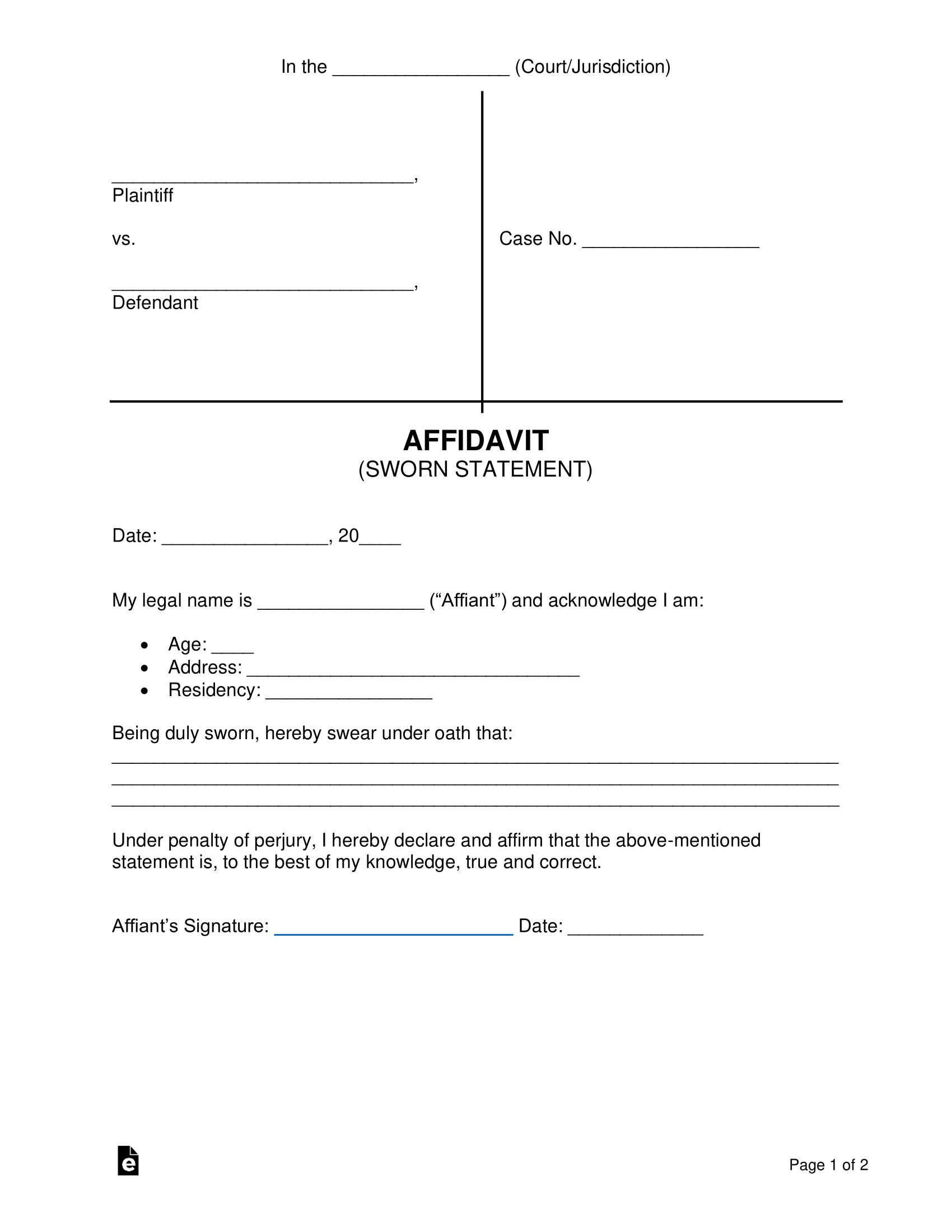
Court Affidavit Form (Sworn Statement)
Full Conversation
I need an affidavit form because I want to get rid of a charge on my ticket, but I’m not sure if I'm supposed to say anything in my sworn statement.
Lexi, Chatbot
I understand you need an affidavit form to address a charge on your ticket. Have you received any guidance or instructions on what to include in the sworn statement?
No.
Lexi, Chatbot
Can you provide more details about the specific charge on your ticket that you're trying to address?
Passing Authorized Emergency Vehicle or Tow Truck.
Lexi, Chatbot
Is there anything else the lawyer should know before I connect you? Rest assured they’ll be able to help.
No.
Legal Eagle
Good afternoon and welcome to AskALawyer. Please give me a moment to review your question.
Legal Eagle
It’s completely understandable to feel uncertain about how to prepare an affidavit, especially for a traffic charge like passing an authorized emergency vehicle or tow truck. This typically falls under a “Move Over” law, which requires drivers to slow down and change lanes (if possible) when approaching stationary emergency vehicles with flashing lights.
Violating this can result in fines, points, or worse consequences if there’s damage or injury.
An affidavit is a sworn written statement made under penalty of perjury. It’s used to explain facts formally to the court. In your case, it's your chance to explain what happened—what you saw, what you did, and why the charge should be dismissed or reduced.
For example, if you didn’t see the emergency vehicle in time or couldn’t change lanes safely, include that. If you were unaware of the law (especially for a first offense), you can mention that too—it may not be a full legal defense, but it can reflect good faith.
What to include in the affidavit:
- Your full name
- Date of the incident
- Citation number (optional, not legally required but helpful)
- A clear, honest, and chronological explanation of the event
- Any supporting evidence (dashcam footage, photos, witness statements)
- A final statement like: “I declare under penalty of perjury that the foregoing is true and correct.”
- Your signature and the date
Note: Some courts require the affidavit to be notarized. Check with your court clerk or traffic division.
Submitting an affidavit doesn’t guarantee dismissal, but if it's your first offense and you show you acted responsibly, the court may reduce the charge, fine, or offer traffic school instead.
Yes, that makes sense. I just didn’t know what I should’ve included in the sworn statement. The rest of the form I got figured out.
Legal Eagle
Here’s a simple sample you can use in your sworn statement:
“On [date], I was driving on [road/highway] when I approached the emergency vehicle. Due to [brief explanation—e.g., traffic conditions, visibility, or safety concerns], I was unable to safely move over but did slow down significantly as required.”
Do I put the citation number in the statement or near my name?
Legal Eagle
There’s no legal requirement either way. It’s just a matter of style—either is fine.
9
3
Answered 1 week ago
10
3
Answered 3 weeks ago
Disclaimer
By messaging AskaLawyer.com, you agree to our Terms and have read our Privacy Policy.
The information provided on AskaLawyer.com is for general informational purposes only and does not constitute legal advice. While we strive to ensure the accuracy and timeliness of the information presented, we make no guarantees regarding its completeness or applicability to your specific circumstances.
Use of this website does not create an attorney-client relationship between you and AskaLawyer.com or any of its attorneys. Communications through this website, including any responses from attorneys, are not privileged or confidential. For advice tailored to your individual situation, we recommend consulting a licensed attorney in your jurisdiction.
AskaLawyer.com disclaims any liability for actions taken or not taken based on the content of this site. We are not responsible for any third-party content that may be accessed through this website. Reliance on any information provided herein is solely at your own risk.