If the grantor owes delinquent taxes, can he legally keep them in his name when selling the property?
Specific laws vary by state jurisdiction, but generally speaking, the grantor must address any delinquent taxes or outstanding liens before or at closing.
Here is a breakdown that may be helpful in understanding how unpaid taxes affect title transfers.
1. Delinquent Taxes Do Not Disappear:
- When a grantor sells a property, any delinquent taxes do not simply go away or get ignored during the transfer process.
- In a standard real estate transaction, the seller (grantor) must address any outstanding liens or obligations before or at closing.
- Delinquent property taxes create a cloud on title, meaning the title to the property is not clear.
- This can impede or block a legal transfer to the buyer.
2. Title Insurance and Unpaid Taxes:
- If the grantor attempts to sell the property without satisfying delinquent taxes:
- A title company (if involved) will discover the unpaid taxes during the title search.
- Title companies generally will not insure the title unless all liens, including tax liens, are cleared.
- Most buyers (or their lenders) will insist that all outstanding taxes be paid as a condition of closing.
3. Property Transfer Tax - Can You Put 0?
- It would be highly improper and potentially illegal to report 0 as the property transfer tax if taxes are due.
- Property transfer taxes are based on:
- The consideration paid for the property, or
- The fair market value, depending on jurisdiction.
- Intentionally reporting a false transfer value to reduce or avoid tax obligations can constitute tax fraud.
- This can expose the grantor (and possibly the grantee) to serious civil and even criminal penalties.
In Short:
- A grantor cannot legally hide delinquent taxes when transferring property.
- They also cannot manipulate the property transfer tax reporting to avoid tax obligations.
- If delinquent taxes exist, they must be dealt with properly:
- Paying them off prior to closing
- Ensuring that the sale proceeds are used to satisfy them
0
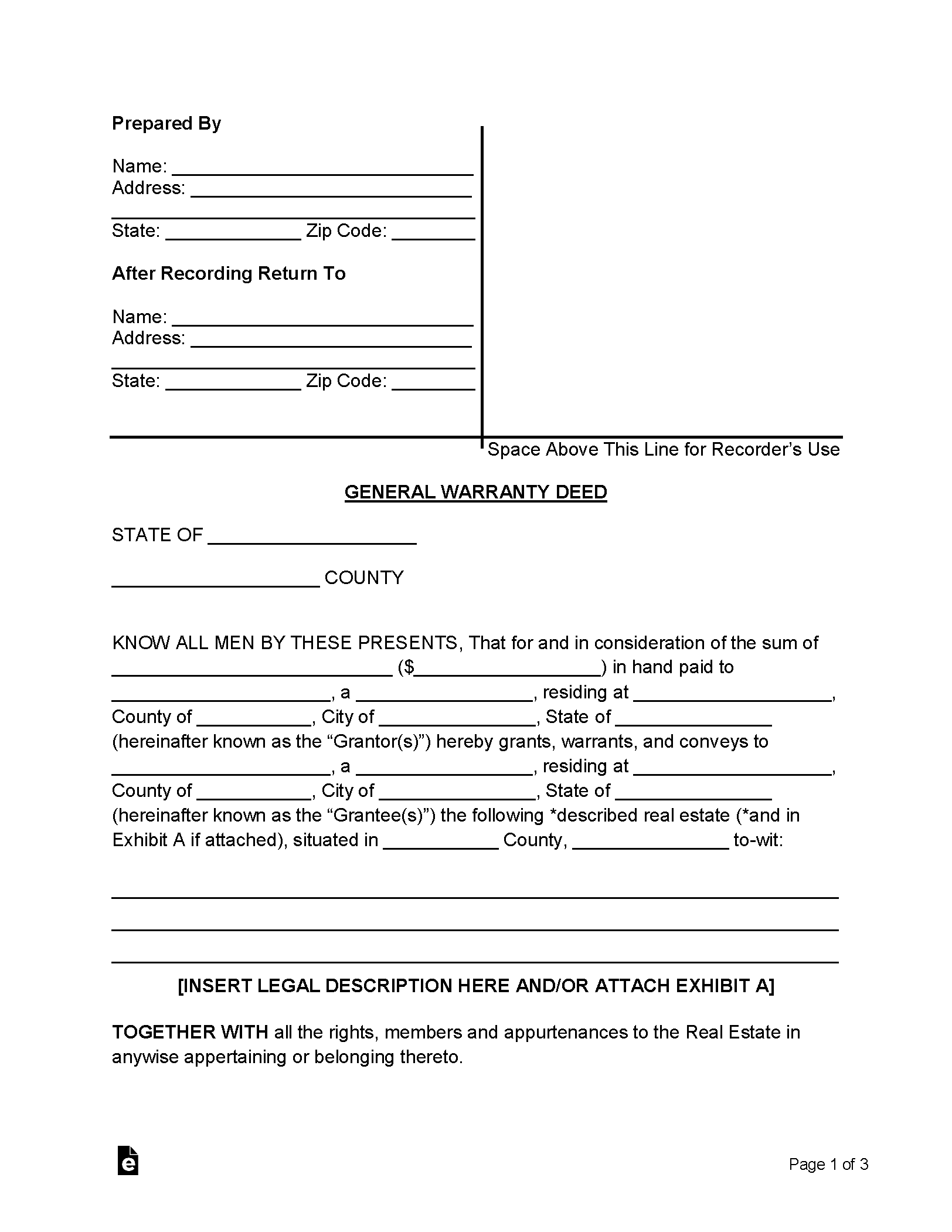
General Warranty Deed Form
Full Conversation
If the grantor owes delinquent taxes, can he legally keep them in his name when selling the property?
For example, when asked about property transfer tax, can they just put 0?
Alex, Esq.
Hello! My name is Alex, and I’m a Finance, Accounting, Tax, and Social Security Expert here to assist you today.
Alex, Esq.
Specific laws vary by state jurisdiction, but generally speaking, the grantor must address any delinquent taxes or outstanding liens before or at closing.
Here is a breakdown that may be helpful in understanding how unpaid taxes affect title transfers.
1. Delinquent Taxes Do Not Disappear:
- When a grantor sells a property, any delinquent taxes do not simply go away or get ignored during the transfer process.
- In a standard real estate transaction, the seller (grantor) must address any outstanding liens or obligations before or at closing.
- Delinquent property taxes create a cloud on title, meaning the title to the property is not clear.
- This can impede or block a legal transfer to the buyer.
2. Title Insurance and Unpaid Taxes:
- If the grantor attempts to sell the property without satisfying delinquent taxes:
- A title company (if involved) will discover the unpaid taxes during the title search.
- Title companies generally will not insure the title unless all liens, including tax liens, are cleared.
- Most buyers (or their lenders) will insist that all outstanding taxes be paid as a condition of closing.
3. Property Transfer Tax - Can You Put 0?
- It would be highly improper and potentially illegal to report 0 as the property transfer tax if taxes are due.
- Property transfer taxes are based on:
- The consideration paid for the property, or
- The fair market value, depending on jurisdiction.
- Intentionally reporting a false transfer value to reduce or avoid tax obligations can constitute tax fraud.
- This can expose the grantor (and possibly the grantee) to serious civil and even criminal penalties.
In Short:
- A grantor cannot legally hide delinquent taxes when transferring property.
- They also cannot manipulate the property transfer tax reporting to avoid tax obligations.
- If delinquent taxes exist, they must be dealt with properly:
- Paying them off prior to closing
- Ensuring that the sale proceeds are used to satisfy them
There is no way that the grantor could keep the delinquent taxes—it would transfer to the grantee, right?
Alex, Esq.
Yes, there is a way delinquent taxes can effectively transfer to the grantee, but it is not a clean or advisable situation.
- If the grantor does not pay the taxes before the transfer, especially through informal means (like a quitclaim deed), the grantee can inherit the property subject to those unpaid taxes.
- In other words, the liability for the delinquent taxes remains attached to the property itself, not the previous owner.
- The taxing authority does not care who owns the property—they only care that the taxes are paid.
- This is why in cases involving a quitclaim deed or private sale without title insurance or escrow, the grantee may become responsible for the previous owner’s unpaid taxes if they are not careful.
- Liens "run with the land," meaning they bind the property regardless of ownership changes, unless explicitly resolved at or before the time of transfer.
Final Advice:
- Be cautious when acquiring property with potential liens.
- Ensure that the title is clear and all delinquent taxes are resolved before completing the transfer.
- Consulting a real estate attorney or title company before finalizing such transactions is highly recommended.
11
2
Answered 3 days ago
Disclaimer
By messaging AskaLawyer.com, you agree to our Terms and have read our Privacy Policy.
The information provided on AskaLawyer.com is for general informational purposes only and does not constitute legal advice. While we strive to ensure the accuracy and timeliness of the information presented, we make no guarantees regarding its completeness or applicability to your specific circumstances.
Use of this website does not create an attorney-client relationship between you and AskaLawyer.com or any of its attorneys. Communications through this website, including any responses from attorneys, are not privileged or confidential. For advice tailored to your individual situation, we recommend consulting a licensed attorney in your jurisdiction.
AskaLawyer.com disclaims any liability for actions taken or not taken based on the content of this site. We are not responsible for any third-party content that may be accessed through this website. Reliance on any information provided herein is solely at your own risk.