Can I remove myself from a deed?
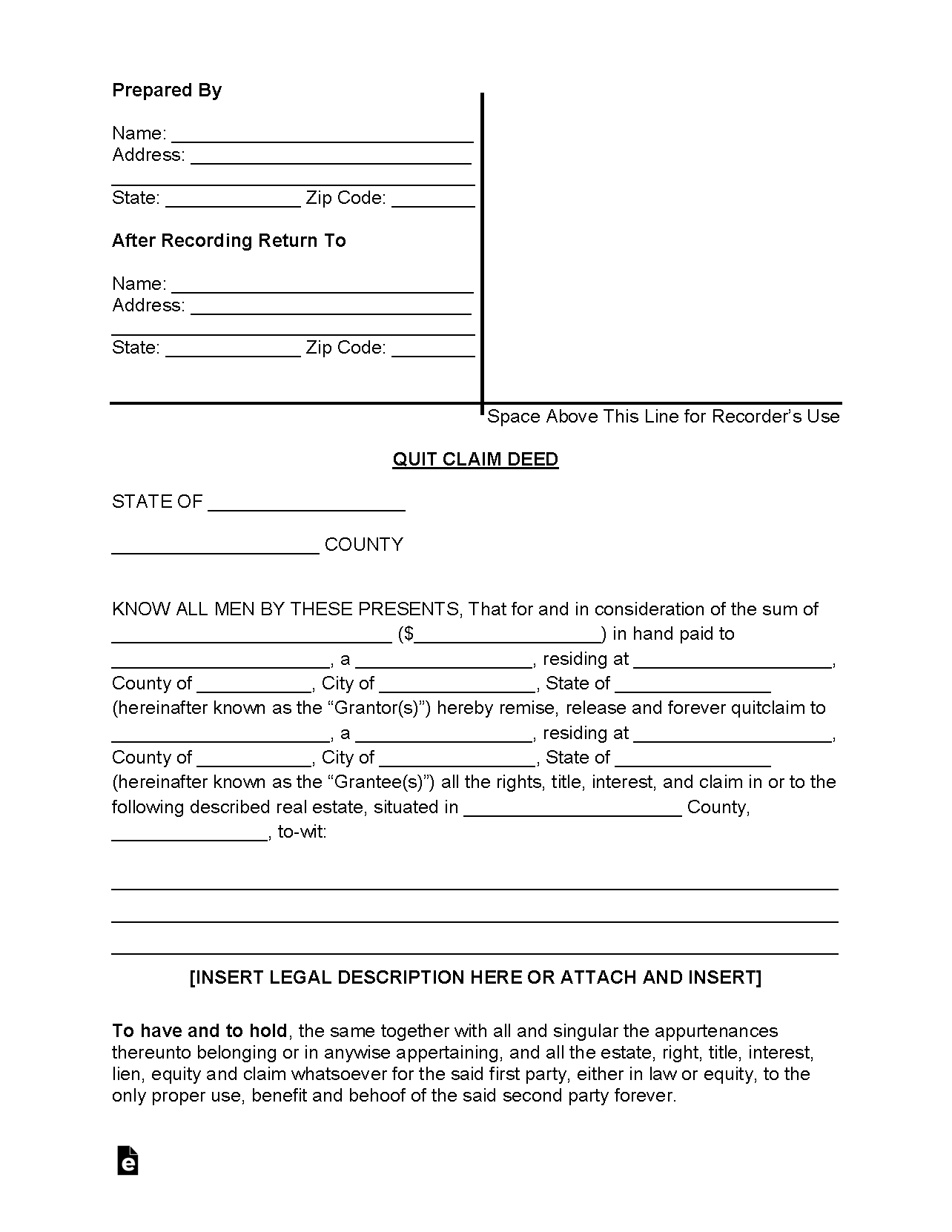
Yes, you can remove yourself from the deed by executing a Quitclaim Deed and filing it with the appropriate county recorder’s office. However, a few important legal and practical considerations apply:
Voluntary Act: You must voluntarily sign the quitclaim deed, and your son must accept the transfer of your interest. This removes you from ownership, but does not remove you from the mortgage.
Mortgage Obligation Remains: Even after you're off the deed, you remain legally liable for the mortgage unless the lender agrees to release you. This means:
- If your son defaults, the lender can still pursue you for the balance.
- You cannot force the lender to remove you unless your son refinances the loan in his name alone.
Lender Consent Not Required for Quitclaim: You generally do not need the lender’s permission to quitclaim your interest, but it's often a good idea to notify them, especially since the change affects their collateral interest in the property.
Effect on Credit: Since you remain on the mortgage, the loan will still appear on your credit report and can affect your debt-to-income ratio and creditworthiness for other loans.
If your goal is to completely sever financial and legal ties to the property, your son would need to refinance the mortgage solely in his name, at which point you could then file the quitclaim deed in conjunction with the refinance.
Let me know if you need help walking through the mechanics of completing and filing a quitclaim deed in your state.
0
Quitclaim Deed
Full Conversation
I co-signed for my son's mortgage in 2008. I am still on the deed and would like to be removed. I assume I can accomplish this by submitting a Quitclaim Deed form to the county. I know I'm still on the mortgage, but would like to be off the deed.
Hello. My name is Richard and I have been a licensed attorney for over 25 years and hope to be of assistance.
Please be advised that this website is for information purposes only and I cannot formally represent customers of this website or perform actual legal services on your behalf.
I know your question is important and I’m working on typing an answer to your question now. Sometimes responses and replies take time, and we ask you to be courteous and patient to allow the expert to type your answers to you and also to others.
Yes, you can remove yourself from the deed by executing a Quitclaim Deed and filing it with the appropriate county recorder’s office. However, a few important legal and practical considerations apply:
Voluntary Act: You must voluntarily sign the quitclaim deed, and your son must accept the transfer of your interest. This removes you from ownership, but does not remove you from the mortgage.
Mortgage Obligation Remains: Even after you're off the deed, you remain legally liable for the mortgage unless the lender agrees to release you. This means:
- If your son defaults, the lender can still pursue you for the balance.
- You cannot force the lender to remove you unless your son refinances the loan in his name alone.
Lender Consent Not Required for Quitclaim: You generally do not need the lender’s permission to quitclaim your interest, but it's often a good idea to notify them, especially since the change affects their collateral interest in the property.
Effect on Credit: Since you remain on the mortgage, the loan will still appear on your credit report and can affect your debt-to-income ratio and creditworthiness for other loans.
If your goal is to completely sever financial and legal ties to the property, your son would need to refinance the mortgage solely in his name, at which point you could then file the quitclaim deed in conjunction with the refinance.
Let me know if you need help walking through the mechanics of completing and filing a quitclaim deed in your state.
If you have any follow-up questions, please let me know.
11
2
Answered 2 days ago
Disclaimer
By messaging AskaLawyer.com, you agree to our Terms and have read our Privacy Policy.
The information provided on AskaLawyer.com is for general informational purposes only and does not constitute legal advice. While we strive to ensure the accuracy and timeliness of the information presented, we make no guarantees regarding its completeness or applicability to your specific circumstances.
Use of this website does not create an attorney-client relationship between you and AskaLawyer.com or any of its attorneys. Communications through this website, including any responses from attorneys, are not privileged or confidential. For advice tailored to your individual situation, we recommend consulting a licensed attorney in your jurisdiction.
AskaLawyer.com disclaims any liability for actions taken or not taken based on the content of this site. We are not responsible for any third-party content that may be accessed through this website. Reliance on any information provided herein is solely at your own risk.