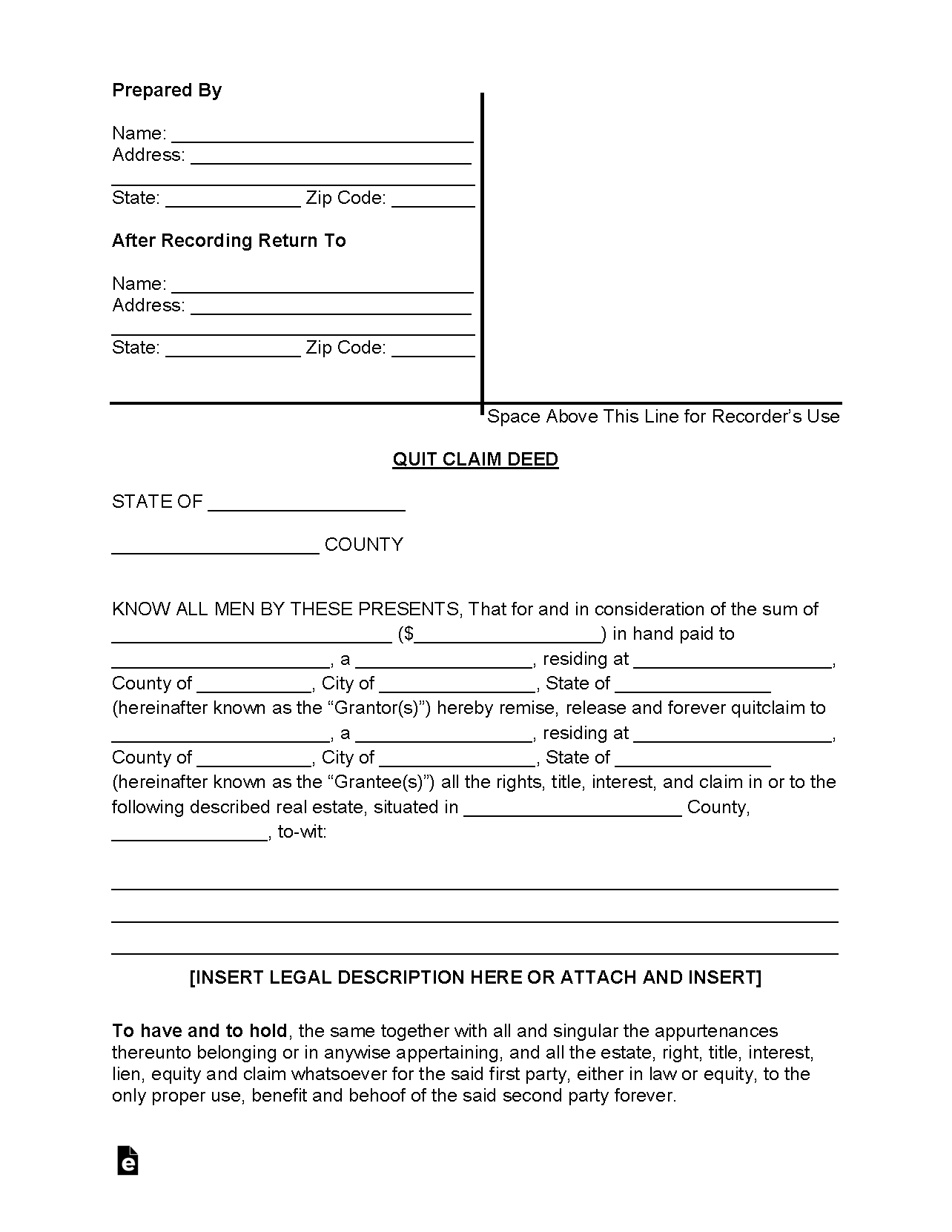
Does the grantor’s spouse have to sign a quitclaim deed?
It would not be mandatory, but it would be better to have the spouse sign because even if the spouse is not on the deed listed as an owner, they still have what is called a "marital interest" simply due to being married to the owner. Having both the owner and their spouse sign a quitclaim deed as Grantors ensures that everything the Grantor owns or has an interest in regarding the property gets transferred to the Grantee.
0
Quitclaim Deed
Full Conversation
Does the Grantor's spouse have to sign? What if they refuse to sign? My mother is the Grantor and I am the Grantee.
Lexi, Chatbot
I understand that dealing with quitclaim deeds can be complicated. Is your mother currently married, and is her spouse involved in the property transfer?
He is not involved, but needs to sign the Quitclaim Deed, correct?
Lexi, Chatbot
Have you already discussed the situation with your mother's spouse regarding their signature on the deed?
My mother prefers him not to be involved.
Lexi, Chatbot
Is there anything else the Real Estate Lawyer should know before I connect you? Rest assured they’ll be able to help with the signature issue.
Barrister
Hello and welcome to the site! My name is Barrister, and I am a licensed attorney here to help with your situation. I know your question is important, but there may be a short delay in my responses as I type out an answer or reply, since I am typically working with several customers at once on the website. I have read your post and I am sorry to hear you are having to deal with this situation, as I realize it can be frustrating and confusing.
I appreciate your assistance.
Barrister
It would not be mandatory, but it would be better to have the spouse sign because even if the spouse is not on the deed listed as an owner, they still have what is called a "marital interest" simply due to being married to the owner. Having both the owner and their spouse sign a quitclaim deed as Grantors ensures that everything the Grantor owns or has an interest in regarding the property gets transferred to the Grantee.
What rights would the person have with a "marital interest"?
Barrister
They can potentially come back and claim that they have some type of equitable interest in the property. For example, if a wife owned a property in her name only but her husband had contributed a lot of money to repairs, upkeep, maintenance, and improvements over the years, even though he's not on the deed, he could still have some claim to equitable rights in the property due to his contributions over the years, even though the legal title is in the wife's name only.
The problem with a quitclaim deed is that it essentially says, "Whatever I own, be it 0% or 100% or anything in between, I am conveying to you, but I'm not guaranteeing anything." And that makes no guarantee as to the quality of the title. I could give you a quitclaim deed from me to you for your mother's house, and it would mean absolutely nothing because I have nothing to convey since I have no ownership interest in the property at all.
If my mother passes away, would her husband own the place or have control of 50% of it?
Barrister
That depends on whether she had a will leaving it to you or to him, and when she acquired it—during marriage, before marriage, inherited, or gifted. It also depends on whether the spouse had any claim to it due to paying for it over the years, and even what state it is in, because some states give the surviving spouse the right to live there for life if it was their home. There are many factors that could affect whether the spouse gets some type of interest in the property if your mother passes.
Barrister
But if he signs the quitclaim deed, all that doesn't matter.
Understood, I appreciate your time.
Barrister
You are very welcome. I’m glad I could help. It was my pleasure to work with you and answer your question.
11
2
Answered 3 days ago
Disclaimer
By messaging AskaLawyer.com, you agree to our Terms and have read our Privacy Policy.
The information provided on AskaLawyer.com is for general informational purposes only and does not constitute legal advice. While we strive to ensure the accuracy and timeliness of the information presented, we make no guarantees regarding its completeness or applicability to your specific circumstances.
Use of this website does not create an attorney-client relationship between you and AskaLawyer.com or any of its attorneys. Communications through this website, including any responses from attorneys, are not privileged or confidential. For advice tailored to your individual situation, we recommend consulting a licensed attorney in your jurisdiction.
AskaLawyer.com disclaims any liability for actions taken or not taken based on the content of this site. We are not responsible for any third-party content that may be accessed through this website. Reliance on any information provided herein is solely at your own risk.