[SC] [SC] How can I transfer a deed into my name when the owner is not in the same state?
This sounds like you may need to use a quitclaim deed to transfer the property over from how it is now to reflect the new owner(s). You don’t need to be in the same state. You can mail a copy of it and use notarize.com to do a notary. Being in the same room is not necessary, and not being in the same state is fine too.
Here is the long answer:
Quitclaim deeds are usually used in family situations where one party releases some or all rights to the property, but people can also do it between non-family members as well. The thing with quitclaim deeds is that there are no warranties on the property, so if there are any liens or encumbrances, the new owner(s) won’t have any recourse.
To get a quitclaim deed:
- You can go to legalzoom.com, rocketlawyer.com, or deeds.com.
- You can also download a quitclaim form from your county recorder's website or obtain a form from a local attorney, real estate agent, or office supply store.
- Make sure you have the assessor's parcel number (APN) on the form so the recorder’s office knows what property this is. You can find the APN on your property tax bill.
When it comes to taxes, some transactions are exempt:
- Transfers between spouses are exempt (26 US Code Section 1041)
- Transfers between parents and children, grandparent to grandchildren, or as gifts are usually taxed as a gift to the person giving the gift.
0
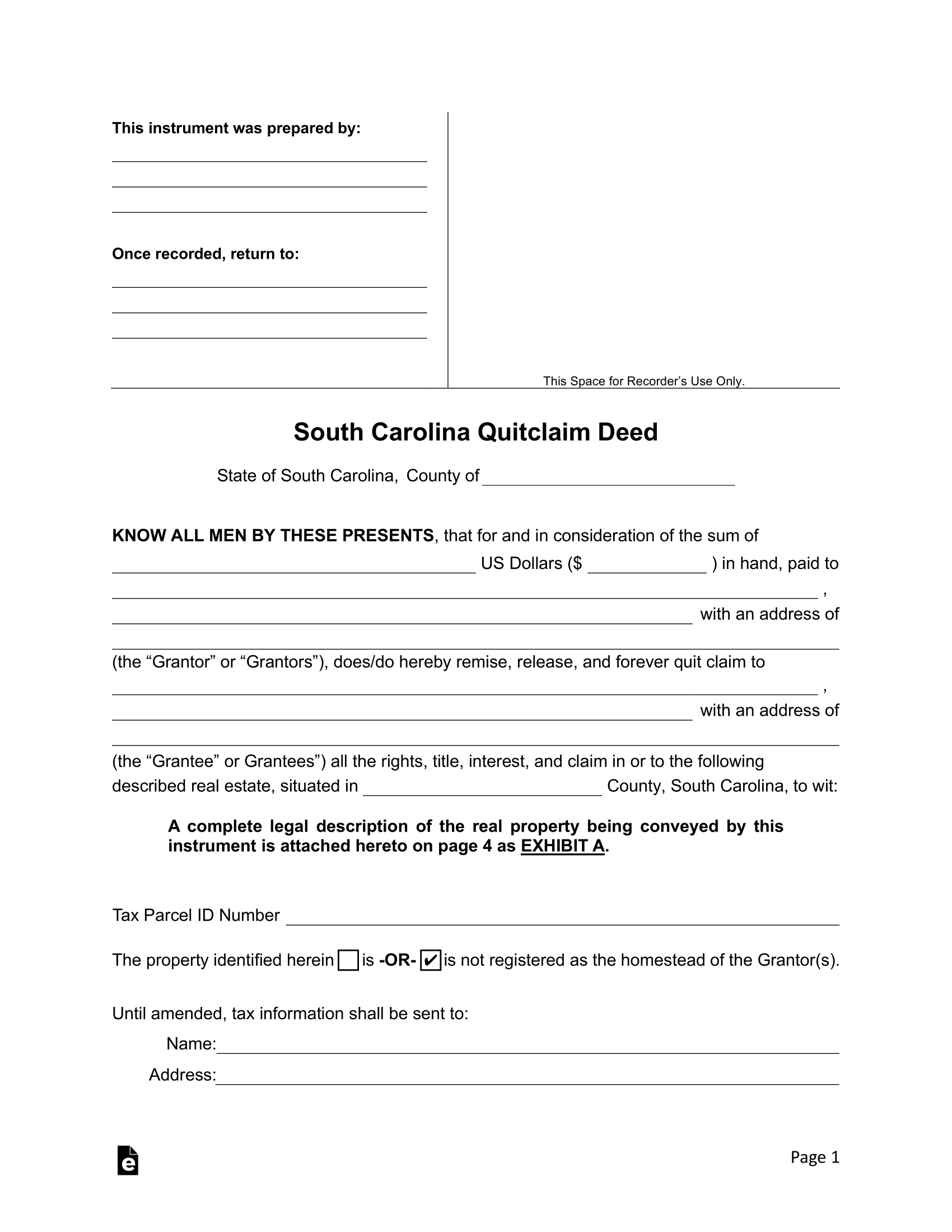
South Carolina Quit Claim Deed
Full Conversation
What would be the easiest way to transfer the deed into my name when the owner is no longer in the same state?
Lexi, Chatbot
I understand the distance can make the process more challenging. Are you currently in possession of a power of attorney from the owner?
No, they are my mother and I bought the house from her and she moved out of state before we transferred anything.
Lexi, Chatbot
Have you considered using a title company or an attorney to assist with the deed transfer process?
No I haven’t. I wasn’t sure where to start.
Lexi, Chatbot
Is there anything else the Real Estate Lawyer should know before I connect you? Rest assured they’ll be able to help with transferring the deed into your name.
My father passed away and his name is also on the current deed/title.
Legal Eagle
Hello! Legal Eagle here, and I am an attorney specializing in your area of law. Have you already initiated any legal proceedings regarding your father's estate or the property?
No, my mother was supposed to do whatever since she was listed in the will, but moved out of state and I took over the house — paying property taxes and bought the house from her.
Legal Eagle
Ok thanks! Just a few more questions. What state is this in again?
The property is in South Carolina. My mother is currently in PA so it’s a bit difficult to do any kind of notary unless it can be done electronically.
Legal Eagle
This sounds like you may need to use a quitclaim deed to transfer the property over from how it is now to reflect the new owner(s). You don’t need to be in the same state. You can mail a copy of it and use notarize.com to do a notary. Being in the same room is not necessary, and not being in the same state is fine too.
Here is the long answer:
Quitclaim deeds are usually used in family situations where one party releases some or all rights to the property, but people can also do it between non-family members as well. The thing with quitclaim deeds is that there are no warranties on the property, so if there are any liens or encumbrances, the new owner(s) won’t have any recourse.
To get a quitclaim deed:
- You can go to legalzoom.com, rocketlawyer.com, or deeds.com.
- You can also download a quitclaim form from your county recorder's website or obtain a form from a local attorney, real estate agent, or office supply store.
- Make sure you have the assessor's parcel number (APN) on the form so the recorder’s office knows what property this is. You can find the APN on your property tax bill.
When it comes to taxes, some transactions are exempt:
- Transfers between spouses are exempt (26 US Code Section 1041)
- Transfers between parents and children, grandparent to grandchildren, or as gifts are usually taxed as a gift to the person giving the gift.
Legal Eagle
Does that help clarify things? I want to make sure I didn’t leave anything out.
No, I think that sums it up.
Legal Eagle
For sure! Did I thoroughly address your question? Did I provide top-tier service to you? If the answer is no to either, please let me know so I can help!
You bet. I'm sorry to hear about your situation! Thank you for trusting AskaLawyer with your question.
11
2
Answered 3 days ago
Disclaimer
By messaging AskaLawyer.com, you agree to our Terms and have read our Privacy Policy.
The information provided on AskaLawyer.com is for general informational purposes only and does not constitute legal advice. While we strive to ensure the accuracy and timeliness of the information presented, we make no guarantees regarding its completeness or applicability to your specific circumstances.
Use of this website does not create an attorney-client relationship between you and AskaLawyer.com or any of its attorneys. Communications through this website, including any responses from attorneys, are not privileged or confidential. For advice tailored to your individual situation, we recommend consulting a licensed attorney in your jurisdiction.
AskaLawyer.com disclaims any liability for actions taken or not taken based on the content of this site. We are not responsible for any third-party content that may be accessed through this website. Reliance on any information provided herein is solely at your own risk.