[NM] [NM] Can I be the preparer and the tenant on a TOD deed?

Hello, can I be both the preparer on the transfer of death deed and the tenant in New Mexico?

31

12

Jon
Jon

556 satisfied customers

View context
Solved

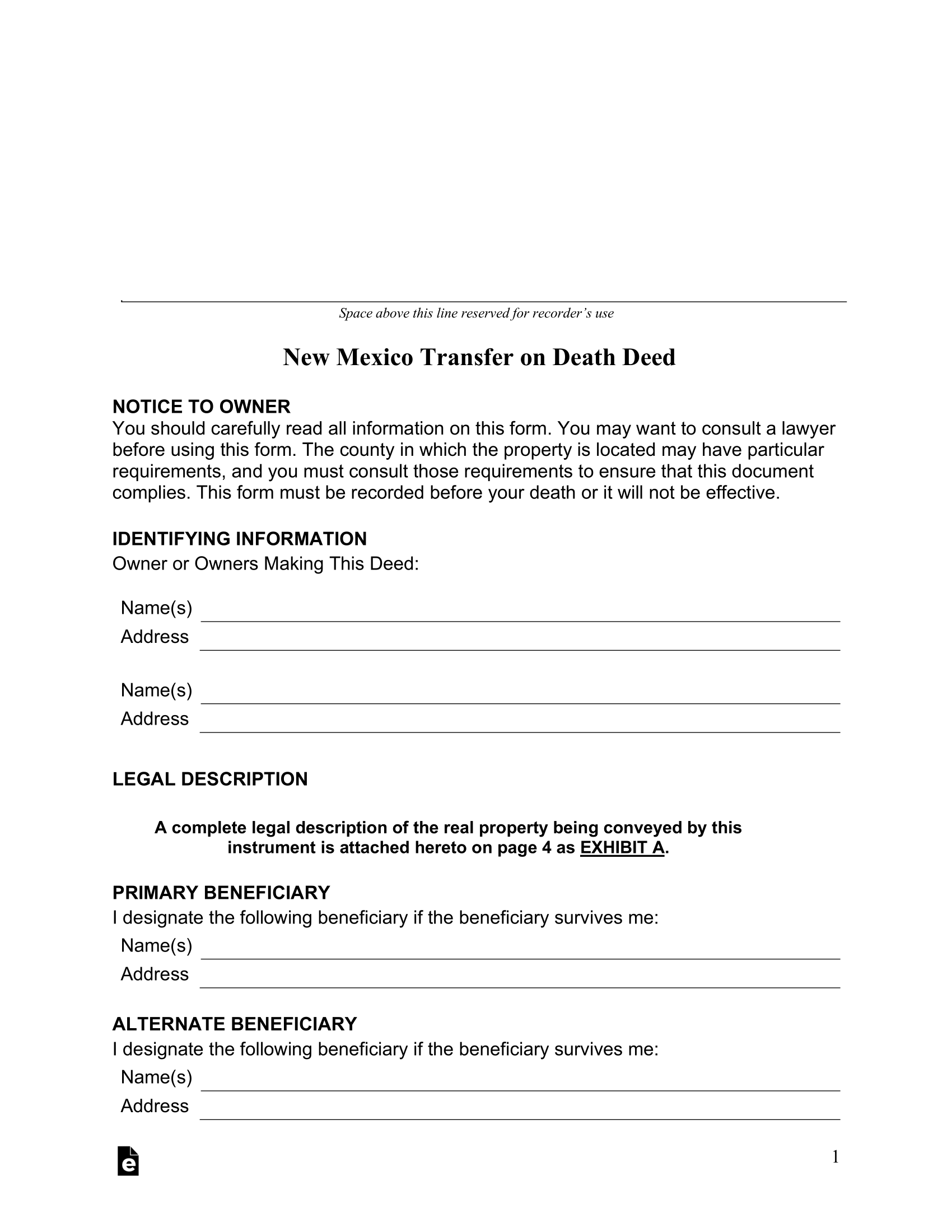
In New Mexico, a Transfer on Death (TOD) Deed is a simple way for a property owner to name someone who will inherit their real estate when they pass away—avoiding the delays and costs of probate.

If you're wondering whether you can both prepare your own TOD deed and still live on the property as a tenant, the answer is yes. There’s no legal conflict there. As the owner, you have the full right to create and sign your own TOD deed, naming yourself as the “transferor”—the one arranging for the property to transfer after your death.

Living in the home as a tenant just refers to your current use of the property and doesn’t affect your ability to transfer it later. Importantly, a TOD deed doesn’t give the beneficiary any rights to the property while you’re alive. You remain in full control, meaning you can still sell it, refinance it, or change your mind and revoke the deed at any time.

While you're allowed to draft the TOD deed on your own, it’s wise to have a New Mexico attorney either prepare or at least review it to make sure everything is done correctly and complies with state law. This helps avoid confusion or legal challenges after you’re gone.

0

Transfer on Death Deed

Full Conversation


Hello, can I be both the preparer on the transfer of death deed and the tenant in New Mexico?

Lexi

Lexi, Chatbot

I understand you have a question about being both the preparer on the transfer of death deed and the tenant in New Mexico. Are you looking to ensure that there are no conflicts of interest in this situation?

Yes

Lexi

Lexi, Chatbot

Are you familiar with the specific legal requirements and restrictions regarding being both the preparer on the transfer of death deed and the tenant in New Mexico?

Yes

Lexi

Lexi, Chatbot

Is there anything else the Lawyer should know before I connect you? Rest assured they’ll be able to help with your transfer of death deed.

No

Jon

Jon

Hello and thank you for reaching out! I’m Jon, a licensed attorney with over 13 years of experience, and I’m here to help.

I know legal matters can feel overwhelming, but you're in good hands. I’ll do my best to make things clear and provide you with the guidance you need. Let’s work together to find the right solution for your situation.

Thank you.

Jon

Jon

You want to know if you can be the preparer of the deed and the tenant?

I reside in New Mexico. Yes, correct.

Jon

Jon

Understood! I think I have all the information I need, but is there anything else you'd like to add before I get started on your answer? If not, I'll start working on a response for you right away.

After I receive my document, I can go to any notary office? And do I need to do anything else? Much appreciated. That would be all.

Jon

Jon

Got it! I just need a few minutes to finish typing out a complete response for you. It won’t take long—around 4 or 5 minutes—as I want to make sure I provide you with a thorough and thoughtful reply.

Much appreciated!!

Jon

Jon

In New Mexico, a Transfer on Death (TOD) Deed is a simple way for a property owner to name someone who will inherit their real estate when they pass away—avoiding the delays and costs of probate.

If you're wondering whether you can both prepare your own TOD deed and still live on the property as a tenant, the answer is yes. There’s no legal conflict there. As the owner, you have the full right to create and sign your own TOD deed, naming yourself as the “transferor”—the one arranging for the property to transfer after your death.

Living in the home as a tenant just refers to your current use of the property and doesn’t affect your ability to transfer it later. Importantly, a TOD deed doesn’t give the beneficiary any rights to the property while you’re alive. You remain in full control, meaning you can still sell it, refinance it, or change your mind and revoke the deed at any time.

While you're allowed to draft the TOD deed on your own, it’s wise to have a New Mexico attorney either prepare or at least review it to make sure everything is done correctly and complies with state law. This helps avoid confusion or legal challenges after you’re gone.

Jon

Jon

Once your TOD deed is ready, it needs to be signed and notarized. You can go to any notary for this. The notarization is a key step—it proves the deed is legally valid.

But signing and notarizing it isn’t enough. You must record the deed with the County Clerk in the county where the property is located before you pass away. If the property is in more than one county, you need to record it in each of them. If you don’t get the deed recorded before your death, it won’t take effect. After it’s recorded, the deed is usually sent back to you. Keep it somewhere safe, and consider giving a copy to your beneficiary so they know what to do later, like recording your death certificate to officially transfer the property.

Lastly, make it a habit to review your estate plan from time to time, especially after big life changes—marriage, divorce, a birth, or the death of someone you’ve named. You can update or cancel a TOD deed at any time before your death by recording a new one or filing a formal revocation.

I already have a home deed from the seller a few years ago. Do I still need to record the deed with the County Clerk?

I'm not sure how to record the deed? Or maybe I am not understanding the second part.

Jon

Jon

Yes, even if you received your home deed from the seller years ago, you absolutely must record it with the County Clerk's office in New Mexico. Recording your deed serves as public notice of your legal ownership, protecting you against potential fraudulent claims or conflicts with other parties. It is essential for establishing a clear chain of title to the property, which is crucial for any future sale, refinancing, or the validity of a Transfer on Death Deed. Without recording, while the deed might be valid between you and the seller, it won't be fully effective or protect your rights against third parties.

Jon

Jon

You would need to contact the clerk's office to get directions—every county has its own process and recording fees.

Was I supposed to record my deed from the seller a long time ago?

Jon

Jon

Yes, you were generally expected to record your deed from the seller much earlier, ideally soon after the closing. While New Mexico law doesn't impose a strict deadline, doing so is critical to publicly establish your ownership. An unrecorded deed leaves your title vulnerable and can create significant problems later when selling, refinancing, or dealing with other claims against the property. You need to go do this ASAP.

I will do that. THANK YOU SO MUCH!!! Should I record the deed first before notarizing? Or does it matter?

Jon

Jon

No, you must have it fully complete and notarized before recording.

Jon

Jon

I do hope the information I provided was helpful and addressed your question. If there's anything else you need, please don't hesitate to reach out—I’m always happy to assist. Wishing you a fantastic day ahead!

The deed is fully complete and notarized?

I think this is where I am confused.

Is it too late to make changes to my document on the deed?

The one I created today.

Jon

Jon

You can record it after notarizing. You mentioned, "Should I record the deed first before notarizing?" That's why I responded that way.

Jon

Jon

556 satisfied customers

Jon
Welcome! Have a similar question?

5 lawyers online now

Richard
Richard

4.26 (76,546)

Can I remove myself from a deed?

4

3

Answered 3 days ago

Disclaimer


By messaging AskaLawyer.com, you agree to our Terms and have read our Privacy Policy.

The information provided on AskaLawyer.com is for general informational purposes only and does not constitute legal advice. While we strive to ensure the accuracy and timeliness of the information presented, we make no guarantees regarding its completeness or applicability to your specific circumstances.

Use of this website does not create an attorney-client relationship between you and AskaLawyer.com or any of its attorneys. Communications through this website, including any responses from attorneys, are not privileged or confidential. For advice tailored to your individual situation, we recommend consulting a licensed attorney in your jurisdiction.

AskaLawyer.com disclaims any liability for actions taken or not taken based on the content of this site. We are not responsible for any third-party content that may be accessed through this website. Reliance on any information provided herein is solely at your own risk.

Ask a Lawyer Logo
Ask a Lawyer Logo
Intake Questions
Step of 3
Loading...
Loading...

How do you like to pay?

By proceeding with payment, you agree to our Terms and Privacy Policy. You authorize us to charge $ today and $ thereafter until canceled. You may cancel anytime in the My Account section to stop future charges.

Total Due:

After purchasing, your chat will begin with an attorney.

By proceeding with payment, you agree to our Terms and Privacy Policy. You authorize us to charge $ today and $ thereafter until canceled. You may cancel anytime in the My Account section to stop future charges.

Total Due:

After purchasing, your chat will begin with an attorney.

It looks like you already have an account with Ask a Lawyer.

We have sent you a magic link to . Click the link in your email to sign in and continue your chat.

spin

Step of 6 •

You'll receive an email at as soon as the lawyer joins the conversation 🙏🏻😊

Over 90% of lawyers connect within 5 minutes. If you're not online at that moment, don't worry — the lawyer will reply to your message while you're away.

You're also welcome to stay in the chat while waiting to be connected 💬✨

Waiting for lawyer