[PA] [PA] Do I need additional forms with a quitclaim deed?

Hello, I prepared a quitclaim deed and it’s going from me and my ex-husband to just me. Would I still need to fill out the Realty Transfer Tax Statement? And the Pennsylvania Certificate of Residency. What do I use that for?

20

7

Dan
Dan

29,578 satisfied customers

View context
Solved

I understand how unsettling it can feel to manage property paperwork after a divorce, especially when you want to make sure everything is done correctly and nothing is missed. It’s completely normal to want clarity on forms like the Realty Transfer Tax Statement and the Pennsylvania Certificate of Residency. These documents are standard when transferring property ownership in Pennsylvania, even in cases where the transfer is between former spouses.

The Realty Transfer Tax Statement is used to report the sale or transfer of real estate to the state, which calculates any applicable transfer tax. The Certificate of Residency confirms whether you live in Pennsylvania, which can affect the tax rate. I’ll explain your options for moving forward and the practical steps to get this done smoothly.

One option is to proceed with filing your quitclaim deed at the county recorder’s office where the property is located, along with the Realty Transfer Tax Statement and the Certificate of Residency. Your first step would be to complete the Realty Transfer Tax Statement of Value carefully, reflecting the nature of your transfer (in this case, from both you and your ex-husband to just you). Then, complete the Certificate of Residency to show you are a Pennsylvania resident. Once both forms are ready, you take them with your signed quitclaim deed to the county office to officially record the changes. This process updates the public record, making you the sole owner, and handles any transfer tax issues properly.

Another option is to check if your transfer qualifies for an exemption from the Realty Transfer Tax, which sometimes applies when transferring property between former spouses due to divorce. Pennsylvania law often allows this exemption, but you still need to submit the tax statement and certificate showing the reason for exemption. To start this option, gather documentation about your divorce agreement and make sure your forms mention the property is transferring due to divorce settlement. Then you submit everything together for recording. This keeps costs down and correctly notifies tax authorities about the nature of the transfer.

Finally, if you want to be extra certain you’re doing it all correctly and to avoid any surprises, you could call or visit the county recorder’s office or local tax office before submitting. You can ask if anything specific is required for quitclaim deeds after divorce in your area. Sometimes, these offices can guide you through the paperwork and explain if you need additional forms or particular language in your documents. To begin, have your deed and forms handy and be ready to explain your situation briefly. Doing this gives you peace of mind and control over the process.

In summary, your main paths are: filing everything together as is, checking and applying for a tax exemption related to divorce, or directly consulting local offices for personalized guidance. The most straightforward starting point might be completing the Realty Transfer Tax Statement and Residency Certificate and taking them with the deed for recording. You can tackle this one step at a time and feel confident you’re covering all bases. How do these options feel to you? Do they make sense with what you’re hoping for, or would you like me to walk through any part in more detail?

0

Quitclaim Deed

Full Conversation


Hello, I prepared a quitclaim deed and it’s going from me and my ex-husband to just me. Would I still need to fill out the Realty Transfer Tax Statement? And the Pennsylvania Certificate of Residency. What do I use that for?

Lexi

Lexi, Chatbot

I understand that dealing with property transfers can be complicated. Have you already filed the quitclaim deed with your local county office?

Not yet

Lexi

Lexi, Chatbot

Are you currently residing in Pennsylvania, and is this property your primary residence?

Yes to both

Lexi

Lexi, Chatbot

Is there anything else the lawyer should know before I connect you? Rest assured they’ll be able to help with property transfer.

I don’t think so

Dan

Dan

Hello, and welcome to AskaLawyer. My name is Daniel, and I’ve been a licensed lawyer for more than 21 years. I’m sorry you’re going through this, and I’ll do my best to help. Could you please share a bit more about what happened, including any surrounding circumstances? Even small details can really help me get a clearer picture and make sure I give you the best possible answer.

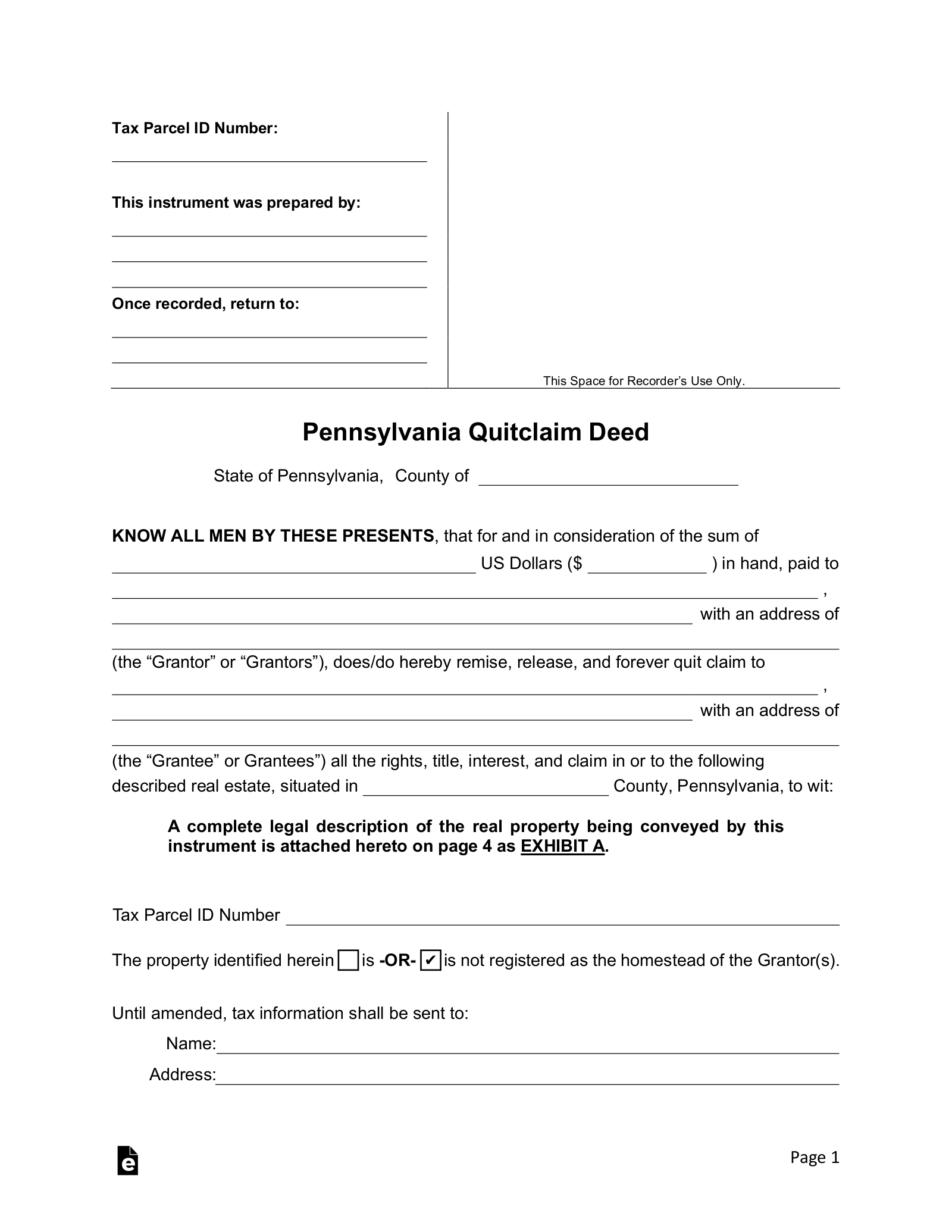
I have been divorced for about 8 1/2 years and my ex-husband has stayed on the deed until now. I need it to reflect only me on the deed. He is willing to do so. I have created the deed on this eForms site and I wanted to confirm the additional papers that came with it.

The first one is Realty Transfer Tax Statement of Value and Pennsylvania Certificate of Residency

Dan

Dan

Thank you for providing that information. I’m working on your answer now and will have it ready shortly. I appreciate your patience!

Dan

Dan

I understand how unsettling it can feel to manage property paperwork after a divorce, especially when you want to make sure everything is done correctly and nothing is missed. It’s completely normal to want clarity on forms like the Realty Transfer Tax Statement and the Pennsylvania Certificate of Residency. These documents are standard when transferring property ownership in Pennsylvania, even in cases where the transfer is between former spouses.

The Realty Transfer Tax Statement is used to report the sale or transfer of real estate to the state, which calculates any applicable transfer tax. The Certificate of Residency confirms whether you live in Pennsylvania, which can affect the tax rate. I’ll explain your options for moving forward and the practical steps to get this done smoothly.

One option is to proceed with filing your quitclaim deed at the county recorder’s office where the property is located, along with the Realty Transfer Tax Statement and the Certificate of Residency. Your first step would be to complete the Realty Transfer Tax Statement of Value carefully, reflecting the nature of your transfer (in this case, from both you and your ex-husband to just you). Then, complete the Certificate of Residency to show you are a Pennsylvania resident. Once both forms are ready, you take them with your signed quitclaim deed to the county office to officially record the changes. This process updates the public record, making you the sole owner, and handles any transfer tax issues properly.

Another option is to check if your transfer qualifies for an exemption from the Realty Transfer Tax, which sometimes applies when transferring property between former spouses due to divorce. Pennsylvania law often allows this exemption, but you still need to submit the tax statement and certificate showing the reason for exemption. To start this option, gather documentation about your divorce agreement and make sure your forms mention the property is transferring due to divorce settlement. Then you submit everything together for recording. This keeps costs down and correctly notifies tax authorities about the nature of the transfer.

Finally, if you want to be extra certain you’re doing it all correctly and to avoid any surprises, you could call or visit the county recorder’s office or local tax office before submitting. You can ask if anything specific is required for quitclaim deeds after divorce in your area. Sometimes, these offices can guide you through the paperwork and explain if you need additional forms or particular language in your documents. To begin, have your deed and forms handy and be ready to explain your situation briefly. Doing this gives you peace of mind and control over the process.

In summary, your main paths are: filing everything together as is, checking and applying for a tax exemption related to divorce, or directly consulting local offices for personalized guidance. The most straightforward starting point might be completing the Realty Transfer Tax Statement and Residency Certificate and taking them with the deed for recording. You can tackle this one step at a time and feel confident you’re covering all bases. How do these options feel to you? Do they make sense with what you’re hoping for, or would you like me to walk through any part in more detail?

So, who goes on the Certificate of Residency?

And the Realty Transfer Tax Statement seems very confusing to fill out. We are not exchanging any money

Dan

Dan

The Pennsylvania Certificate of Residency should include the name of the person who is receiving the property on the deed, which in your case is you as the sole owner after the transfer. This form essentially confirms your residency status in Pennsylvania, which is important because it affects the calculation of the Realty Transfer Tax. Since you said the property is your primary residence and you live in Pennsylvania, you would put your name and address on this certificate as the grantee (the person receiving full ownership) on the deed. Your ex-husband’s name, as the person giving up the property interest, would not appear on this certificate.

I want to make sure everything is clear and that you feel comfortable with the information I’ve provided. Do you have any follow-up questions, or would you like me to clarify anything? If everything makes sense, you can simply reply “All clear.” Thank you!

Dan

Dan

The key thing to know is that even if there is no financial exchange, this form still needs to be filled out because it reports the transfer of ownership to the state and local authorities. Since your transfer is from you and your ex-husband to only you, the form lets the government know about this change and why no tax might be due.

Because your transfer is happening due to a divorce and you are not paying or receiving money for the property, you would typically claim an exemption on the form. Pennsylvania law usually exempts property transfers between former spouses as part of a divorce from the Realty Transfer Tax.

Then I should follow the instructions on the Realty Transfer Tax Statement to fill it out properly?

Dan

Dan

Yes, precisely.

Okay then I think I’m good. Thank you for your assistance!

Dan

Dan

Thank you so much for sharing your questions with me. I’m really glad you reached out, and I truly appreciate the opportunity to help. If you ever have more questions, you’re always welcome to come back to AskaLawyer.

Dan

Dan

29,578 satisfied customers

Dan
Welcome! Have a similar question?

5 lawyers online now

Richard
Richard

4.26 (76,546)

Can I remove myself from a deed?

4

3

Answered 3 days ago

Disclaimer


By messaging AskaLawyer.com, you agree to our Terms and have read our Privacy Policy.

The information provided on AskaLawyer.com is for general informational purposes only and does not constitute legal advice. While we strive to ensure the accuracy and timeliness of the information presented, we make no guarantees regarding its completeness or applicability to your specific circumstances.

Use of this website does not create an attorney-client relationship between you and AskaLawyer.com or any of its attorneys. Communications through this website, including any responses from attorneys, are not privileged or confidential. For advice tailored to your individual situation, we recommend consulting a licensed attorney in your jurisdiction.

AskaLawyer.com disclaims any liability for actions taken or not taken based on the content of this site. We are not responsible for any third-party content that may be accessed through this website. Reliance on any information provided herein is solely at your own risk.

Ask a Lawyer Logo
Ask a Lawyer Logo
Intake Questions
Step of 3
Loading...
Loading...

How do you like to pay?

By proceeding with payment, you agree to our Terms and Privacy Policy. You authorize us to charge $ today and $ thereafter until canceled. You may cancel anytime in the My Account section to stop future charges.

Total Due:

After purchasing, your chat will begin with an attorney.

By proceeding with payment, you agree to our Terms and Privacy Policy. You authorize us to charge $ today and $ thereafter until canceled. You may cancel anytime in the My Account section to stop future charges.

Total Due:

After purchasing, your chat will begin with an attorney.

It looks like you already have an account with Ask a Lawyer.

We have sent you a magic link to . Click the link in your email to sign in and continue your chat.

spin

Step of 6 •

You'll receive an email at as soon as the lawyer joins the conversation 🙏🏻😊

Over 90% of lawyers connect within 5 minutes. If you're not online at that moment, don't worry — the lawyer will reply to your message while you're away.

You're also welcome to stay in the chat while waiting to be connected 💬✨

Waiting for lawyer