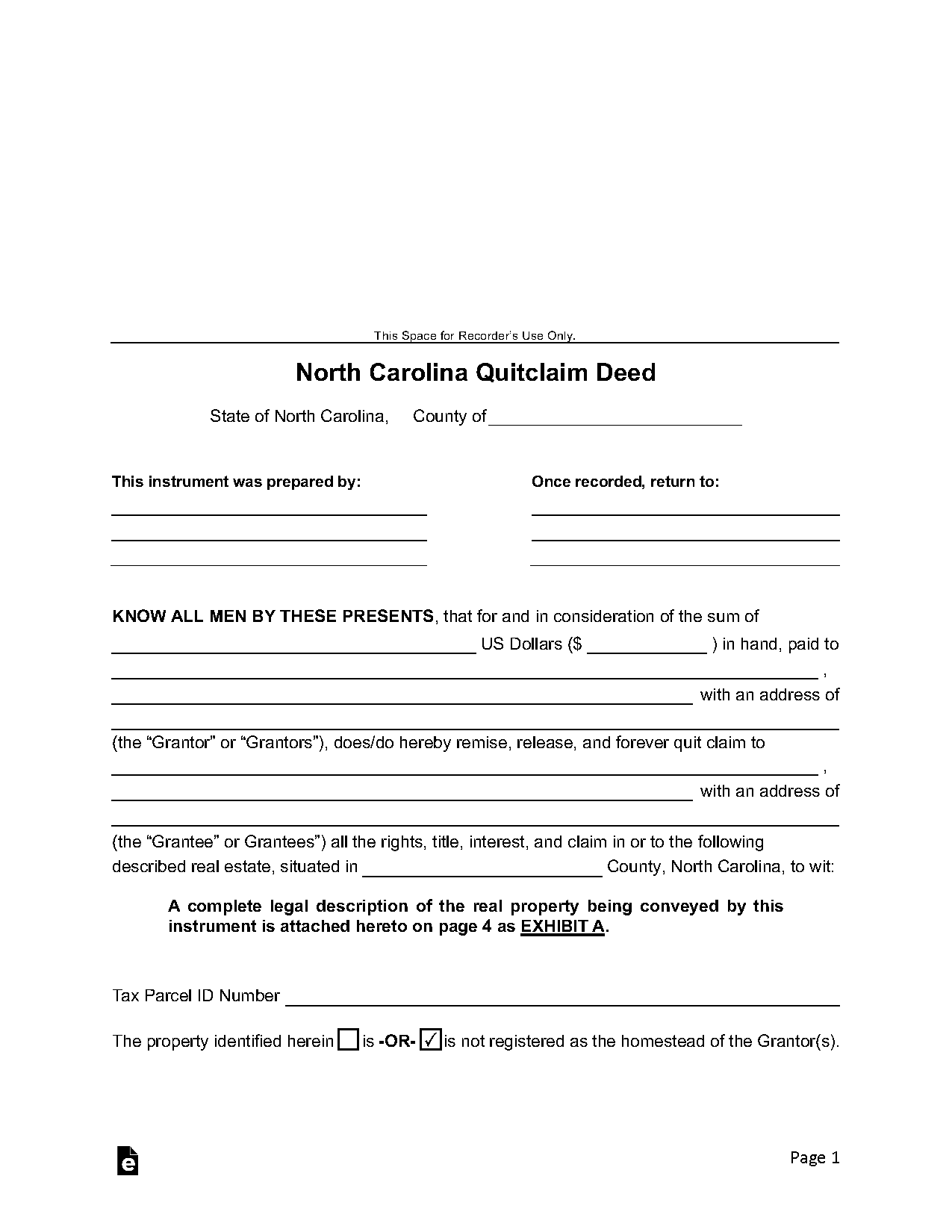
[NC] [NC] Do I need a quitclaim deed per property?
If you’re preparing quitclaim deeds in North Carolina for four separate lots (each with its own legal description and street address), you can include all four in a single deed if each tract is accurately described and the grantor signs it. However, there are practical reasons to prepare four separate deeds:
- Clarity / fewer scrivener’s errors when copying legal descriptions.
- Easier title searches and recording because each deed will be filed with its corresponding parcel.
- Avoid future confusion or disputes — isolating each lot helps if one transfer is later contested.
It’s not strictly required under NC law to have separate deeds, but best practice generally favors one deed per parcel (N.C. Gen. Stat. § 47-17). My recommendation:
- Prepare four quitclaim deeds (one per lot).
- Use the exact parcel/legal description and recording references from the original general warranty deed for each respective lot.
- Record each deed separately in the county Register of Deeds. You can record them the same day if they’re in the same county.
0
North Carolina Quit Claim Deed
Full Conversation
Hello — I am preparing a quitclaim deed for four properties. Do I need one for each property?
Lexi, Chatbot
I understand. Are the properties located in the same state?
Yes.
Lexi, Chatbot
Have you already determined how you want to divide ownership of the properties among the parties involved?
Yes.
Lexi, Chatbot
Is there anything else the lawyer should know before I connect you?
The properties are four lots that were given to my great aunt in a general warranty deed by her husband, my great uncle. In the general warranty deed they were given all at once and I am copying the description from that, but I was told that you need to have four separate quitclaim deeds for each property since each has an address.
Andres Sanchez
Hello — I’m Andres Sanchez, an attorney. What state are you in?
North Carolina.
Andres Sanchez
If you’re preparing quitclaim deeds in North Carolina for four separate lots (each with its own legal description and street address), you can include all four in a single deed if each tract is accurately described and the grantor signs it. However, there are practical reasons to prepare four separate deeds:
- Clarity / fewer scrivener’s errors when copying legal descriptions.
- Easier title searches and recording because each deed will be filed with its corresponding parcel.
- Avoid future confusion or disputes — isolating each lot helps if one transfer is later contested.
It’s not strictly required under NC law to have separate deeds, but best practice generally favors one deed per parcel (N.C. Gen. Stat. § 47-17). My recommendation:
- Prepare four quitclaim deeds (one per lot).
- Use the exact parcel/legal description and recording references from the original general warranty deed for each respective lot.
- Record each deed separately in the county Register of Deeds. You can record them the same day if they’re in the same county.
Okay excellent, thank you.
Andres Sanchez
You’re welcome. Best of luck.
11
2
Answered 3 days ago
Disclaimer
By messaging AskaLawyer.com, you agree to our Terms and have read our Privacy Policy.
The information provided on AskaLawyer.com is for general informational purposes only and does not constitute legal advice. While we strive to ensure the accuracy and timeliness of the information presented, we make no guarantees regarding its completeness or applicability to your specific circumstances.
Use of this website does not create an attorney-client relationship between you and AskaLawyer.com or any of its attorneys. Communications through this website, including any responses from attorneys, are not privileged or confidential. For advice tailored to your individual situation, we recommend consulting a licensed attorney in your jurisdiction.
AskaLawyer.com disclaims any liability for actions taken or not taken based on the content of this site. We are not responsible for any third-party content that may be accessed through this website. Reliance on any information provided herein is solely at your own risk.