[TX] [TX] What’s the difference between a quitclaim and warranty deed?

I am a co-owner of the home that is being deeded over to me. We are getting it notarized in Washington State, but the paperwork shows Texas. How do I change that? Also, do I need a Special Warranty Deed or just a Quitclaim Deed form? The house has a clear title, and we own it outright—no loans on it, etc.

17

5

Lori
Lori

25,410 satisfied customers

View context
Solved

Yes, the notary state can be crossed out and filled in by the notary. You can use either a Special Warranty Deed or a Quitclaim Deed. They both transfer title to the grantee.

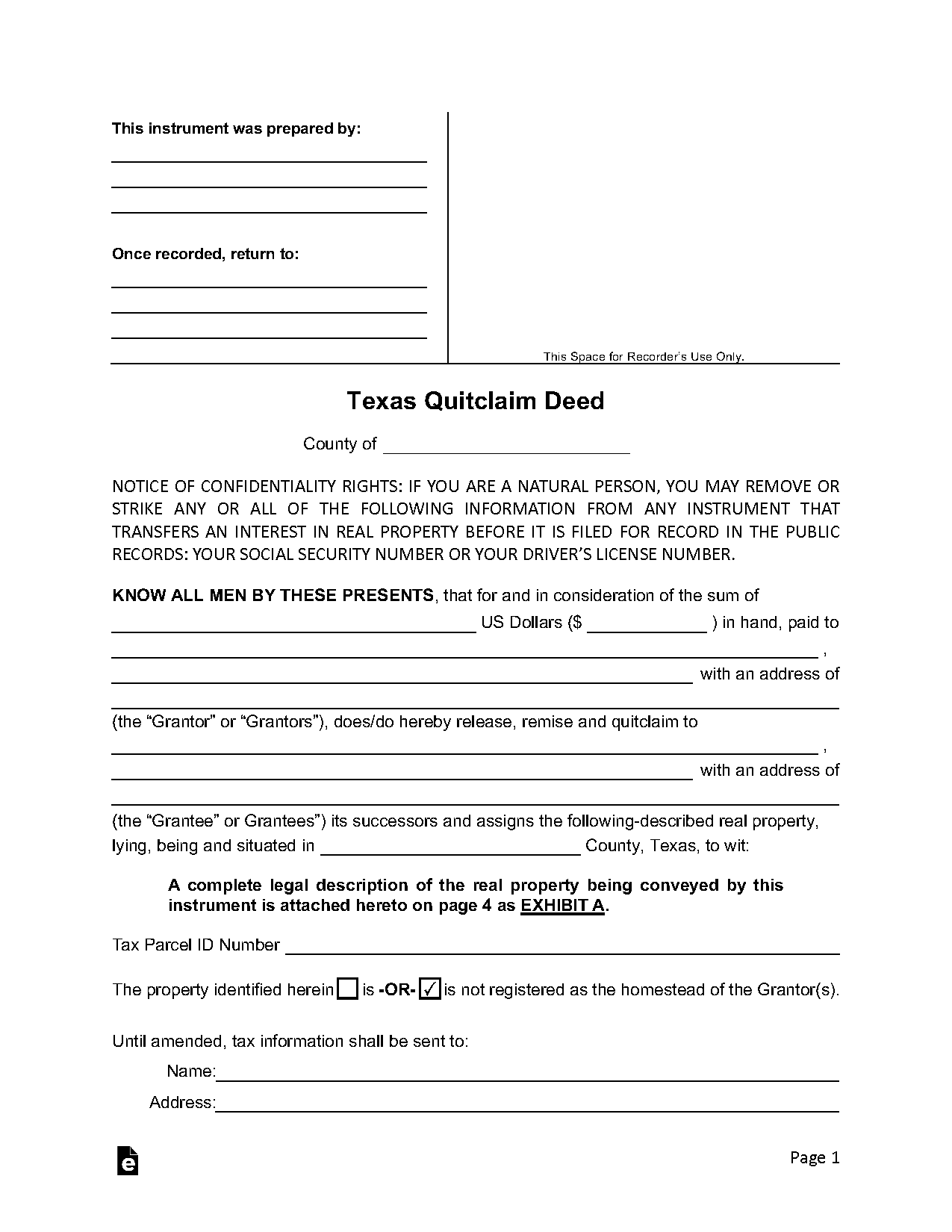
The key difference between a Special Warranty Deed and a Quitclaim Deed lies in the level of protection and assurance each provides to the grantee (the person receiving the property):

A. Special Warranty Deed:

  • Limited Guarantee: The grantor (seller) guarantees that the property was not encumbered during their ownership but makes no promises about what happened before they owned it.
  • Warranties Provided: Typically includes covenants like the right to convey, freedom from encumbrances during the grantor’s ownership, and a promise to defend title against claims arising from their period of ownership.

B. Quitclaim Deed:

  • No Guarantee: The grantor transfers whatever interest they may have in the property—if any—without making any warranties about title or ownership.
  • Risk to Grantee: The grantee has no legal recourse if it turns out the grantor didn’t actually own the property or if there are title defects.
  • Common Use: Typically used between parties who trust each other, like family members, divorcing spouses, or when transferring property into a trust or LLC.

Thus, the most common transfer method is the Quitclaim Deed for your situation.

0

Quitclaim Deed

Full Conversation


I am a co-owner of the home that is being deeded over to me. We are getting it notarized in Washington State, but the paperwork shows Texas. How do I change that? Also, do I need a Special Warranty Deed or just a Quitclaim Deed form? The house has a clear title, and we own it outright—no loans on it, etc.

Lexi

Lexi, Chatbot

I understand the situation regarding the deed transfer mix-up. Have you already signed the paperwork with the incorrect state listed?

No

Lexi

Lexi, Chatbot

Are you looking to correct the state listed on the deed and determine whether a Special Warranty Deed or Quitclaim Deed is more appropriate for this transfer?

Yes, it will be notarized in Washington State. Which is the right form to use? Will the Special Warranty Deed be sufficient, or do we need to do a Quitclaim Deed instead?

Lexi

Lexi, Chatbot

Is there anything else the Real Estate Lawyer should know before I connect you? Rest assured, they’ll be able to help with your deed transfer.

No

Lori

Lori

Hey there! Welcome! I'm Lori, an attorney with many years of experience, and I'm here to help you. I’m live with you today.

  1. What city and state is the real property located in?
  2. Are you signing it in Washington? The paperwork should reflect where you are signing it for the notary. If you are signing and having it notarized in Washington, then the notary block should reflect that.

The property is in Dallas, Texas. We are physically located in Seattle, Washington.

My question also asked which form is legally needed for this transfer of ownership. Should the form be a Special Warranty Deed form or a Quitclaim Deed form? Also, when filling out the Special Warranty Deed form, it doesn’t allow you to change the state from Texas to Washington.

On the notary page, I didn’t see where you could change the state from Texas to Washington, unless that can be crossed out by my notary.

Lori

Lori

Understood. Thanks for the information. Please give me some time to review, do a bit of research, and draft my personalized response. I’ll get back to you as soon as possible.

Thank you, Lori.

Lori

Lori

Yes, the notary state can be crossed out and filled in by the notary. You can use either a Special Warranty Deed or a Quitclaim Deed. They both transfer title to the grantee.

The key difference between a Special Warranty Deed and a Quitclaim Deed lies in the level of protection and assurance each provides to the grantee (the person receiving the property):

A. Special Warranty Deed:

  • Limited Guarantee: The grantor (seller) guarantees that the property was not encumbered during their ownership but makes no promises about what happened before they owned it.
  • Warranties Provided: Typically includes covenants like the right to convey, freedom from encumbrances during the grantor’s ownership, and a promise to defend title against claims arising from their period of ownership.

B. Quitclaim Deed:

  • No Guarantee: The grantor transfers whatever interest they may have in the property—if any—without making any warranties about title or ownership.
  • Risk to Grantee: The grantee has no legal recourse if it turns out the grantor didn’t actually own the property or if there are title defects.
  • Common Use: Typically used between parties who trust each other, like family members, divorcing spouses, or when transferring property into a trust or LLC.

Thus, the most common transfer method is the Quitclaim Deed for your situation.

Thank you, Lori. So I am safe using a Special Warranty Deed for this, and when I get to Texas to file it, Janet won’t have any problems filing it to secure it in her name?

Lori

Lori

Yes, that is correct.

Thank you for your time.

Lori

Lori

You’re welcome. Thank you for allowing me to assist you today. Have a nice day!

Lori

Lori

25,410 satisfied customers

Lori
Welcome! Have a similar question?

5 lawyers online now

Richard
Richard

4.26 (76,546)

Can I remove myself from a deed?

4

3

Answered 3 days ago

Disclaimer


By messaging AskaLawyer.com, you agree to our Terms and have read our Privacy Policy.

The information provided on AskaLawyer.com is for general informational purposes only and does not constitute legal advice. While we strive to ensure the accuracy and timeliness of the information presented, we make no guarantees regarding its completeness or applicability to your specific circumstances.

Use of this website does not create an attorney-client relationship between you and AskaLawyer.com or any of its attorneys. Communications through this website, including any responses from attorneys, are not privileged or confidential. For advice tailored to your individual situation, we recommend consulting a licensed attorney in your jurisdiction.

AskaLawyer.com disclaims any liability for actions taken or not taken based on the content of this site. We are not responsible for any third-party content that may be accessed through this website. Reliance on any information provided herein is solely at your own risk.

Ask a Lawyer Logo
Ask a Lawyer Logo
Intake Questions
Step of 3
Loading...
Loading...

How do you like to pay?

By proceeding with payment, you agree to our Terms and Privacy Policy. You authorize us to charge $ today and $ thereafter until canceled. You may cancel anytime in the My Account section to stop future charges.

Total Due:

After purchasing, your chat will begin with an attorney.

By proceeding with payment, you agree to our Terms and Privacy Policy. You authorize us to charge $ today and $ thereafter until canceled. You may cancel anytime in the My Account section to stop future charges.

Total Due:

After purchasing, your chat will begin with an attorney.

It looks like you already have an account with Ask a Lawyer.

We have sent you a magic link to . Click the link in your email to sign in and continue your chat.

spin

Step of 6 •

You'll receive an email at as soon as the lawyer joins the conversation 🙏🏻😊

Over 90% of lawyers connect within 5 minutes. If you're not online at that moment, don't worry — the lawyer will reply to your message while you're away.

You're also welcome to stay in the chat while waiting to be connected 💬✨

Waiting for lawyer