[AL] [AL] Was my purchase of my mother’s property valid for Medicaid purposes?
Yes—you did legally purchase the property. A deed that is properly executed, notarized, delivered, and recorded completes a legal transfer in Alabama (Ala. Code § 35-4-20). A settlement statement is not required to make a deed valid. Medicaid just wants proof of the financial details. A notarized Bill of Sale, a copy of the appraisal, a check copy, and the recorded deed are all acceptable supporting documents.
0
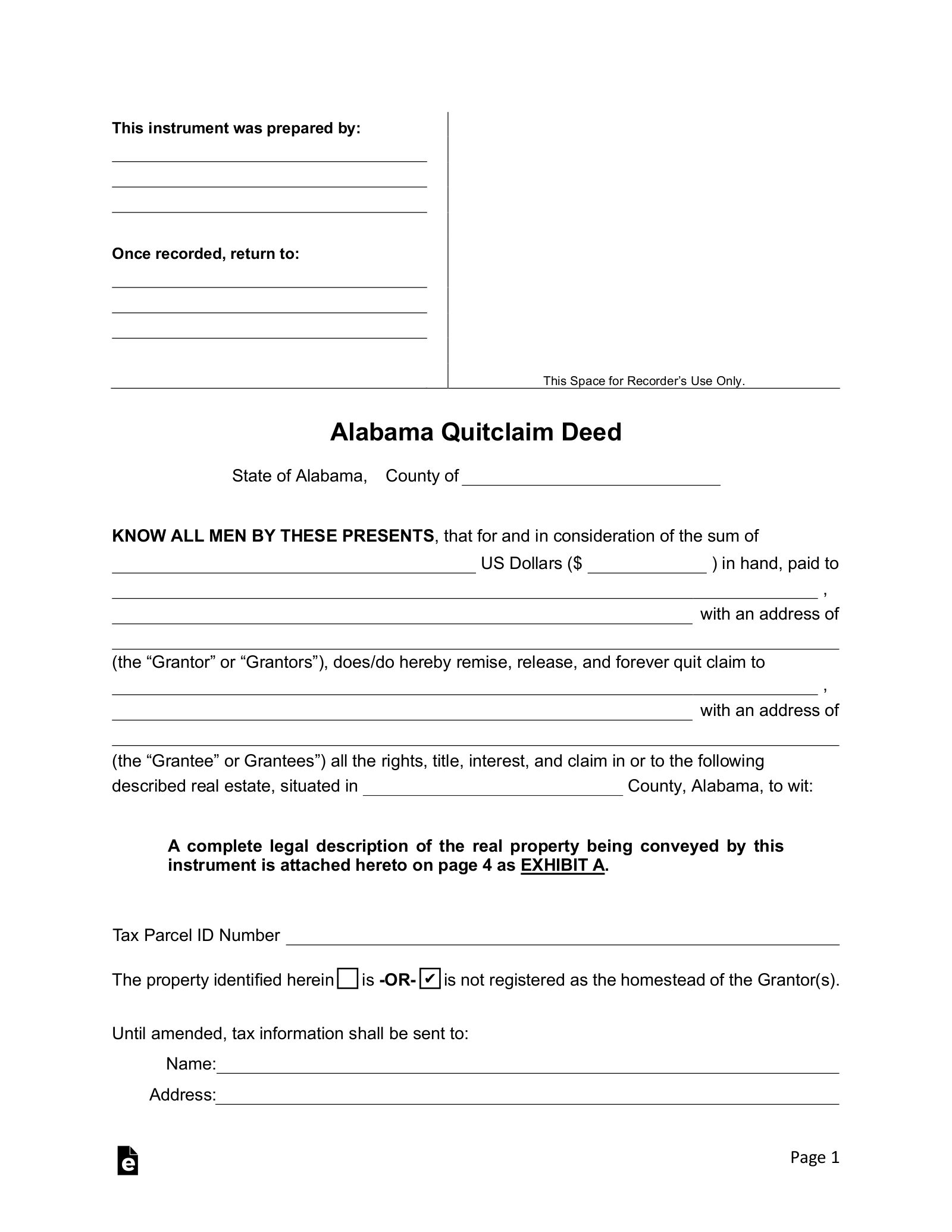
Alabama Quit Claim Deed
Full Conversation
We are applying for Medicaid for skilled nursing for my mom. She had this little property in Hamilton that is part of someone else’s yard. We couldn’t get a realtor to list it. I thought I could buy it from her for the appraised value of $1,040. I had an attorney’s office prepare the deed, my mom signed it with a notary present, and we filed it with the county. I paid my mom $1,040 with a personal check. I also paid the recording fee and taxes. Medicaid has now asked for a settlement statement.
I understand. Any liens or encumbrances on the property?
No, it doesn't.
Did Medicaid give any specific instructions about the settlement statement?
No.
Anything else the lawyer should know?
No.
Medicaid reviews transfers to confirm they weren’t made for less than fair market value. You paid the appraised value and recorded the deed. They likely want documentation showing the financial details—normally a settlement statement. Let’s talk about what that means.
As far as you can tell, have I legally purchased the property from my mom, even though there wasn’t a settlement statement? I didn’t think I needed one for such a small transaction. I wish I could get one prepared now, but I don’t think that’s possible. Would a notarized Bill of Sale be helpful? I don’t think Medicaid will dispute the value.
Yes—you did legally purchase the property. A deed that is properly executed, notarized, delivered, and recorded completes a legal transfer in Alabama (Ala. Code § 35-4-20). A settlement statement is not required to make a deed valid. Medicaid just wants proof of the financial details. A notarized Bill of Sale, a copy of the appraisal, a check copy, and the recorded deed are all acceptable supporting documents.
That’s good news. I just wanted to make sure I had acquired it legally. I’m not sure what the purpose of the Alabama Purchase Agreement was. Should I give that to Medicaid too? It said it was legally binding.
Yes, that agreement helps show the sale was legitimate and for fair market value. Include it. A fair-market-value transfer is legal, but Medicaid reviews everything in the look-back period. Provide the purchase agreement, deed, appraisal, check copy, and any proof of taxes/fees paid.
None of the case law you cited was from Alabama. Is it the same in Alabama? Have I legally purchased the property from my mom even without a settlement statement?
Yes. Alabama law also recognizes that a deed transfer is valid once it is executed, notarized, and delivered. Medicaid may still request documentation, but the absence of a settlement statement does not invalidate the sale.
Thank you for your time.
11
2
Answered 2 days ago
Disclaimer
By messaging AskaLawyer.com, you agree to our Terms and have read our Privacy Policy.
The information provided on AskaLawyer.com is for general informational purposes only and does not constitute legal advice. While we strive to ensure the accuracy and timeliness of the information presented, we make no guarantees regarding its completeness or applicability to your specific circumstances.
Use of this website does not create an attorney-client relationship between you and AskaLawyer.com or any of its attorneys. Communications through this website, including any responses from attorneys, are not privileged or confidential. For advice tailored to your individual situation, we recommend consulting a licensed attorney in your jurisdiction.
AskaLawyer.com disclaims any liability for actions taken or not taken based on the content of this site. We are not responsible for any third-party content that may be accessed through this website. Reliance on any information provided herein is solely at your own risk.