[CA] [CA] For a real estate business, what is the best business structure for tax purposes?
Thanks! You're in a great position to build long-term real estate wealth — and with 3 rentals and plans to flip, getting your business structure right will save you thousands in taxes, limit liability, and keep you audit-safe.
Let’s break this down step-by-step for your situation in California with out-of-state properties, a business partner, and mixed activities (rentals + flipping).
What Is Pass-Through Taxation?
- The business itself doesn’t pay income tax.
- Instead, profits "pass through" to you and your partner.
- You each report your share of the income/losses on your personal tax return (Form 1040).
- Common for LLCs, S Corps, and partnerships.
- Helps avoid double taxation (unlike a C Corporation).
Best Structure for You (California-Based, Rentals + Flipping, With a Partner)
Step 1: Form a California Holding Company LLC
- You and your partner are both members (50/50 ownership or as agreed).
- Taxed as a partnership by default.
- This holding LLC will own your rental property LLCs.
Step 2: Create One LLC Per Rental Property
- One California LLC for your California rental (must pay CA's $800/year franchise tax).
- Two New Mexico LLCs, one for each NM property (very affordable — about $50/year each).
- Each LLC is owned by the holding company.
- Provides asset protection and separates liabilities.
Step 3: Create a Separate Flipping LLC in California
- This LLC handles your house flipping and any other active income.
- Should be taxed as an S Corporation (once you're flipping more than 2 homes or making over $50K net).
- You and your partner are co-owners and both on payroll (reasonable salaries).
- Remaining profits can be taken as distributions — saving you self-employment tax.
How Your Taxes Will Work
Rental Income:
- Passes through to you and your partner via the holding company.
- You each get a K-1 to report your share on your personal taxes.
- You benefit from depreciation, mortgage interest, repairs, etc., to lower taxable income.
Flipping Income:
- The flipping LLC will pay each of you a salary (W-2).
- Additional profits can be taken as dividends (not subject to self-employment tax).
- This structure helps minimize tax on high active income.
️Legal & Asset Protection Benefits
- Each property is legally separate, reducing risk if one property faces a lawsuit.
- Personal assets are protected from business liabilities.
- New Mexico LLCs offer strong privacy — owner names are not public.
Annual Costs You Should Expect
- $800/year for each California LLC (including the holding company and the flipping LLC).
- About $50/year for each New Mexico LLC.
- Around $1,000–$2,000/year for CPA and tax filings.
- Around $600–$1,200/year for payroll software (like Gusto or ADP) for the S Corp structure.
- Optional: umbrella insurance for added legal protection ($200–$400/year).
What to Do Next
- Form your California Holding LLC (with your partner).
- Form three rental property LLCs (1 in CA, 2 in NM).
- Form a CA flipping LLC, and once ready, elect S Corp taxation with the IRS (Form 2553).
- Set up separate business bank accounts for each LLC.
- Start tracking your income/expenses with bookkeeping software.
- Get help from a real estate-focused CPA (I can help you draft the right questions).
- Create operating agreements for all LLCs (especially the ones with a partner).
0
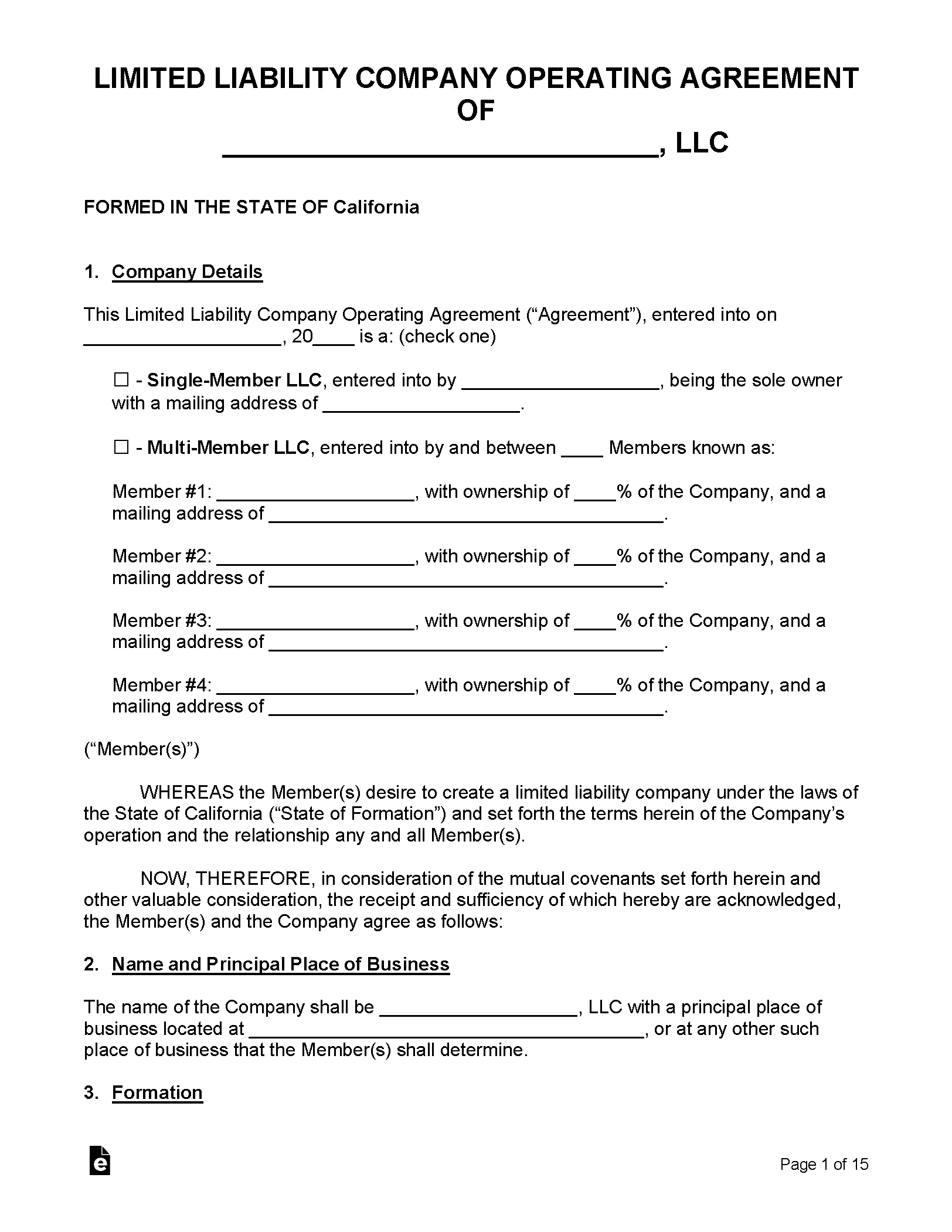
LLC Operating Agreement
Full Conversation
I need help structuring a real estate business and need to know what the best structure is for tax purposes.
Lexi, Chatbot
I understand you're looking to structure your real estate business for tax purposes. Have you already registered your business with the appropriate authorities?
not yet
Lexi, Chatbot
Are you looking to minimize taxes on rental income, capital gains, or both?
both
Lexi, Chatbot
Is there anything else the Accountant should know before I connect you? I don't want to miss anything important.
no
Gino G., CPA
Hello, my name is Gino and I am a CPA. Can you please confirm we are connected?
Hello Gino
I am in the process of putting my real estate portfolio into a Trust and am trying to figure out the best way of structuring this portfolio for asset protection and tax benefits.
Gino G., CPA
Great — setting up your real estate business with the right structure is crucial for taxes, liability protection, and long-term growth. The best structure depends on:
- Your country and state of residence
- Your role (investor, agent, developer, flipper, landlord, wholesaler, etc.)
- How many properties you own or plan to own
- Whether you're working alone or with partners
- Your income goals and tolerance for complexity
Please confirm your country or state, and what kind of real estate activity you're planning. In the meantime, here’s a general breakdown of the best U.S. structures by activity type and tax efficiency:
Common U.S. Legal Structures for Real Estate
1. Sole Proprietorship
Best for: Beginners testing the waters
Pros: Easy to start, minimal paperwork
Cons: No liability protection, taxed on all income as personal income
2. Limited Liability Company (LLC)
Best for: Rental property owners and flippers
Pros: Pass-through taxation (default), Liability protection, Flexibility to be taxed as S Corp or C Corp later
Cons: Still subject to self-employment tax unless changed
Rentals:
Use one LLC per property or group similar-risk properties together to reduce liability.
Flipping or Active Business:
Consider LLC taxed as S Corp for income over ~$50k to save on self-employment tax.
3. S Corporation (S Corp)
Best for: Active real estate professionals (agents, flippers, wholesalers)
Pros: Pass-through taxation, Save on self-employment tax by paying yourself a “reasonable salary” and taking the rest as distributions
Cons: More paperwork (payroll, corporate minutes), Must pay yourself a salary
4. C Corporation
Best for: Very high-income businesses reinvesting most profits or with foreign investors
Pros: Corporate tax rate (21%) may be lower than personal in some cases
Cons: Double taxation (profits taxed at corp level, then again as dividends)
5. Partnership or Multi-Member LLC
Best for: Real estate with multiple owners/investors
Pros: Pass-through taxation, Flexible allocation of profits/losses
Cons: More complex filings (Form 1065, K-1s)
Best Practices
- Keep rentals and flips separate: Flipping is considered active income and is taxed differently than rental income.
- Use a holding company: A parent LLC can own property LLCs for easier control.
- Consider a Series LLC (in certain states like TX, DE, NV): Helps isolate risk between properties.
- Get an accountant or tax strategist involved early: They can help you make elections (e.g., S Corp election) and maximize deductions.
I live in California. I own 3 rental properties, one in california and two in Albuquerque NM. I plan on flipping houses and also adding to my rental portfolio. I would like to have one partner.
I dont know what pass-through taxation is.
I want to create an LLC so that I can build business credit to help grow my business. My personal credit is not in the best of shape.
Gino G., CPA
Thanks! You're in a great position to build long-term real estate wealth — and with 3 rentals and plans to flip, getting your business structure right will save you thousands in taxes, limit liability, and keep you audit-safe.
Let’s break this down step-by-step for your situation in California with out-of-state properties, a business partner, and mixed activities (rentals + flipping).
What Is Pass-Through Taxation?
- The business itself doesn’t pay income tax.
- Instead, profits "pass through" to you and your partner.
- You each report your share of the income/losses on your personal tax return (Form 1040).
- Common for LLCs, S Corps, and partnerships.
- Helps avoid double taxation (unlike a C Corporation).
Best Structure for You (California-Based, Rentals + Flipping, With a Partner)
Step 1: Form a California Holding Company LLC
- You and your partner are both members (50/50 ownership or as agreed).
- Taxed as a partnership by default.
- This holding LLC will own your rental property LLCs.
Step 2: Create One LLC Per Rental Property
- One California LLC for your California rental (must pay CA's $800/year franchise tax).
- Two New Mexico LLCs, one for each NM property (very affordable — about $50/year each).
- Each LLC is owned by the holding company.
- Provides asset protection and separates liabilities.
Step 3: Create a Separate Flipping LLC in California
- This LLC handles your house flipping and any other active income.
- Should be taxed as an S Corporation (once you're flipping more than 2 homes or making over $50K net).
- You and your partner are co-owners and both on payroll (reasonable salaries).
- Remaining profits can be taken as distributions — saving you self-employment tax.
How Your Taxes Will Work
Rental Income:
- Passes through to you and your partner via the holding company.
- You each get a K-1 to report your share on your personal taxes.
- You benefit from depreciation, mortgage interest, repairs, etc., to lower taxable income.
Flipping Income:
- The flipping LLC will pay each of you a salary (W-2).
- Additional profits can be taken as dividends (not subject to self-employment tax).
- This structure helps minimize tax on high active income.
️Legal & Asset Protection Benefits
- Each property is legally separate, reducing risk if one property faces a lawsuit.
- Personal assets are protected from business liabilities.
- New Mexico LLCs offer strong privacy — owner names are not public.
Annual Costs You Should Expect
- $800/year for each California LLC (including the holding company and the flipping LLC).
- About $50/year for each New Mexico LLC.
- Around $1,000–$2,000/year for CPA and tax filings.
- Around $600–$1,200/year for payroll software (like Gusto or ADP) for the S Corp structure.
- Optional: umbrella insurance for added legal protection ($200–$400/year).
What to Do Next
- Form your California Holding LLC (with your partner).
- Form three rental property LLCs (1 in CA, 2 in NM).
- Form a CA flipping LLC, and once ready, elect S Corp taxation with the IRS (Form 2553).
- Set up separate business bank accounts for each LLC.
- Start tracking your income/expenses with bookkeeping software.
- Get help from a real estate-focused CPA (I can help you draft the right questions).
- Create operating agreements for all LLCs (especially the ones with a partner).
Am I able to do all this while the titles are under a Trust? I will be flipping in New Mexico as well. I was going to put the titles to all 3 properties in a trust to avoid gains taxes should something happen to me. am I still able to do all that you outlined on top, with the trust holding title to the properties?
Gino G., CPA
Yes, you can absolutely structure your real estate business as described above while holding the property titles in a trust, but there are some key points to understand depending on what type of trust you’re using and your goals (like avoiding capital gains or probate).
Let’s break this down clearly for your situation:
What You're Asking:
- You want to place your rental properties into a trust to avoid probate and possibly capital gains if you pass away.
- You're also actively flipping (in both California and New Mexico).
- You want to run this as a business with a partner — using LLCs for protection and tax efficiency.
What Kind of Trust Are You Using?
Most likely you're referring to a Revocable Living Trust, which:
- Avoids probate if you die
- Does not avoid capital gains taxes while you're alive
- Is ignored for tax purposes while you're alive (you still use your own SSN)
If that's the case, here's how everything fits together:
Holding Rentals in LLCs — Then Putting the LLCs Into the Trust
Yes, you can absolutely do this:
- Form individual LLCs for each rental (as we discussed).
- Then, transfer ownership of the LLCs (not the property directly) into your revocable trust.
That way:
- The LLCs remain intact for liability protection.
- The trust handles probate avoidance.
- You still control everything.
This method is far better than titling the properties themselves directly into the trust, especially for out-of-state properties and partnerships.
Flipping Business and Trust
For flipping, it works a bit differently:
- Flipping involves active business activity.
- That business is usually run through an LLC taxed as an S Corp, with you and your partner as owners.
- You should not put the flipping LLC into the trust — instead:
- Keep the flipping LLC owned directly by you and your partner.
- But you can name the trust as the beneficiary of your share in case you pass away.
Important Distinctions
Rental Properties → put into LLCs → then those LLCs can be owned by your trust.
Flipping Activity → done via an active business LLC → not held in the trust, but your share can transfer to the trust upon death via your estate plan or buy-sell agreement.
Key Legal & Tax Notes
- Avoiding capital gains tax is not something the trust helps with while you're alive. That would require something like:
- A 1031 exchange
- Stepped-up basis upon death (which does happen if property is in a revocable trust)
- Liability protection comes from the LLCs, not the trust.
- Partnerships and S Corps must remain clearly owned and operated by the people doing the work — trusts can be beneficiaries, but not managers.
Summary: Yes, You Can Do All of This
You can:
- Set up LLCs for rentals and flips.
- Have your trust own the LLCs that hold rentals.
- Run the flipping business outside the trust, but make sure your share passes to the trust upon death.Still benefit from pass-through taxation, legal protection, and streamlined estate planning.
Next Steps
- Make sure you’re using a revocable living trust (not an irrevocable trust, which limits control).
- Have an estate planning attorney:
- Amend your trust to own LLCs (they’ll list the LLCs as trust assets).
- Draft a transfer document (assignment of LLC interest to trust).
- Set up successor managers/members for the LLCs in case of death.
- Keep your flipping LLC in your personal names but draft a buy-sell or succession plan.
sorry i forgot to mention that I am divorced and have a 6 year old son. I want to protect his inheritance from her which is why I was looking at doing a trust because she would go through all his inheritance and he would never see anything if something were to happen to me
Thank you so much for your advice! it is something I have been needing to do and your advice is giving me a great deal of relief.
I was going to use a revocable living trust. I also did not want to trigger a pay off of the mortgage I have on the california property.
Can you send me the list of questions you mentioned I should ask a real estate-focused CPA?
Gino G., CPA
You're doing exactly the right thing by setting up a trust — especially if you want to:
- Protect your son’s inheritance from your ex,
- Avoid probate, and
- Prevent triggering a mortgage due-on-sale clause.
Thank you for sharing more — you're being proactive and smart, and your instincts are spot-on.
Quick Clarification on the Revocable Living Trust and Mortgage
Putting your personal property (like your home or rentals) into a revocable living trust does not usually trigger the mortgage's due-on-sale clause — especially if:
- You’re the grantor of the trust,
- You’re the trustee, and
- You still occupy or control the property.
Federal law (Garn-St. Germain Act) protects this kind of transfer for estate planning purposes.
But to be extra safe:
Call your mortgage lender and ask,
“Do you object to me transferring this property into a revocable living trust for estate planning purposes while I retain control as trustee and grantor?”
Questions to Ask a Real Estate-Focused CPA
STRUCTURE & TAX STRATEGY
- What’s the best tax setup for a partnership LLC that holds rental properties in multiple states (CA and NM)?
- Should my flipping business be taxed as an S Corporation? At what income level is that most beneficial?
- How do I report income from LLCs owned by my revocable trust?
- Do I need to file multi-state returns for New Mexico rental income?
- Can my rental LLCs be treated as disregarded entities for simplicity, or is partnership taxation better?
- How do I allocate expenses and depreciation between the different LLCs?
TRUST & LEGACY PLANNING
- How should I structure my trust to protect my son’s inheritance from his mother?
- Is it better to have the LLCs owned by the trust, or just name the trust as the beneficiary of my LLC membership interests?
- Can the trust distribute rental income to my son (or a trustee for him) if I pass away? How is that taxed?
- Do I need to file a separate return for the trust while I’m alive? After I die?
COMPLIANCE & RECORDKEEPING
- What records do I need to keep to protect my LLC and trust structures in an audit?
- What are the annual filing requirements in CA and NM for each LLC?
- How should I manage bookkeeping across multiple LLCs and a trust? Should I use QuickBooks or another tool?
INCOME MANAGEMENT & PAYROLL (for flipping)
- If I flip houses under an S Corp, what’s a “reasonable salary” for me and my partner?
- How do I handle distributions vs payroll in the flipping LLC?
- Should I set up a solo 401(k) or SEP IRA for tax-deferred savings through the flipping company?
ASSET PROTECTION
- How can I use the LLC + trust structure to protect my properties from lawsuits or creditors?
- Should I consider umbrella insurance or liability insurance for the LLCs?
- Do I need to file a separate Operating Agreement or Buy-Sell Agreement between me and my partner?
Let me know if you'd like help:
- Drafting a sample trust clause to protect your son’s inheritance from his mother
- Creating a family LLC/trust diagram to take to your CPA or attorney
- Picking software or setting up basic books for your rentals and flips
You’re on the right path — and your son is lucky you’re thinking ahead like this.
Thank you so much for the advice.
Gino G., CPA
No problem! Thanks for using AskaLawyer and have a great day!
Thank you! Its been on my plate for a few years to get all this going. have a great day!!
Gino G., CPA
You too!
19
6
Answered 4 days ago
Disclaimer
By messaging AskaLawyer.com, you agree to our Terms and have read our Privacy Policy.
The information provided on AskaLawyer.com is for general informational purposes only and does not constitute legal advice. While we strive to ensure the accuracy and timeliness of the information presented, we make no guarantees regarding its completeness or applicability to your specific circumstances.
Use of this website does not create an attorney-client relationship between you and AskaLawyer.com or any of its attorneys. Communications through this website, including any responses from attorneys, are not privileged or confidential. For advice tailored to your individual situation, we recommend consulting a licensed attorney in your jurisdiction.
AskaLawyer.com disclaims any liability for actions taken or not taken based on the content of this site. We are not responsible for any third-party content that may be accessed through this website. Reliance on any information provided herein is solely at your own risk.